Sour Batter: What It Is, Why It Matters, and How to Get It Right
When you think of sour batter, a fermented mix of rice and urad dal that becomes the base for crispy dosas and fluffy idlis. Also known as fermented batter, it’s not just a mixture—it’s a living, breathing foundation of South Indian kitchens. This isn’t magic. It’s science, patience, and tradition all rolled into one bowl. The sourness isn’t an accident—it’s the sign that good bacteria have done their job, breaking down starches, releasing gases, and turning a simple paste into something light, airy, and full of flavor.
What makes sour batter work? It’s the urad dal, a small black lentil that swells and whips up into a frothy, sticky paste when ground mixed with rice, usually parboiled or raw, that gives structure and body. The magic ratio? Around 1 part urad dal to 3 parts rice. Too much dal, and your dosa turns rubbery. Too little, and it won’t rise. The batter needs warmth—around 80°F—to ferment properly. Cold kitchens? It’ll sit there, bored and flat. That’s why many South Indian homes keep it near the stove or in a warm corner overnight.
The sour taste? That’s lactic acid doing its thing. It’s not vinegar. It’s not lemon. It’s the natural byproduct of fermentation, and it’s what makes the batter digestible, flavorful, and just a little tangy. If your batter doesn’t smell slightly sour after 8–12 hours, it didn’t ferment right. And if your dosa comes out soft? That’s your clue. Under-fermented batter, wrong consistency, or a cold tawa—all common fixes you’ll find in the posts below.
People think sour batter is just for dosas. It’s not. It’s the soul behind idlis, uttapams, and even some regional pancakes. It’s the reason why breakfast in Mysore doesn’t need fancy ingredients—just rice, dal, salt, time, and heat. You won’t find this in a jar at the grocery store. It’s made fresh, daily, in homes across Karnataka, Tamil Nadu, and beyond. And if you’ve ever tried to copy it and failed? You’re not alone. The posts here break down exactly what went wrong—and how to fix it, step by step.
Whether you’re struggling with a batter that won’t rise, a dosa that won’t crisp, or just wondering why your last batch tasted flat—this collection has the answers. No fluff. No guesswork. Just clear, tested fixes for the most common sour batter problems, straight from kitchens that do this every single day.
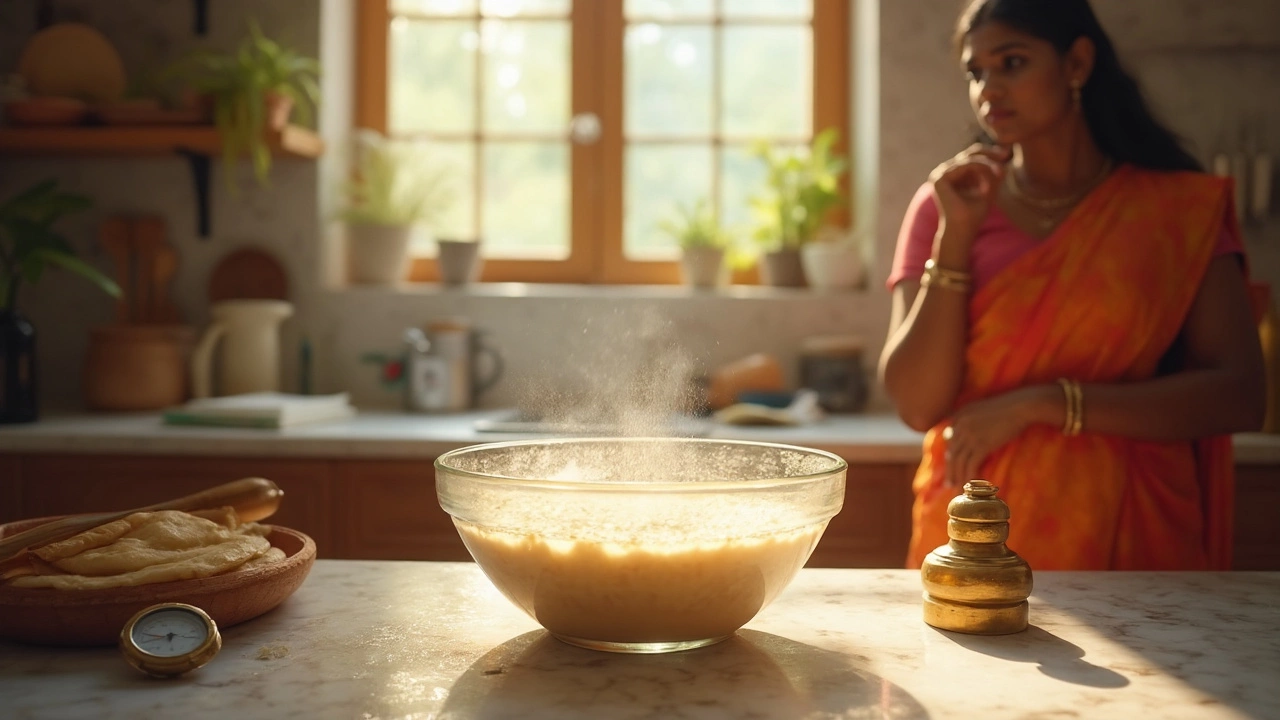
Dosa Batter: Why It Turns Sour and How to Prevent It
Ever wondered why dosa batter sometimes ends up too sour? This article breaks down the exact reasons behind sourness in dosa batter, driven by fermentation, temperature, and storage choices. You’ll pick up real tips for controlling batter flavor, extending its shelf life, and avoiding common mistakes. Get answers with concrete advice to keep your dosas tasting just right every time. Discover how to tweak your process for perfect results, every batch.
learn more