Chutney Types: The Real Flavors Behind Every Indian Meal
When you think of chutney, a thick, flavorful condiment from South Asia made with fruits, herbs, or spices, often served with snacks and meals. Also known as Indian relish, it's not just a side—it's the soul of the plate. Whether it’s a crispy dosa, a spicy samosa, or a plate of idli, there’s almost always a chutney beside it. But not all chutneys are the same. The real magic lies in the types of chutney, distinct regional variations based on ingredients, texture, and preparation methods. From the tangy bite of tamarind chutney, a sweet-and-sour paste made with tamarind pulp, jaggery, and spices, often used in chaat and snacks to the fresh green punch of mint chutney, a cooling blend of mint, cilantro, green chilies, and lemon, perfect for cutting through fried foods, each one plays a different role on your plate.
Then there’s coconut chutney, a creamy, slightly sweet condiment made from grated coconut, roasted chana dal, and red chilies, common in Karnataka and Tamil Nadu, often served with breakfast staples like idli and vada. And let’s not forget peanut chutney—nutty, earthy, and packed with protein—used in Andhra and Telangana meals. Even garlic chutney, fiery and bold, has its place in Maharashtrian homes. These aren’t just recipes; they’re traditions passed down through generations, shaped by local crops, climate, and taste. You won’t find a single chutney that works for every dish. Tamarind chutney loves fried snacks, mint chutney pairs best with grilled meats or sandwiches, and coconut chutney is the quiet hero of South Indian breakfasts. The right chutney doesn’t just add flavor—it balances heat, adds texture, and brings the whole meal together.
Some people think chutney is just a dip, but it’s more like a seasoning tool. It’s what turns a plain rice bowl into something memorable. It’s why you don’t skip it on your dosa. And if you’ve ever wondered why your homemade chutney doesn’t taste like the one at your favorite South Indian restaurant, it’s probably because you’re missing the small details—roasting the dal, using fresh curry leaves, letting it sit overnight. The chutney types you choose tell a story about where you’re from, what you grew up eating, and how you like your food to feel in your mouth. Below, you’ll find real, tested posts that break down exactly how to make each one, what to serve it with, how to store it, and even what to use when you’re out of it. No fluff. Just the facts that help you cook better, taste better, and eat like someone who grew up with these flavors.
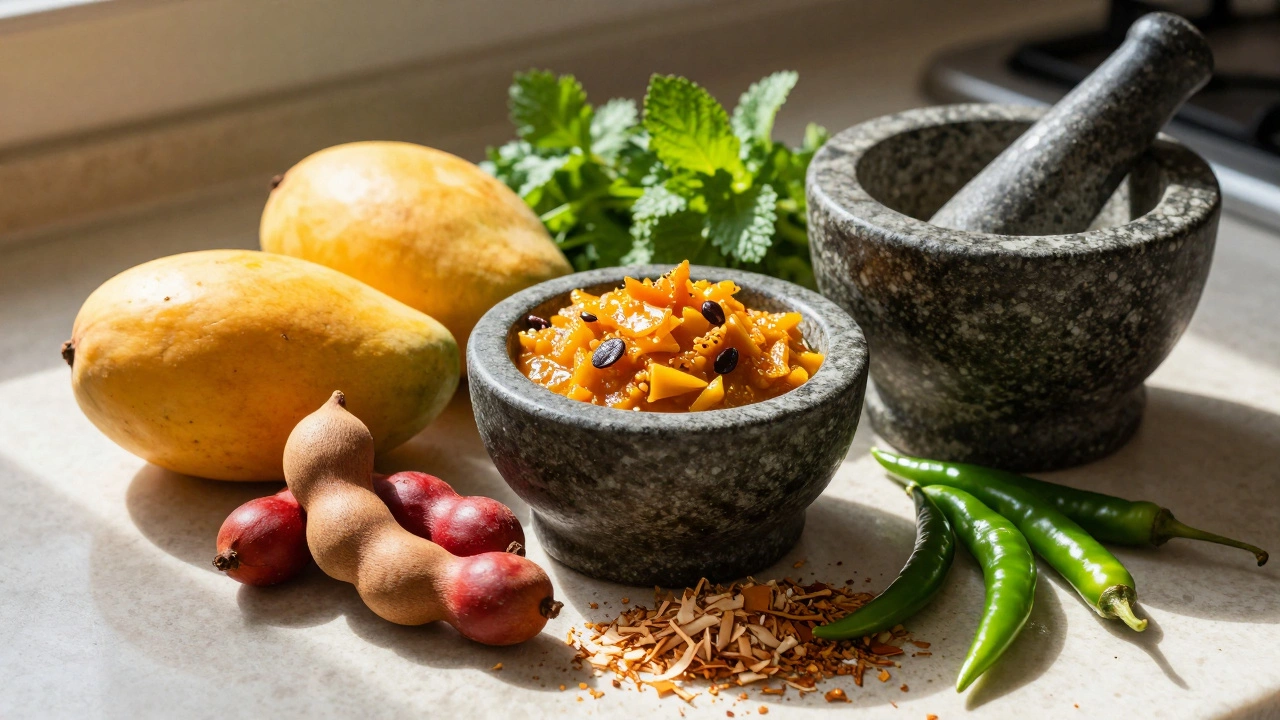
What Does Chutney Taste Like? A Real Guide to Flavor Profiles
Chutney isn't just spicy or sweet - it's a balance of sour, salty, and fresh flavors that transform meals. Learn what different types taste like and how to use them.
learn more