Chutney Flavor Balance Calculator
Find your perfect chutney balance by adjusting the four key flavor components. This tool helps you understand how to achieve the ideal harmony between sweet, sour, spicy, and salty - just like professional chutney makers.
Ever taken a bite of a spicy, tangy spoonful of chutney and wondered what exactly you’re tasting? It’s not just hot. It’s not just sweet. It’s not even just sour. Chutney is a flavor explosion that changes depending on where it’s from, what’s in it, and how it’s made. If you’ve only tried the store-bought kind, you’re missing out on the real thing - the kind that makes curry come alive, turns a plain dosa into something unforgettable, or wakes up a simple rice bowl like a morning sunrise.
Chutney isn’t one flavor - it’s a whole spectrum
Think of chutney like salsa, but with way more depth. In India, there are hundreds of types, each region has its own version, and every family has a secret recipe. Some are fiery hot, others are sweet like jam, and some taste like a garden just after rain. The base is usually fruit or vegetables - mango, tamarind, coconut, tomato, mint, coriander - but what makes chutney special is how it’s balanced.
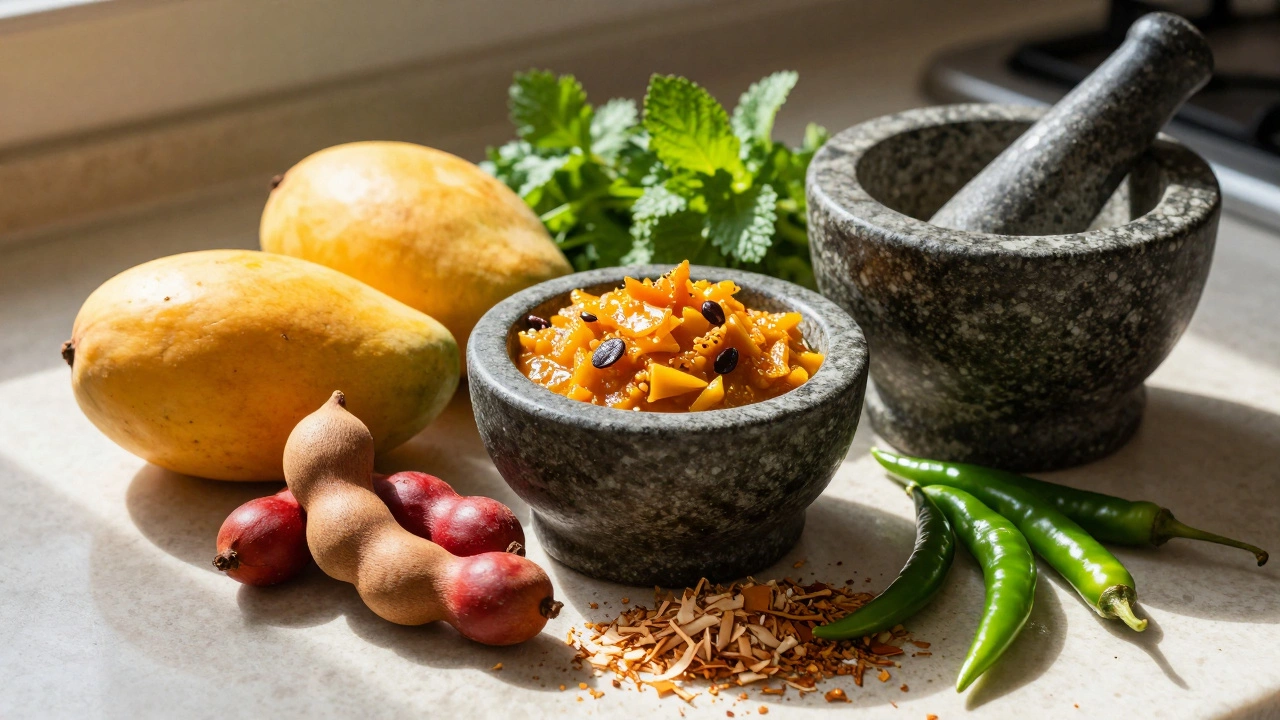
A classic mango chutney is the most common. When ripe, it’s sweet and thick, almost like a fruit preserve. But add green chilies, mustard seeds, and a pinch of salt, and suddenly it’s got a kick that lingers. The sweetness doesn’t disappear - it holds the heat in place. It’s like sugar and fire dancing together.
Then there’s tamarind chutney. It’s sour, but not like lemon. It’s deep, dark, almost smoky. It’s the kind of sour that makes your mouth water without making you pucker. Add jaggery or brown sugar, and it turns into a sticky, sweet-sour glaze that’s perfect for samosas or pakoras. In Mumbai street stalls, it’s drizzled over everything. You’ll taste it before you even see the snack.
Green chutney: fresh, sharp, and alive
If you’ve had a masala dosa or a chaat, you’ve probably had green chutney. It’s made from fresh coriander, mint, green chilies, ginger, and sometimes coconut or yogurt. It’s not cooked. It’s blended raw, so it tastes like a garden you just picked.
The first bite hits you with sharpness - the bite of raw garlic or ginger. Then the herbs rush in, cool and bright. The chilies give it a slow burn, not a shock. It’s refreshing, not overwhelming. In South India, they make it with roasted chana dal for texture. In the North, they add yogurt to soften it. In my kitchen in Auckland, I throw in a handful of cilantro from the balcony - it’s not the same as in Kerala, but it’s close enough to make my kids ask for seconds.
Coconut chutney: creamy, mild, and comforting
Coconut chutney is what you reach for when you need something gentle. It’s made from grated coconut, roasted lentils, green chilies, and a splash of water. It’s not spicy, not sour, not sweet - but somehow, it’s all of those things at once. The coconut gives it a buttery richness, the roasted urad dal adds a nutty depth, and the chilies? Just enough to remind you it’s still Indian food.
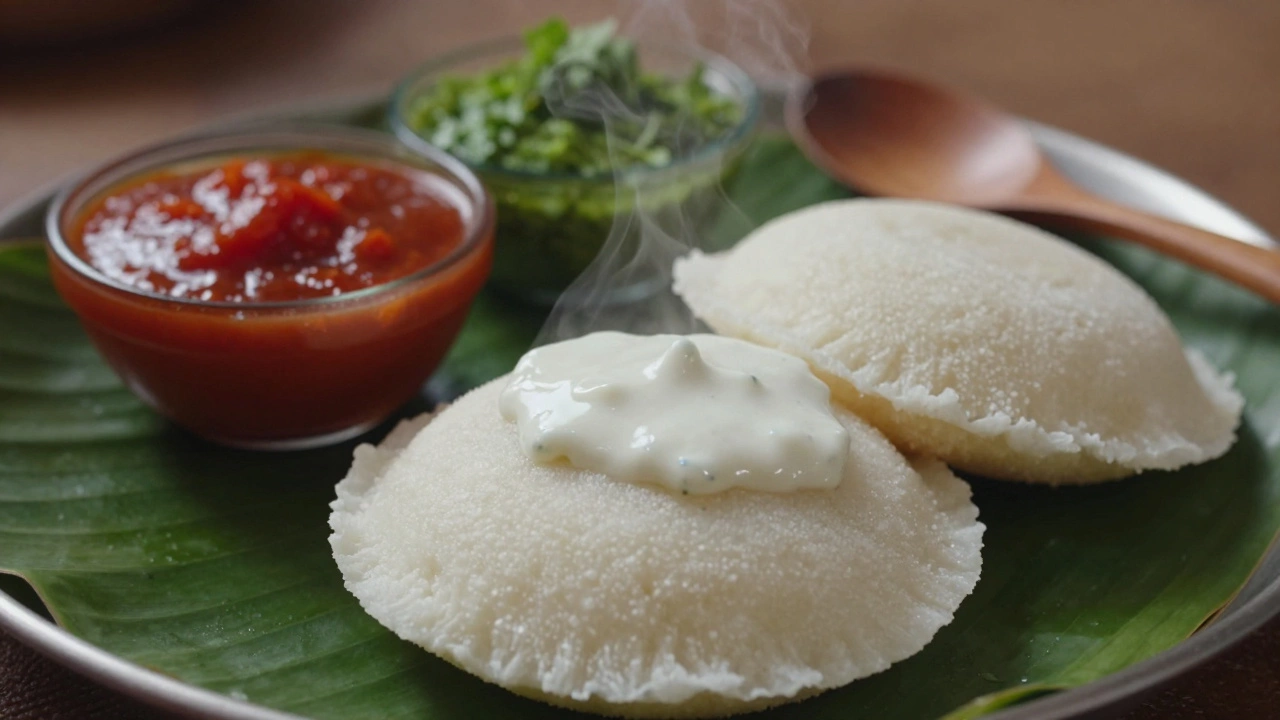
It’s the quiet hero of South Indian breakfasts. Served with idli or dosa, it doesn’t shout. It whispers. But without it, the meal feels incomplete. I’ve seen people eat three idlis with just this chutney and a cup of filter coffee - no sugar, no butter, no fuss. That’s the power of balance.
Tomato chutney: tangy, umami, and deeply savory
Tomato chutney is what happens when you cook down tomatoes with garlic, onions, cumin, and a little jaggery. It’s thick, sticky, and smells like a kitchen after a long day of cooking. The tomatoes break down into a rich paste, and the sugar brings out their natural sweetness. But the magic? The cumin and mustard seeds that crackle in hot oil before being stirred in. That’s the aroma that sticks to your clothes.
This chutney is the opposite of fresh. It’s cooked slow, sometimes for hours, until it turns dark red and glossy. It’s the kind you’ll find in a jar on the shelf, waiting to be spooned over rice or dal. It’s not meant to be eaten right away. It’s meant to age, to deepen, to get better over time.
Why chutney matters - it’s not just a side
Chutney isn’t an afterthought. It’s the seasoning that ties everything together. In a plate of biryani, a spoonful of mint chutney cuts through the richness. With a plate of pakoras, tamarind chutney stops the oil from feeling heavy. Even plain rice benefits from a dollop of coconut chutney - it adds texture, flavor, and soul.
People think of chutney as a condiment. But in Indian cooking, it’s more like a seasoning layer. You don’t just add salt. You add chutney. It’s how you adjust the mood of a meal. Too bland? Add heat. Too rich? Add sour. Too dry? Add creaminess.

How to know if a chutney is good
There’s no single right way. But here’s what makes a chutney work:
- Balance - sweet, sour, spicy, salty - none should drown the others.
- Texture - it should be thick enough to cling, not runny like sauce.
- Freshness - if it tastes flat or dull, it’s been sitting too long.
- Complexity - you should taste more than one thing. If it’s just sweet or just hot, it’s not chutney. It’s syrup or hot sauce.
Try this test: put a tiny spoonful on your tongue. Let it sit for five seconds. If it changes flavor as it warms up - if the heat grows, the sourness blooms, the sweetness lingers - you’ve got a good one.
What to pair chutney with
Chutney isn’t picky. It works with almost anything:
- Mango - with grilled chicken, fish tacos, even cheese toasties
- Tamarind - with fried snacks, roasted vegetables, or as a glaze for tofu
- Green - with grilled meats, sandwiches, or as a dip for raw veggies
- Coconut - with rice bowls, steamed dumplings, or plain yogurt
- Tomato - with dal, lentils, or scrambled eggs
My favorite? A spoon of green chutney on a cold leftover roti. No heat. No fuss. Just the sharp, clean taste of herbs and chilies. It’s my version of comfort food.
Chutney is personal
Every family has a chutney they swear by. My neighbor’s grandmother makes a pomegranate chutney with black salt and roasted cumin. It tastes like summer and spice and memory. My friend’s mom adds roasted peanuts to her coconut chutney - crunchy, nutty, unexpected.
There’s no right or wrong. The only rule is: if it makes you want another bite, it’s good. If it makes you smile, it’s perfect.
Try making one. Just one. Start with mango - it’s forgiving. Add a little sugar, a little vinegar, a chili or two. Taste as you go. Adjust. Make it yours. Then serve it with something simple. Watch how it changes everything.
Is chutney the same as salsa?
No. Salsa is usually raw, chunky, and tomato-based, with lime and cilantro. Chutney can be raw or cooked, and it’s built on balance - sweet, sour, spicy, salty - with ingredients like tamarind, jaggery, coconut, or roasted lentils. Chutney is more complex and often has a thicker texture.
How long does homemade chutney last?
Fresh chutneys like mint or coconut last 3-5 days in the fridge. Cooked chutneys like mango or tomato can last up to 3 weeks if stored in a clean, airtight jar. For longer storage, freeze in small portions - they keep well for 3-4 months.
Can I make chutney without sugar?
Yes. Many traditional chutneys use jaggery, dates, or ripe fruit for natural sweetness. If you’re avoiding sugar, use mashed ripe mango, dates, or a splash of apple cider vinegar to balance sourness. The key is taste - adjust slowly until the flavors feel right.
Why does my chutney taste bitter?
Bitterness usually comes from over-toasting spices, using old or bitter coriander, or too much tamarind pulp without enough sweetness. To fix it, add a pinch of salt or a teaspoon of jaggery. If it’s still bitter, blend in a spoon of yogurt or coconut milk to mellow it out.
What’s the easiest chutney to start with?
Mint-coriander chutney. Just blend fresh mint, coriander, one green chili, a clove of garlic, a squeeze of lemon, and a pinch of salt. Add water to thin it. It takes five minutes, needs no cooking, and goes with everything.
If you’ve never made chutney before, start small. A jar, a blender, and an hour of your time. Taste it. Adjust it. Make it yours. Then serve it with something plain. Watch how it changes everything.