Chutney Taste: What Makes It Bold, Balanced, and Irreplaceable
When you think of chutney taste, the vibrant, layered flavor profile of traditional Indian condiments made from fruits, herbs, or vegetables, often spiked with spices, vinegar, or jaggery. Also known as Indian condiment, it’s not just a side—it’s the soul of a meal. That burst of sour, sweet, and heat you get from a spoonful of mango chutney or coconut chutney doesn’t happen by accident. It’s the result of decades of kitchen wisdom—balancing tamarind’s punch with sugar’s mellow, letting garlic and mustard seeds sizzle in oil, and waiting just long enough for flavors to marry without losing their edge.
What makes chutney ingredients, the raw components like tamarind, green chilies, coconut, cilantro, or roasted peanuts that define each chutney’s character so powerful isn’t just what’s in them, but how they’re treated. Roasting peanuts before grinding them adds depth. Toasting cumin seeds releases oils that raw ones never can. Even the water you use to blend it matters—tap water can dull the brightness, while filtered water keeps the flavors clean. And then there’s chutney storage, the method of preserving chutney through heat, vinegar, sugar, or sealing in sterilized jars to extend shelf life without losing flavor. Cool it too fast before jarring? You risk condensation and mold. Skip the vinegar? It won’t last a week in the fridge. These aren’t just tips—they’re rules passed down because they work.
And don’t forget chutney pairing, how chutney is matched with foods like dosa, samosa, tandoori chicken, or even grilled cheese to enhance or cut through richness. A spicy coconut chutney doesn’t just sit next to idli—it wakes it up. Mint chutney doesn’t just accompany a samosa; it cuts through the fried heaviness like a fresh breeze. That’s why you’ll never find a South Indian meal without at least one chutney on the side. It’s not an afterthought. It’s the finisher, the balance, the flavor anchor.
What you’ll find below isn’t just a list of articles. It’s a deep dive into how chutney taste is made, fixed, stored, and used—from what to do when you run out of mint chutney, to why cooling it before jarring keeps it safe, to how British chutney differs from Indian versions. Whether you’re trying to fix a bland batch, figure out what to eat it with, or just understand why your grandma’s chutney tasted better than anything you can buy, these posts have the answers. No fluff. Just real kitchen truth.
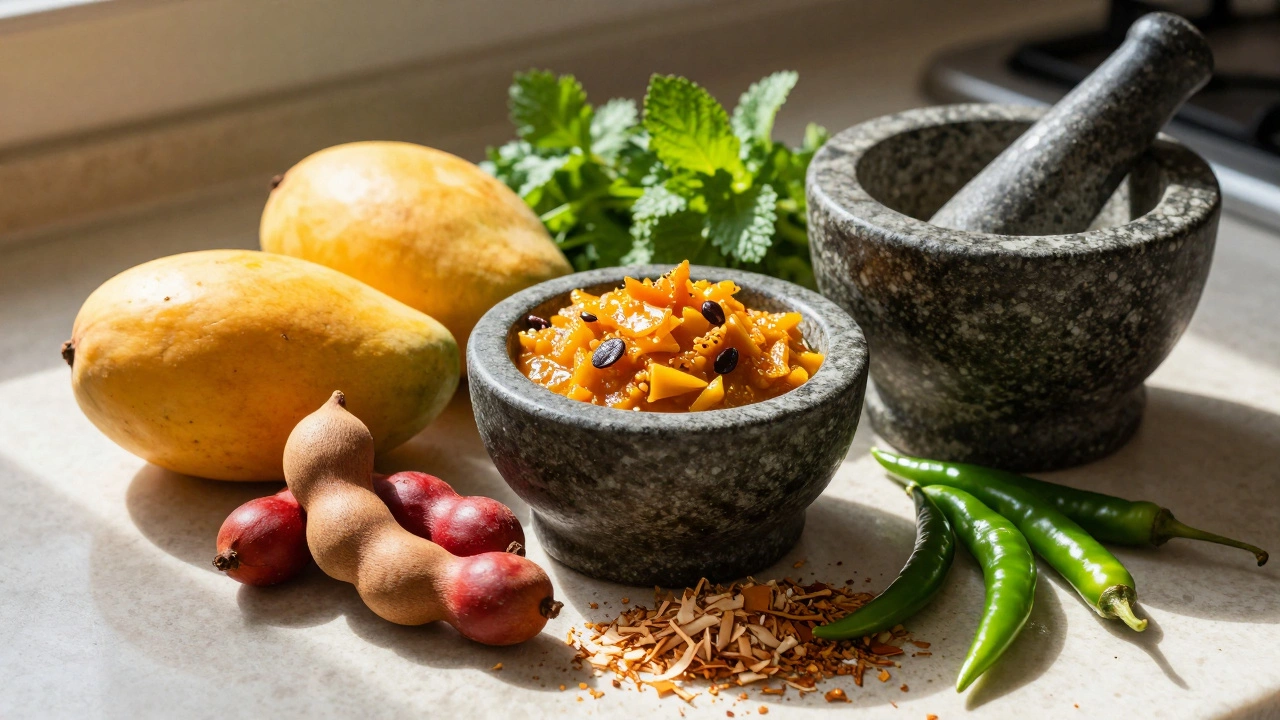
What Does Chutney Taste Like? A Real Guide to Flavor Profiles
Chutney isn't just spicy or sweet - it's a balance of sour, salty, and fresh flavors that transform meals. Learn what different types taste like and how to use them.
learn more