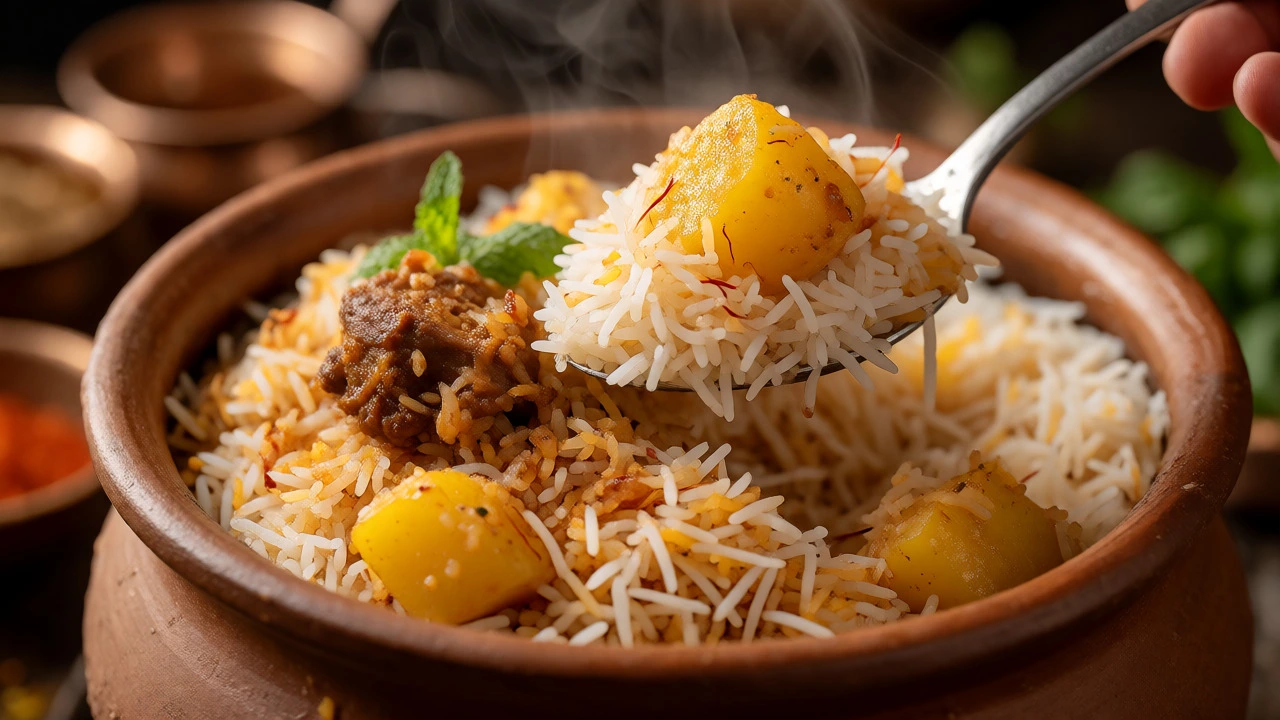
Biryani Regional Identifier
Confused by the debate over potatoes in biryani? Answer a few questions about your dish to identify its likely regional origin.
You’re at a dinner party, or maybe you just ordered your favorite comfort food from that local spot down the street. You dig into the fragrant mound of rice, expecting tender meat and aromatic spices. Then, you hit it: a soft, yellow chunk of potato sitting right there in the middle of your biryani is a spiced rice dish originating from the Indian subcontinent, traditionally cooked with meat, vegetables, eggs, or seafood.. If you’re from North India or Pakistan, this might feel like a culinary crime. Why is there potato in biryani? Isn’t it supposed to be about the meat? Or if you’re from Hyderabad, you might wonder why anyone would question it at all. It’s not a mistake. It’s not a cost-cutting measure by lazy chefs. That humble tuber plays a critical role in the chemistry, texture, and flavor profile of one of India’s most famous dishes.
The confusion usually stems from regional differences. In Lucknow, Kolkata, or Karachi, biryani often skips the potato entirely. But in Hyderabad, the potato isn’t just an ingredient; it’s a structural necessity. To understand why, we have to look beyond the plate and into the pot-specifically, the sealed clay pot used for dum cooking. This article breaks down the science, history, and practical reasons behind the potato’s presence, helping you decide whether to keep it, ditch it, or embrace it in your own kitchen.
The Science of Moisture and Steam
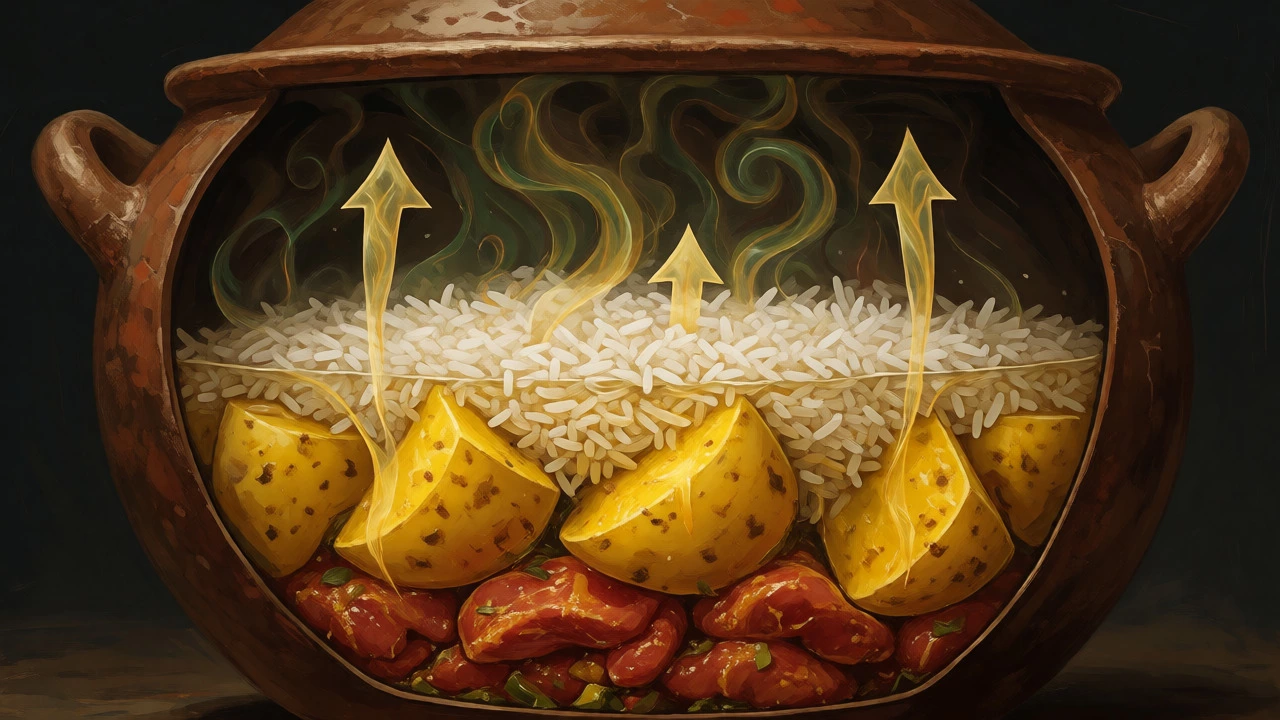
Biryani is technically a form of dum pukht is a slow-cooking technique where food is sealed in a pot with dough to trap steam., a method where ingredients are layered and then steamed over low heat until fully cooked. The magic happens because nothing escapes. The lid is sealed tight, often with wheat flour dough, trapping every bit of moisture inside. Now, imagine what happens when you cook raw basmati rice and raw meat together in this sealed environment. The meat releases juices, yes, but rice needs consistent, even hydration to cook properly without becoming mushy or staying hard in the center.
This is where the potato steps in as a moisture regulator. Potatoes have a high water content and a dense cellular structure. When placed in the layers of the biryani pot, they act like sponges. They absorb excess liquid from the marinade and meat juices during the initial heating phase. As the temperature rises, the potatoes release that moisture back out slowly as steam. This creates a humid micro-environment around the rice grains, ensuring they cook evenly from top to bottom. Without this buffer, you risk two common disasters: dry, undercooked rice on top or soggy, broken rice at the bottom. The potato balances the equation, keeping the rice fluffy and distinct.
Flavor Absorption and Distribution
If you’ve ever made a stew or curry, you know that starch loves flavor. Potatoes are bland on their own, which makes them perfect vehicles for carrying taste. In a biryani pot, the air space between layers is filled with aromatic steam infused with saffron, mint, fried onions, and whole spices like cardamom and cloves. The potato surface area is large and porous once cooked, allowing it to soak up these volatile aromatics.
Think of it this way: the meat provides the savory depth (the umami), the rice provides the base, but the potato acts as a flavor amplifier. It captures the essence of the marinade and the steam, becoming intensely flavorful itself. When you bite into that potato, you get a concentrated burst of the biryani’s soul. Some home cooks even argue that the potato is the best part of the dish precisely because it absorbs more spice than the meat does. Meat fibers can be tough and resist penetration, but a well-cooked potato lets those flavors seep deep into its core.
Historical Context: The Nizams’ Kitchen
To truly answer "why," we need to travel back to the 18th century and the court of the Nizams of Hyderabad. Hyderabadi Biryani is a specific style developed in the royal kitchens of Hyderabad, known for its use of raw marinated meat and dum cooking. didn’t start as a street food staple; it was royal cuisine. Historical accounts suggest that the inclusion of potatoes was likely influenced by the availability of ingredients and the preferences of the royal palate. Unlike the Mughal-influenced Awadhi biryanis of Lucknow, which focused heavily on delicate meats and subtle spices, the Deccan region had access to different agricultural products.
Potatoes were introduced to India by the Portuguese in the early 17th century and became widely cultivated in the southern regions. By the time Hyderabadi biryani evolved into its current form, potatoes were abundant and cheap. Royal chefs, always looking for ways to stretch expensive meats while maintaining volume and satisfaction, found that potatoes complemented the heavy, spicy profiles of Deccan cooking. Over generations, this practical choice became tradition. What started as economic pragmatism turned into a cultural signature. Today, removing the potato from a Hyderabadi biryani feels wrong to locals for the same reason removing pickles from a burger feels wrong to Americans-it’s just not complete.
Regional Variations: Who Uses Potato and Who Doesn’t?
Not all biryanis are created equal. The presence of potato is a major marker of regional identity. If you see potato, you’re likely looking at a South Indian or Deccan-style preparation. If you don’t, you’re probably dealing with a North Indian or Pakistani variant. Let’s break down the map.
| Biryani Style | Region | Potato Included? | Primary Focus |
|---|---|---|---|
| Hyderabadi Kacchi | Telangana, Andhra Pradesh | Yes, essential | Raw meat, intense spices, dum cooking |
| Lucknowi Pakki | Uttar Pradesh | No | Pre-cooked meat, subtle aromas, ghee |
| Kolkata Biryani | West Bengal | Yes, prominent | Mild spice, yogurt, boiled egg, potato |
| Sindhi Biryani | Sindh, Pakistan | Usually No | Plums, potatoes sometimes, tangy tomato |
| Thalassery Biryani | Kerala | No | Short-grain rice, cashews, raisins |
Notice how Kolkata biryani also uses potatoes, but for different reasons. In Kolkata, the dish evolved among poor communities who couldn’t afford much meat. The potato became a primary protein source, often replacing the chicken or mutton entirely in cheaper versions. Here, the potato isn’t just a moisture balancer; it’s the star. In contrast, in Lucknow, the focus is on the delicacy of the meat. Adding a starchy vegetable would muddy the refined flavors of the saffron and rose water, so it’s strictly excluded.
Culinary Benefits Beyond Moisture
Let’s talk about texture. Rice is uniform. Meat is fibrous. Where is the contrast? The potato provides a creamy, yielding texture that contrasts beautifully with the firmness of the rice and the chewiness of the meat. This textural variety keeps the eating experience interesting. You aren’t just chewing through similar consistencies repeatedly. The softness of a perfectly cooked potato melts in your mouth, offering a moment of relief and richness.
There’s also the issue of binding. While not a binder in the traditional sense like flour, the starch released from the potatoes helps lightly coat the rice grains. This prevents them from sticking together in clumps, promoting that desired "separate grain" aesthetic that defines good biryani. Additionally, potatoes help stabilize the acidity of the yogurt-based marinades often used in Hyderabadi recipes. Yogurt can curdle if heated too quickly or unevenly. The potato buffers the heat and acid interaction, resulting in a smoother, more cohesive gravy layer at the bottom of the pot.
Should You Add Potato to Your Homemade Biryani?
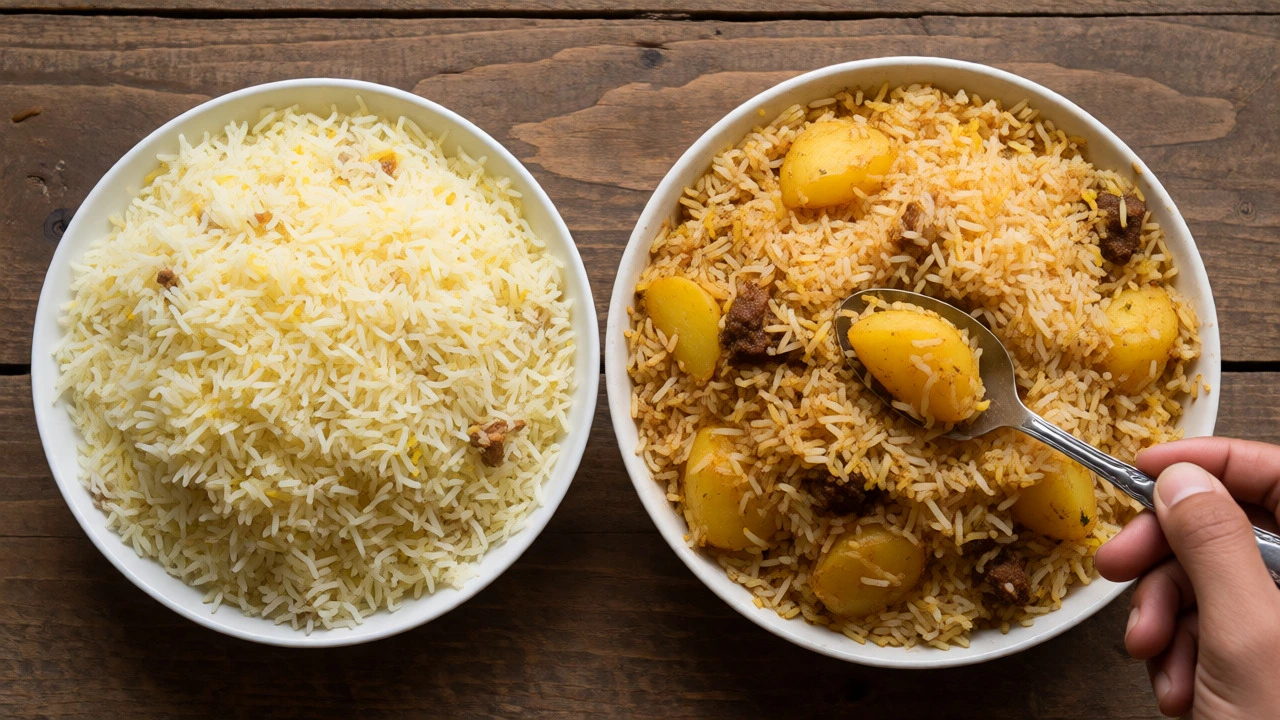
If you’re trying to replicate authentic Hyderabadi biryani at home, skip the potato at your own risk. You’ll miss out on the authentic flavor profile and moisture balance. However, if you’re making a quick weeknight version or prefer a lighter meal, you can omit it. Just be aware that you might need to adjust your liquid ratios slightly. Since the potato won’t be releasing extra steam, you may need a splash more broth or water to ensure the rice cooks through.
For those who do include it, here are some pro tips to make sure the potato shines rather than dominates:
- Cut Size Matters: Cut potatoes into medium-sized chunks, about 1.5 inches wide. Too small, and they dissolve into mash. Too big, and they stay raw in the center while the rice burns.
- Par-boil Optional: Some chefs par-boil potatoes for 5 minutes before adding them to the pot. This ensures they cook evenly with the rice. Others throw them in raw, trusting the long dum process. Raw works best if your heat control is precise.
- Placement: Place potatoes near the bottom, close to the meat. This allows them to absorb the richest juices first. Avoid putting them directly against the hottest part of the flame unless using a diffuser, as they can burn easily.
- Quality Check: Use waxy potatoes like Yukon Gold or local varieties suited for boiling. Starchy russets tend to fall apart too much, turning your biryani into a thick porridge.
Debunking Myths: Is Potato a Cheap Filler?
Critics often claim that restaurants add potatoes to bulk up the dish cheaply. While it’s true that potatoes are inexpensive, reducing their role to mere filler ignores their functional importance. If cost were the only factor, restaurants could add cabbage or carrots, which are equally cheap. But neither has the same moisture-regulating properties or flavor-absorbing capacity as the potato. The consistency across thousands of years and millions of plates suggests a deliberate culinary choice, not just economic opportunism.
Furthermore, high-end Hyderabadi restaurants still serve biryani with premium meats and generous portions, yet they keep the potato. If it were purely about cutting costs, they’d remove it when serving expensive mutton or prawn biryanis. They don’t. This proves that the chef values the contribution the potato makes to the final product. It’s an ingredient respected for its utility, not just its price tag.
Can I remove potato from Hyderabadi biryani?
Yes, you can remove it, but the result will differ from the traditional recipe. The rice may become drier or require more liquid adjustment, and you will lose the unique flavor absorption that potatoes provide. It remains delicious, but it won't taste exactly like authentic Hyderabadi biryani.
Which type of potato is best for biryani?
Waxy potatoes hold their shape better during long cooking processes. In India, local varieties like Chandramukhi are commonly used. Globally, Yukon Golds are a good substitute. Avoid very starchy baking potatoes as they tend to disintegrate.
Do all Indian biryanis contain potato?
No. Potato is primarily found in Hyderabadi and Kolkata styles. Lucknowi, Sindhi, and Thalassery biryanis typically do not include potatoes, focusing instead on the purity of the meat and rice flavors.
Why is my potato raw in the biryani?
This usually happens if the potato pieces are too large or if the heat was too high, causing the rice to cook faster than the dense potato. Try cutting smaller chunks or par-boiling the potatoes for 3-5 minutes before layering.
Is potato necessary for vegetarian biryani?
In many vegetable biryanis, especially in South India, potatoes are almost always included. They provide substance and texture that other vegetables like peas or carrots cannot match in terms of absorbing the heavy spice mix.