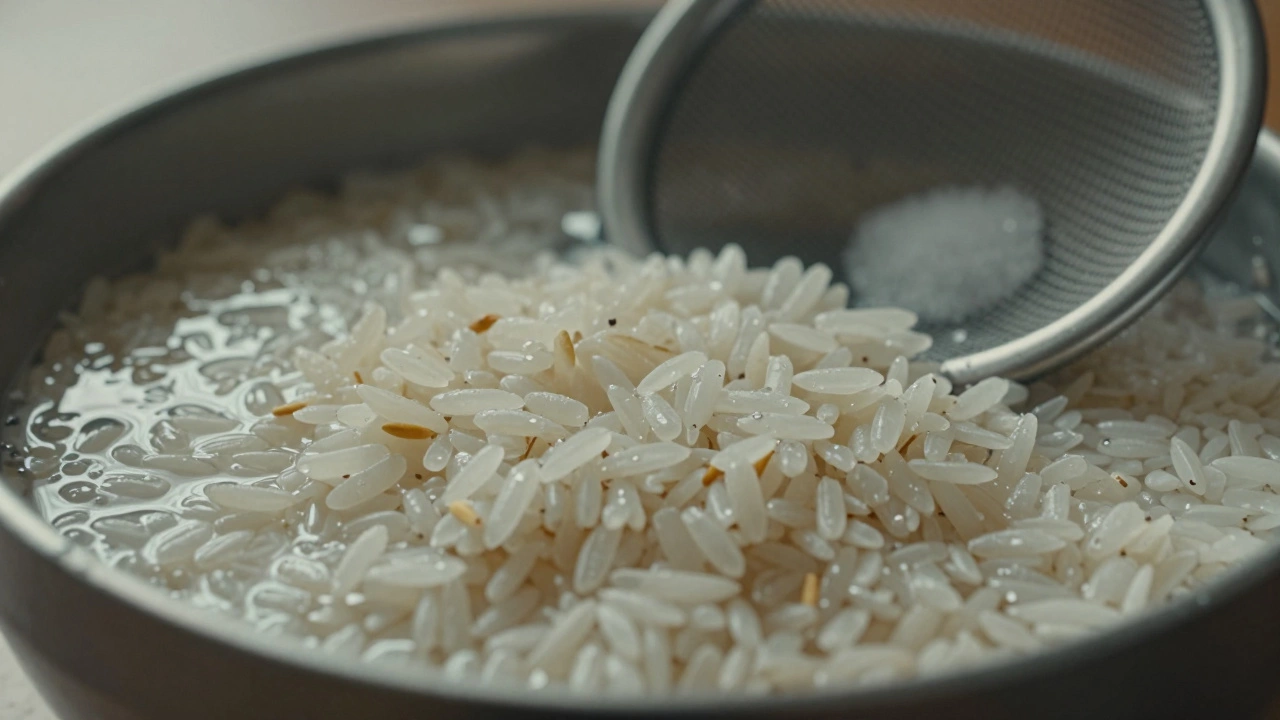
Ever made biryani and ended up with mushy rice? Or worse-gritty, undercooked grains stuck to the bottom of the pot? It’s not your spice blend. It’s not even your cooking time. More often than not, the problem starts before you even turn on the stove: soaking rice.
Soaking rice isn’t just tradition-it’s physics
You’ve seen recipes say: "Soak basmati rice for 30 minutes." But why? Why not just rinse and cook? If you’ve ever wondered if this step is just cultural habit passed down from your grandmother, the answer is no. Soaking rice is a critical step backed by how starch and water interact.
Basmati rice, the kind most used in biryani, has long, slender grains with a high amylose content. That’s the type of starch that stays firm and doesn’t turn gluey when cooked. But that same starch is tightly packed. Without soaking, the water can’t penetrate deep enough before the outside turns mushy from heat. The result? Grains that are soft on the outside but hard in the middle-exactly what you don’t want in biryani.
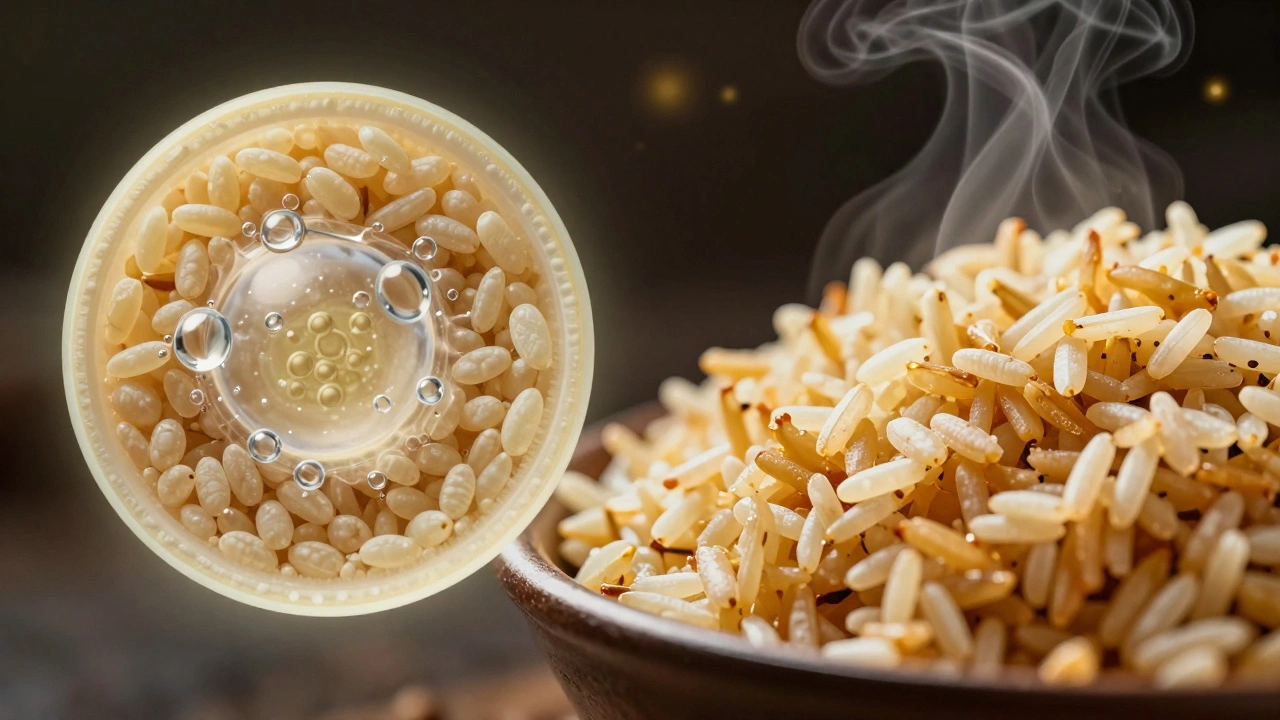
Soaking gives the rice a head start. In 30 minutes, the grains absorb enough water to swell slightly, softening the outer layer just enough so that when you par-cook them later, the heat travels evenly through the whole grain. This means every grain finishes cooking at the same time. No crunchy centers. No overcooked mush.
What happens if you skip soaking?
Let’s say you’re in a hurry. You rinse the rice, dump it in boiling water, and move on. You might think you’re saving time. But you’re not. You’re just trading time now for frustration later.
Unsoaked basmati rice takes longer to cook. That means you have to boil it longer to get it halfway done before layering it with meat and spices. But the longer you boil it, the more the grains break down. They start to stick together. The distinct, separate grains you want in biryani? Gone. Instead, you get a sticky, clumpy mess that looks more like risotto than biryani.
And here’s the hidden cost: if you undercook the rice because you’re afraid of overdoing it, you’ll end up with hard bits in the final dish. That’s not just unpleasant-it’s unsafe. Raw starch can harbor bacteria if not fully gelatinized. Soaking reduces the risk and ensures even cooking.
How long should you soak it? And what water?
Thirty minutes is the sweet spot. Less than that? Not enough water absorption. More than an hour? The grains start to soften too much. You’ll lose that signature bite.
Use cold water. Not hot. Not warm. Cold. Hot water can begin cooking the rice prematurely, especially if you’re using a warm kitchen. Cold water lets the starch absorb slowly and evenly. You can add a pinch of salt to the soaking water-it helps season the rice from the inside out. But don’t add oil. That creates a barrier and stops water from penetrating.
Pro tip: After soaking, drain the rice well. Don’t just pour it into the pot. Use a fine-mesh strainer. Excess water on the surface will throw off your cooking time. You want the rice damp, not dripping.
Why not just rinse it instead?
People often confuse rinsing with soaking. Rinsing removes surface starch-that’s good. It stops the rice from sticking together during cooking. But rinsing doesn’t hydrate the grain. It’s like wiping the outside of a dry sponge. You clean it, but it still won’t hold water.
Soaking is hydration. Rinsing is cleaning. You need both. Rinse the rice under cold water until the water runs clear. Then soak it. Don’t skip either step.
What if you’re short on time?
Life happens. You forgot to soak the rice. You’re hosting dinner in an hour. What now?
There’s a workaround. Place the rinsed rice in a bowl and cover it with hot (not boiling) water. Let it sit for 15 minutes. It won’t be as perfect as a 30-minute soak, but it’ll be close. The heat speeds up absorption. Just be careful not to overdo it. After 15 minutes, drain and proceed with par-cooking. Test a grain. It should bend slightly without snapping.
Another option: Use pre-soaked, parboiled basmati rice (sometimes labeled as “sella” or “converted” rice). It’s been soaked and steamed before packaging. It’s more forgiving and cooks faster. But it’s not the same. You lose some of the aroma and length. It’s a compromise, not a replacement.
How soaking affects flavor and texture
Good biryani isn’t just about spices. It’s about balance. The rice should be a canvas-not a competitor. Soaked rice absorbs the flavor of the broth or saffron water you cook it in. It carries the fragrance of cardamom and bay leaf deeper into the grain.
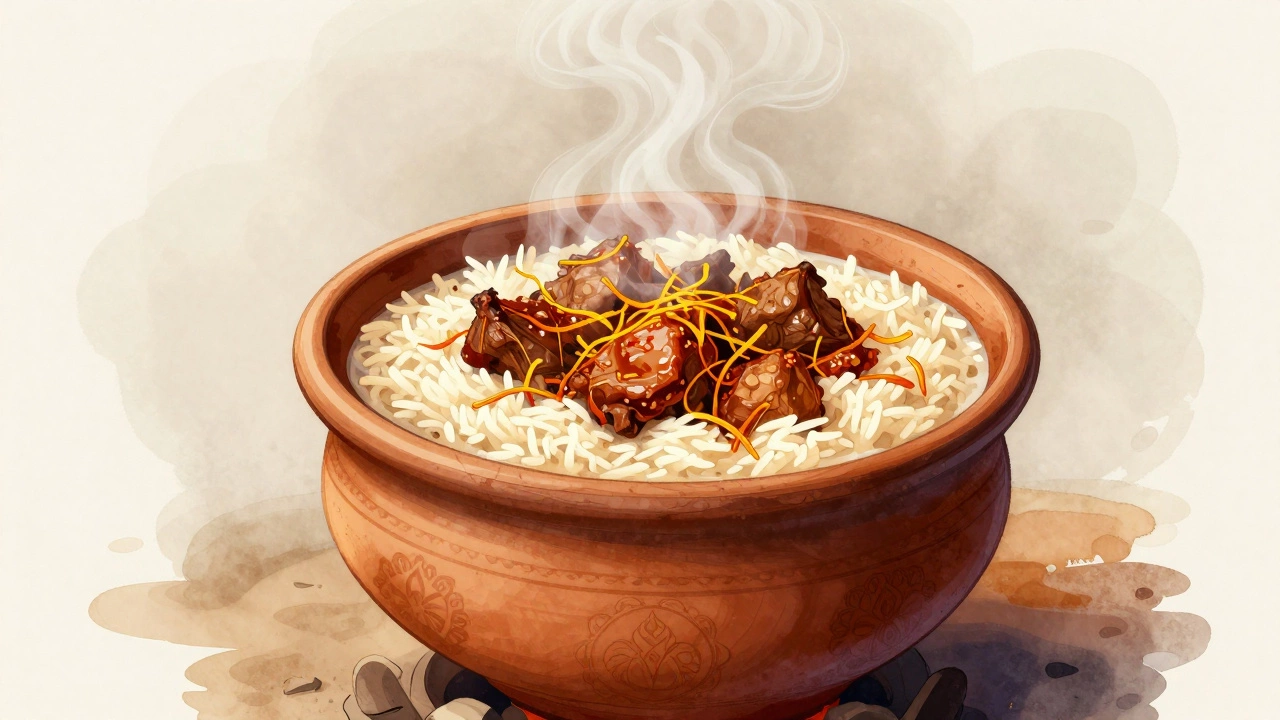
When you layer the par-cooked rice with marinated meat, yogurt, fried onions, and saffron milk, the rice doesn’t just sit there. It breathes. It soaks up the steam and the oils. That’s the magic of dum cooking-the slow, sealed steam that melds everything together.
Without soaking, the rice acts like a sponge that’s still dry in the center. It won’t absorb the flavors. It’ll just sit there, bland and separate. The whole dish feels disconnected.
Common mistakes people make with soaked rice
- Soaking too long-grains get mushy before cooking even starts.
- Not draining properly-extra water dilutes the cooking liquid and makes rice soggy.
- Using the wrong rice-jasmine or short-grain rice won’t work the same way. Stick to aged basmati.
- Skipping the par-cook-soaking alone isn’t enough. You still need to cook the rice halfway before layering.
One mistake I see over and over: people think soaking makes the rice fully cooked. It doesn’t. Soaking prepares it. Par-cooking finishes it. That’s two separate steps. Don’t treat them as one.
Real-world example: My first biryani disaster
Years ago, I tried making biryani for the first time. I skipped soaking because I was late for work. I boiled the rice for 8 minutes like the recipe said. When I layered it, the rice was still crunchy in the middle. I thought, "Maybe the heat will finish it." It didn’t. The dum cooking just made the top layer soggy while the bottom stayed hard.
I threw it out. Felt stupid. But I learned. Now, I set a timer for 30 minutes the night before. I rinse, soak, drain, and label the bowl. It’s not extra work-it’s the foundation. Everything else builds on it.
Final tip: Test the rice before layering
After par-cooking, take out a grain. Squish it between your fingers. It should be soft on the outside but still have a slight resistance in the center-like a firm pea. That’s perfect. If it’s completely soft, you’ve overcooked it. If it snaps hard, keep boiling for another minute.
That one test saves you from a ruined biryani every time.
Can I soak rice overnight for biryani?
No. Soaking basmati rice overnight makes it too soft. The grains will break apart during par-cooking and turn mushy in the final dish. Stick to 20-30 minutes. If you’re preparing ahead, rinse and drain the rice, then store it in the fridge for up to 12 hours before par-cooking.
Does soaking rice reduce arsenic?
Yes, soaking rice can reduce arsenic levels by up to 50%, according to research from the University of Sheffield. This is especially helpful if you eat rice frequently. Always rinse well before soaking, and drain the soaking water-don’t reuse it for cooking.
Can I use brown basmati rice for biryani?
You can, but it’s not ideal. Brown basmati has the bran layer intact, which makes it chewier and takes much longer to cook. You’d need to soak it for 1-2 hours and par-cook it for 15-20 minutes. The texture won’t be as light or aromatic as white basmati. It’s a healthier option, but it changes the dish.
Why does my biryani rice stick to the pot?
It’s usually because the rice wasn’t soaked or drained properly, or you didn’t use enough fat. Always use ghee or oil when layering. Also, make sure the pot is heavy-bottomed. Thin pots heat unevenly and burn the bottom. A good seal with dough or foil during dum cooking helps too.
Should I use aged basmati rice?
Yes. Aged basmati (1-2 years old) has lower moisture content, which means the grains stay longer and fluffier when cooked. It also has a stronger aroma. Look for packaging that says "aged" or "extra long grain." It’s worth the extra cost for authentic biryani.