Dosa Rice-to-Urad Dal Ratio Calculator
Discover the science behind dosa batter ratios. Enter your urad dal quantity to calculate the perfect rice amount for crispy, lacy dosas based on traditional South Indian fermentation principles.
Traditional ratios range from 3:1 to 4:1 (rice:urad dal). The exact ratio depends on your desired texture and rice type.
Result
Your dosa batter requires [rice amount] grams of rice.
Fermentation time: [estimated time]
Expected texture: [description]
Tip: [Specific tip based on rice type]
Pro Tip: Traditional South Indian cooks often add 1 tablespoon of cooked rice to the batter. This provides ready-made starch granules that speed up fermentation and enhance crispness.
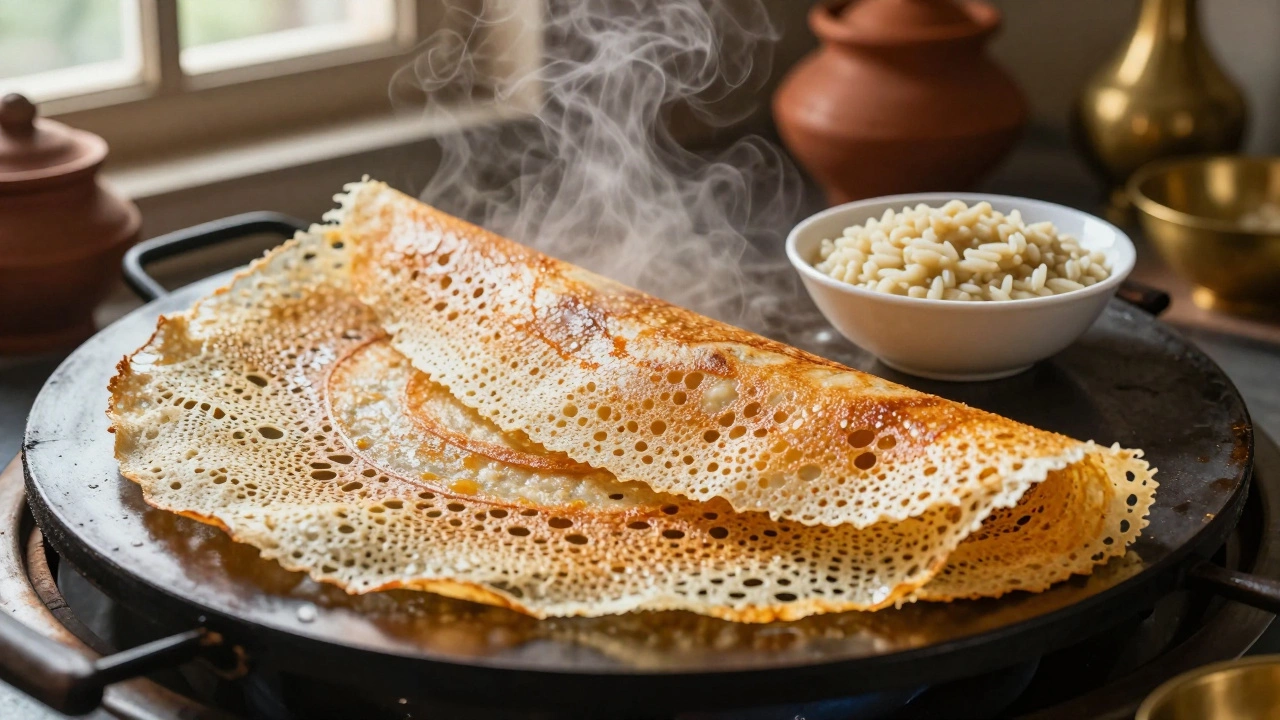
Ever wondered why every traditional dosa recipe calls for rice? It’s not just tradition-it’s chemistry. If you’ve ever made dosa with just urad dal or used only lentils, you know it doesn’t crisp up the same way. The rice isn’t there to bulk it up. It’s the secret to that golden, lacy, shatteringly crisp texture you get at a street stall in Chennai or a home kitchen in Bangalore.
The Role of Rice in Fermentation
Rice isn’t just a starch-it’s the fuel for fermentation. When you mix soaked rice with urad dal and leave it overnight, the natural bacteria and yeast in the air start breaking down the starches. Rice, especially parboiled or idli rice, has a high amylose content. That’s the type of starch that holds up during fermentation and gives the batter structure. Urad dal, on the other hand, is rich in proteins and enzymes that help the batter rise. Together, they create the perfect balance: rice gives body, dal gives lift.
Try making dosa batter with only urad dal. You’ll get a thick, sticky paste that bubbles but never spreads thin. It’ll puff up like a pancake, but won’t crisp. Rice provides the right texture for the batter to flow like silk when poured, then set into delicate, brittle edges.
Why Not Use Other Grains?
You might think: why not use oats, quinoa, or even millet? They’re healthy, right? But here’s the catch-rice has a very specific starch profile that other grains don’t replicate. Oats have beta-glucans that make batter gummy. Quinoa contains saponins that can make the batter bitter. Millet ferments fast but doesn’t hold moisture the same way, leading to dry, crumbly dosas.
Traditional South Indian cooks use a 3:1 or 4:1 ratio of rice to urad dal. That’s not arbitrary. Studies from the Central Food Technological Research Institute in Mysore show that this ratio creates the ideal pH drop during fermentation-around 4.5 to 5.0-which is perfect for flavor development and microbial safety. Lower pH means less risk of harmful bacteria and better taste.
The Difference Between Rice Types
Not all rice is the same in dosa batter. Long-grain parboiled rice (like Ponni or Sona Masoori) is the gold standard. Parboiling changes the starch structure-it gelatinizes partially, making the rice more absorbent and less likely to turn mushy. Regular white rice works, but the dosas won’t be as crisp. Brown rice? It adds fiber, but the bran interferes with fermentation. You’ll need longer soaking and fermentation times, and even then, the texture suffers.
Some home cooks add a tablespoon of cooked rice to the batter. That’s not a trick-it’s a hack. Cooked rice adds ready-made starch granules that help the batter ferment faster and give extra crispness. It’s a trick passed down in Tamil Nadu households for decades.
Fermentation and Temperature
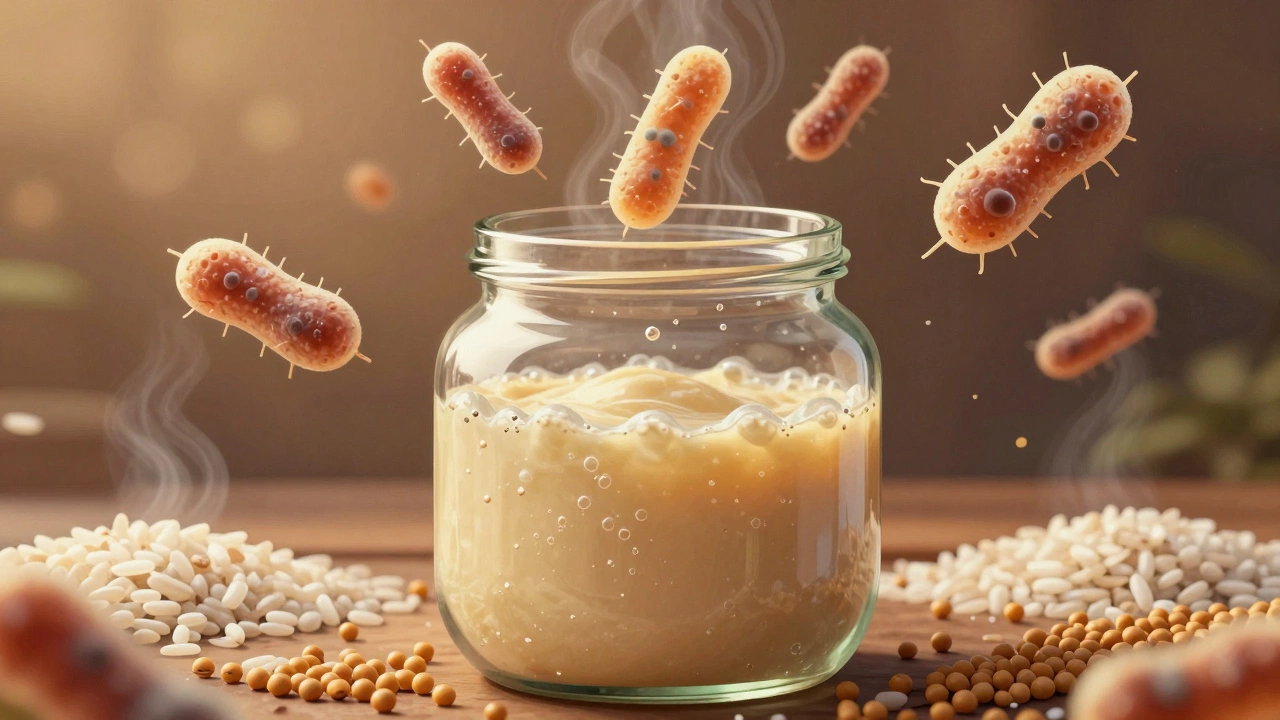
Temperature matters more than you think. In colder climates like Auckland, where the average winter temp is 12°C, dosa batter takes 12-16 hours to ferment. In Chennai, it’s done in 8. That’s because the bacteria responsible for fermentation-Lactobacillus and Leuconostoc-work best between 28°C and 32°C.
If your batter isn’t rising, don’t just wait longer. Try placing the bowl near a warm appliance-like a running oven with the light on-or wrap it in a towel and put it next to a heater. A warm water bath (not hot) works too. But never use a microwave to speed it up. That kills the good bacteria.
What Happens Without Rice?
Some people try to make dosa with just urad dal for a gluten-free or low-carb version. The result? A thick, spongy disc that sticks to the pan. It might taste okay, but it’s not a dosa. It’s more like a lentil pancake. The rice provides the structural integrity that lets the batter spread thin and form those signature holes and lacy edges.
Even in modern fusion recipes-like masala dosa wraps or vegan dosa bowls-rice is still the base. Restaurants that skip rice use rice flour as a substitute. But even that’s just a workaround. Rice flour doesn’t ferment. It just adds texture. Real dosa batter needs whole rice grains to ferment properly.
Pro Tips for Perfect Dosa Batter
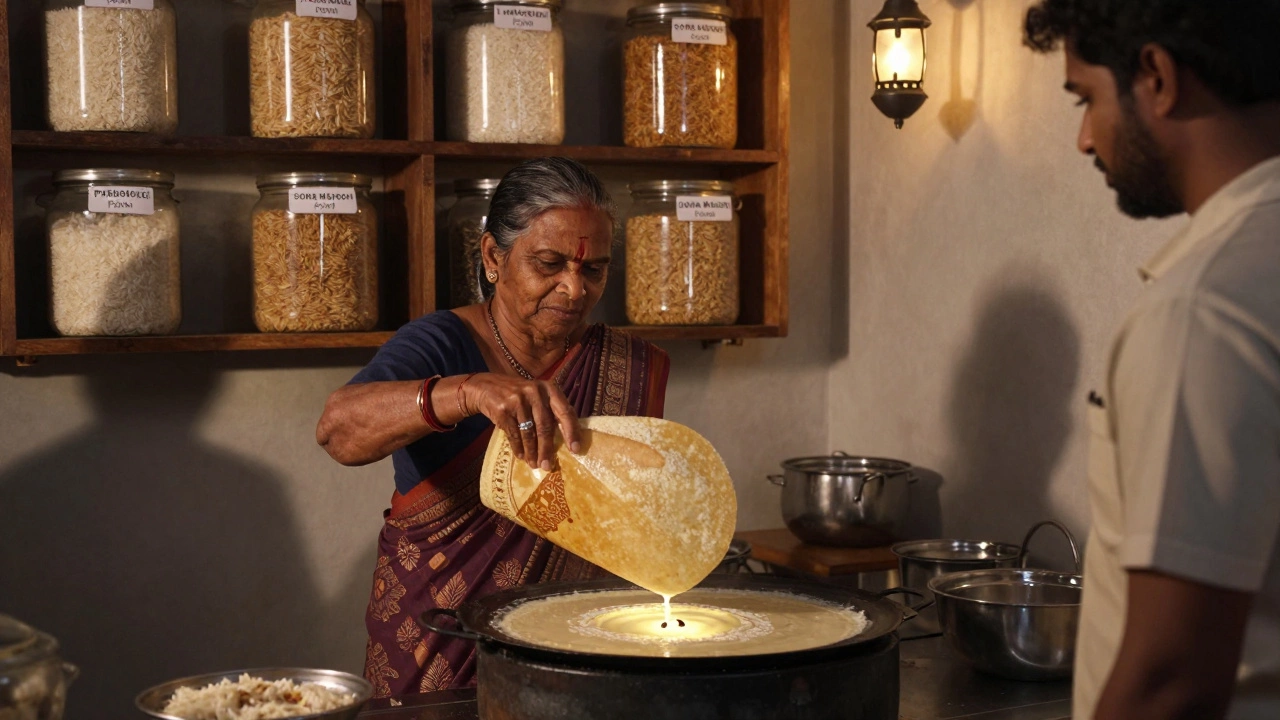
- Soak rice and urad dal separately for 4-6 hours. Urad dal absorbs water faster and can turn mushy if soaked too long with rice.
- Grind the dal first to a fluffy, airy paste. Then add rice and grind to a slightly coarse texture. That’s how you get the right air pockets.
- Use filtered water. Chlorine in tap water can slow fermentation.
- Don’t add salt before fermentation. Salt inhibits bacteria. Add it after the batter has doubled.
- Let the batter rest for 15 minutes after grinding. That lets the enzymes work before you start fermenting.
Why This Matters Beyond Taste
Adding rice isn’t just about texture-it’s about digestibility. Fermented rice and lentils are easier on the gut. The fermentation process breaks down phytic acid, which blocks mineral absorption. That’s why dosa is a staple breakfast in South India: it’s nutritious, energizing, and gentle on digestion.
Modern nutritionists now recognize this. A 2023 study from the Indian Journal of Nutrition found that fermented rice-lentil batter increased iron bioavailability by 40% compared to unfermented batter. That’s why dosa is still a go-to for kids, elders, and anyone with sensitive digestion.
Final Thought: Tradition Has a Reason
People often dismiss old recipes as outdated. But when you understand the science behind why rice is in dosa batter, you realize it’s not just tradition-it’s biology. The right rice, the right ratio, the right fermentation time. It’s a perfect system perfected over centuries.
If you want crispy, light, flavorful dosas every time, don’t skip the rice. Don’t replace it with substitutes. Work with it. Soak it right. Grind it right. Let it breathe. And when you pour that batter onto the hot tawa, you’ll hear the sizzle-that’s the sound of science working.