Milk-to-Tea Calculator
How Milk Transforms Your Tea
Based on article research: Milk proteins (casein) bind with tannins to reduce bitterness. This calculator shows optimal ratios for Indian tea varieties.
How It Works
- Tannin Reduction: Milk proteins bind with bitter tannins
- Heat Retention: Milk extends warmth by 10-15 minutes
- Nutritional Boost: Adds 3g protein + 60mg calcium per 50ml
Your Perfect Cup
Nutritional Value
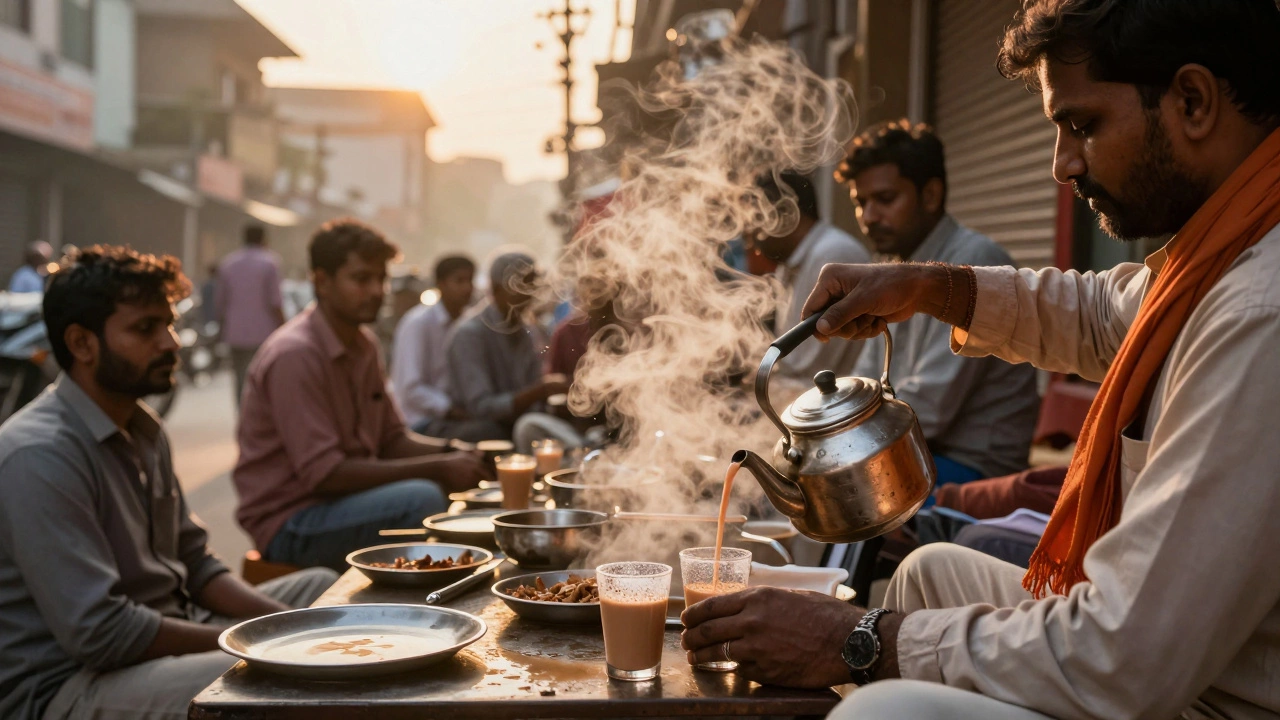
Walk into any Indian home, street stall, or office break room, and you’ll see the same ritual: a small cup of hot, milky tea being poured from a pot, steam rising, sugar dissolving. It’s not just a drink. It’s a daily rhythm. But why milk? Why not just plain tea? The answer isn’t just about taste-it’s about history, climate, and everyday survival.
The Science Behind the Milk
Indian tea isn’t brewed like English Earl Grey or Japanese green tea. Most of it is made with strong black tea leaves-often Assam or CTC (Crush, Tear, Curl) variety-that release a lot of tannins. Tannins are natural compounds that make tea taste bitter and astringent. Without milk, that bitterness can be harsh, especially when the tea is strong and boiled for minutes.
Milk doesn’t just add creaminess. It binds with those tannins. The proteins in milk, especially casein, latch onto the tannin molecules and soften their effect. The result? A smoother, less sharp cup. This isn’t a modern tweak-it’s an old trick passed down because people needed tea to be drinkable, not punishing.
And then there’s the temperature. In much of India, even in winter, the air doesn’t drop below 15°C. But early mornings, before work or school, can still feel chilly. Hot tea with milk warms you from the inside. Milk has more fat and protein than water, so it holds heat longer. A cup of milky tea stays warm for 10-15 minutes longer than plain tea. That matters when you’re rushing out the door to catch a bus or heading to a factory shift.
It’s Not Just About Comfort-It’s About Nutrition
For millions of households, especially in rural areas, breakfast isn’t a plate of eggs and toast. It’s often just tea and a piece of bread, a samosa, or a simple paratha. In places where protein and calcium intake is low, milk in tea becomes a quiet source of nutrition. A single cup of tea with 50ml of whole milk adds about 3 grams of protein and 60mg of calcium. Multiply that by two or three cups a day, and it adds up.
It’s not that people think of tea as a supplement. But over generations, families noticed that those who drank tea with milk felt less tired, stayed fuller longer, and didn’t get stomach upset as often. That’s not superstition-it’s biology. The fat in milk slows down caffeine absorption, giving a steadier energy boost instead of a spike and crash. And the calcium helps with muscle function, which matters when you’re walking miles to work or carrying heavy loads.
History: Colonial Roots, Local Rebirth
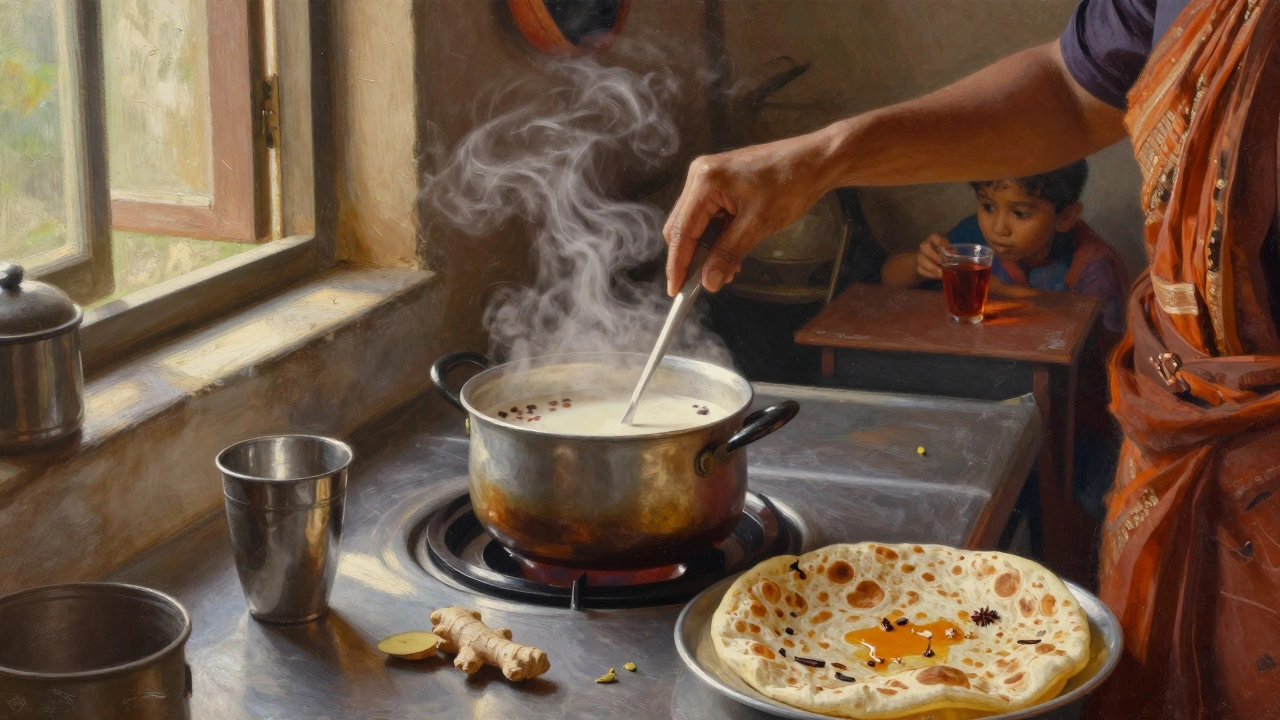
Tea wasn’t originally Indian. The British brought tea plants to Assam in the 1830s to break China’s monopoly on tea. They drank it plain, with milk and sugar, because that’s how they did it back home. But the Indian working class-railway workers, plantation laborers, factory hands-couldn’t afford to drink tea the British way. Tea leaves were expensive. So they started boiling tea leaves with water, milk, and spices like cardamom, ginger, and cloves to stretch the leaves and make the brew last longer.
That’s how masala chai was born-not as a luxury, but as a way to make do. Over time, it became a cultural staple. By the 1950s and 60s, as India’s economy grew, tea stalls popped up everywhere. The chai wallah became a fixture. And the recipe stuck: tea leaves boiled with water, milk, sugar, and spices. No one served plain tea anymore. It just wasn’t considered real tea.
Why Not Just Drink It Plain?
You might wonder: if milk softens bitterness, why not just use less tea? Because tea leaves are cheap. A single batch of leaves can be boiled and reused two or three times. Each brew gets weaker, but with milk and sugar, even the third cup tastes good. That’s the economics of it. In a country where fuel is expensive and time is tight, reusing tea leaves saves money and effort.
Also, plain tea can cause stomach discomfort for some people, especially on an empty stomach. The acidity and caffeine can trigger acidity or nausea. Milk acts as a buffer. It’s why many Indian parents give their kids tea with milk for breakfast instead of coffee or plain tea. It’s gentler.
Regional Variations You Won’t Find Elsewhere
Not all Indian tea is the same. In Kerala, they use more milk than water-sometimes even a 1:1 ratio. In Maharashtra, they boil the tea for 10 minutes with milk and spices until it turns thick and frothy. In Bengal, they prefer less milk and more sugar, sometimes even using condensed milk. In the north, you’ll find tea made with buffalo milk, which is richer and creamier than cow’s milk.
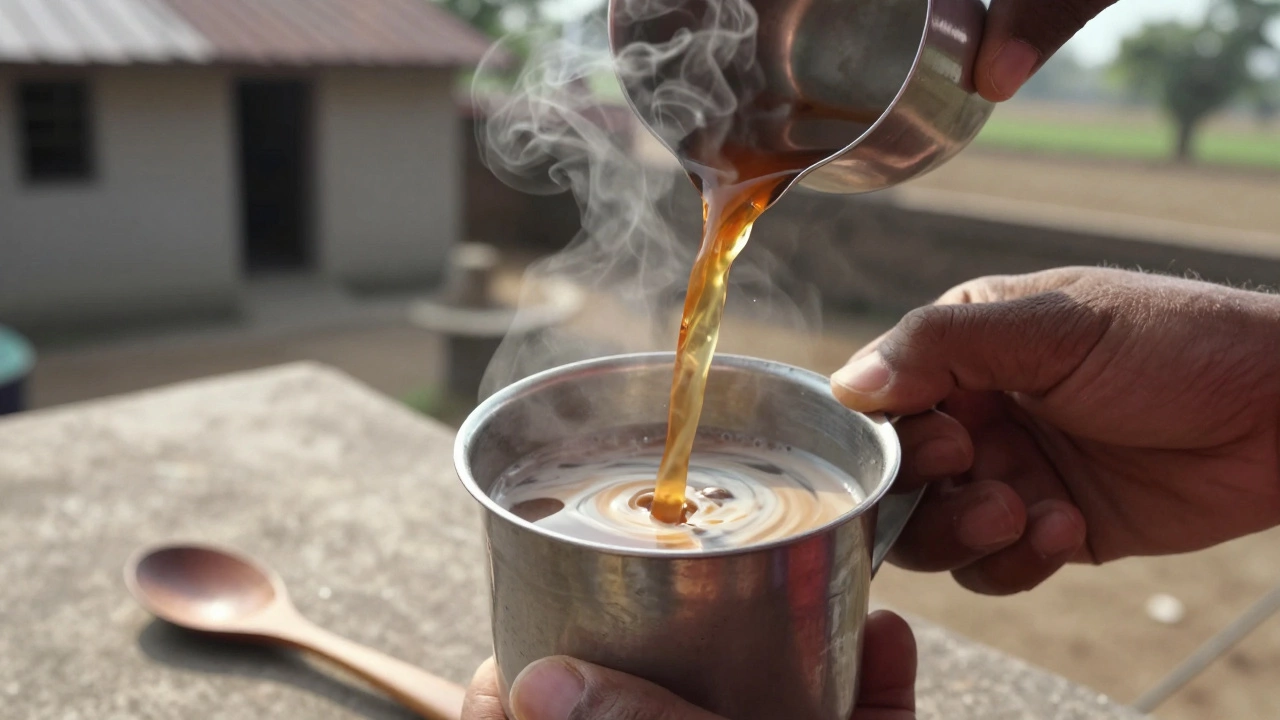
And then there’s the way it’s served. In Delhi, you get it in a small steel tumbler with a saucer. In Chennai, it’s served in a glass with a metal spoon. In rural Uttar Pradesh, it’s poured from a height to cool it down faster. Each variation reflects local resources, climate, and habits.
The Breakfast Connection
Tea with milk is the quiet engine of the Indian morning. It’s not an afterthought-it’s the first thing many people reach for. A cup of chai, a piece of toast, maybe some peanut butter or a boiled egg. That’s breakfast for millions. It’s quick, cheap, and satisfying. No oven needed. No prep time. Just boil water, add tea leaves, milk, sugar, wait two minutes, and pour.
Compare that to a Western breakfast of cereal, yogurt, and fruit. It takes time to shop, prep, and clean up. Indian tea with milk? You can make it in under five minutes. It fits into the rhythm of life where time is tight and energy matters.
What About Health Concerns?
Sure, some say milk in tea blocks antioxidant absorption. Studies show that casein can bind to catechins, reducing their effectiveness. But here’s the thing: most Indians don’t drink tea for health benefits. They drink it for warmth, energy, and comfort. And when you’re drinking two or three cups a day, you’re still getting plenty of antioxidants-just not all of them.
Also, the sugar? Yes, it’s there. But in most homes, it’s just one teaspoon per cup. That’s less than half the sugar in a can of soda. And it’s balanced by the milk’s protein and the slow release of caffeine. It’s not a health drink. But it’s not a vice either. It’s a daily habit that works.
Why This Tradition Lasts
It’s not nostalgia. It’s utility. Milk in tea works. It makes the drink palatable, keeps you warm, gives you energy, and fits into a life where resources are limited and time is short. It’s not about fancy tea ceremonies or artisanal blends. It’s about making something simple, reliable, and sustaining.
Try making tea without milk for a week. You’ll notice the bitterness. You’ll feel the heat fade faster. You might even feel hungrier sooner. That’s why it’s still done. Not because someone told them to. But because it just makes sense.
Is milk in tea only popular in India?
No, milk in tea is common across South Asia-Pakistan, Bangladesh, Nepal, and Sri Lanka all have similar traditions. Even in parts of East Africa, like Kenya and Tanzania, tea is often served with milk due to colonial influence and local adaptation. But India is unique in how deeply it’s woven into daily life, from street stalls to homes to workplaces.
Can I use plant-based milk instead?
Yes, many people now use almond, soy, or oat milk, especially in cities. But these don’t bind with tannins the same way dairy milk does. The tea might taste bitter or watery. Coconut milk adds flavor but doesn’t help with heat retention. If you’re using plant milk, brew the tea weaker and add more sugar to balance it.
Why do some Indians use condensed milk in tea?
In places like Tamil Nadu and Kerala, condensed milk is used because it’s shelf-stable, sweet, and creamy. It’s especially popular where refrigeration is limited. It reduces the need for sugar and milk separately, making tea quicker to make. It’s not traditional everywhere, but it’s practical.
Does boiling tea with milk destroy nutrients?
Boiling does reduce some vitamins in milk, like vitamin B12 and folate. But the amounts in tea are so small that it doesn’t impact overall nutrition. The real benefit is the protein and calcium, which hold up well to heat. The tea’s antioxidants are mostly preserved too.
Why is tea with milk so central to Indian breakfasts?
Because it’s fast, cheap, filling, and comforting. In a country where many people start work before sunrise, tea with milk gives a quick energy boost without needing eggs, toast, or other ingredients. It’s the most efficient breakfast you can make with basic kitchen tools.