Indian Sweet Sugar Selector
Select a traditional Indian sweet below to discover which sugar provides the best texture and flavor profile.
You bite into a warm gulab jamun, and that distinct, earthy sweetness hits you. It’s not quite the sharp, clean snap of white table sugar. If you’ve ever tried to replicate authentic Indian mithai at home using only refined sucrose, you’ve probably noticed something missing. The texture is off. The flavor lacks depth. That’s because traditional Indian confectionery doesn’t just rely on one type of sugar.
The answer to "which sugar is used in Indian sweets?" isn't a single word. It’s a spectrum. From the unrefined golden chunks of jaggery (gur) to the partially refined khandsari, and the ubiquitous white sugar, each sweetener plays a specific chemical and cultural role. Understanding these differences is the secret to mastering the art of Indian desserts.
Key Takeaways: The Sweetness Spectrum
- Jaggery (Gur): Unrefined cane sugar with molasses; adds moisture, color, and mineral-rich depth. Essential for laddoos and barfis.
- Khandsari: Semi-refined brown sugar; retains some molasses but offers a cleaner taste than jaggery. Great for halwas.
- White Sugar (Sucrose): Highly refined; provides structural integrity and crispness. Used in syrups for gulab jamuns and rasgullas.
- Date Palm Sugar (Patali Gur): Distinctive caramel-like flavor; regional specialty in Eastern India.
- Maltose & Glucose Syrups: Modern additives for preventing crystallization and adding shine.
Jaggery: The Soul of Traditional Mithai
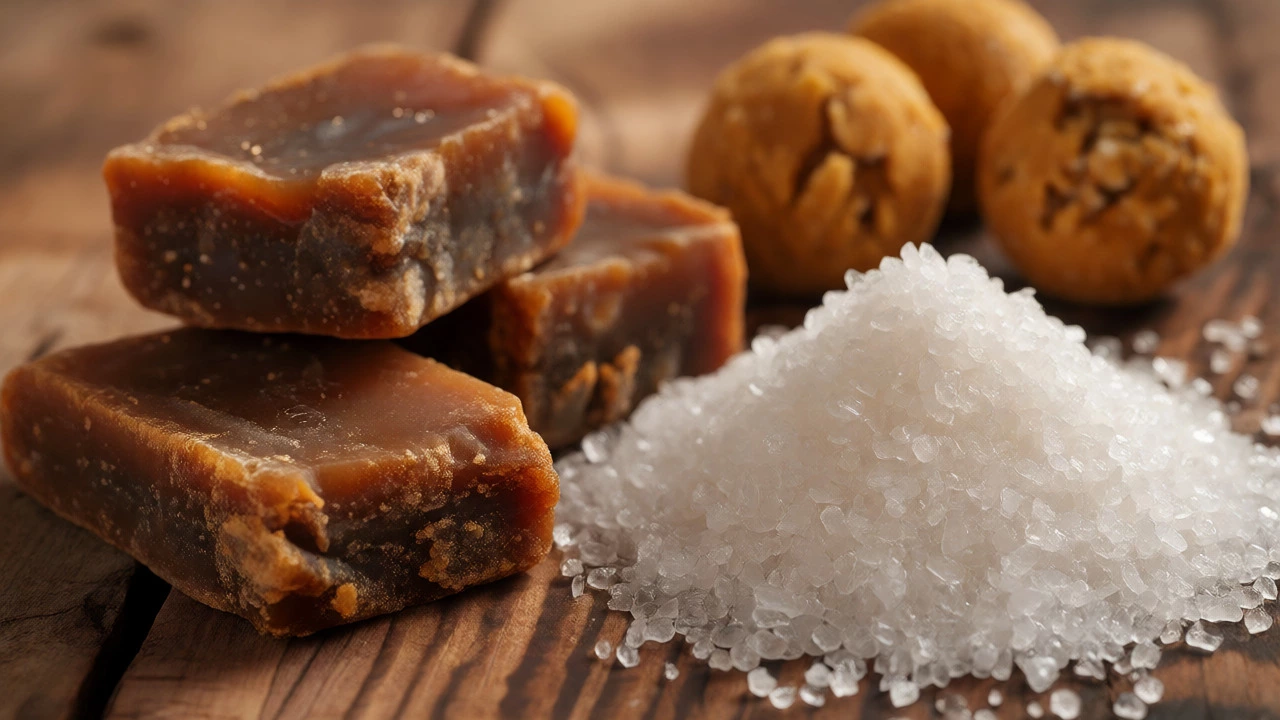
If there is one ingredient that defines the soul of Indian sweets, it is jaggery. Defined as unrefined whole cane sugar, typically solidified into blocks or granules, jaggery is made by boiling sugarcane juice until it concentrates. Unlike white sugar, which strips away all impurities and nutrients, jaggery retains the molasses. This isn't just a health choice; it's a flavor imperative.
Why do artisans prefer it? Molasses contains trace minerals like iron and magnesium, but more importantly, it carries complex flavor compounds-notes of caramel, smoke, and fruit-that refined sugar simply cannot provide. When you make besan laddoo, the recipe calls for ghee-roasted gram flour mixed with jaggery syrup. Using white sugar here results in a dry, crumbly texture. Jaggery, being hygroscopic (moisture-attracting), keeps the laddoo soft and fudgy for days.
There are two main types of jaggery you’ll encounter:
- Sugarcane Jaggery (Gur): The most common variety across North and West India. It ranges from light gold to dark brown depending on the soil and processing.
- Date Palm Jaggery (Patali Gur): Harvested from date palm sap, primarily in Bengal and Odisha. It has a softer, almost creamy texture and a distinct smoky aroma. It melts faster than cane jaggery, making it ideal for delicate preparations like patisapta.
Khandsari and Brown Sugar: The Middle Ground
Sit between jaggery and white sugar lies khandsari. This is a traditional form of semi-refined sugar produced by centrifuging sugarcane juice to remove most, but not all, of the molasses. In modern Western kitchens, this often equates to high-quality brown sugar or demerara, though true khandsari has a unique grain structure.
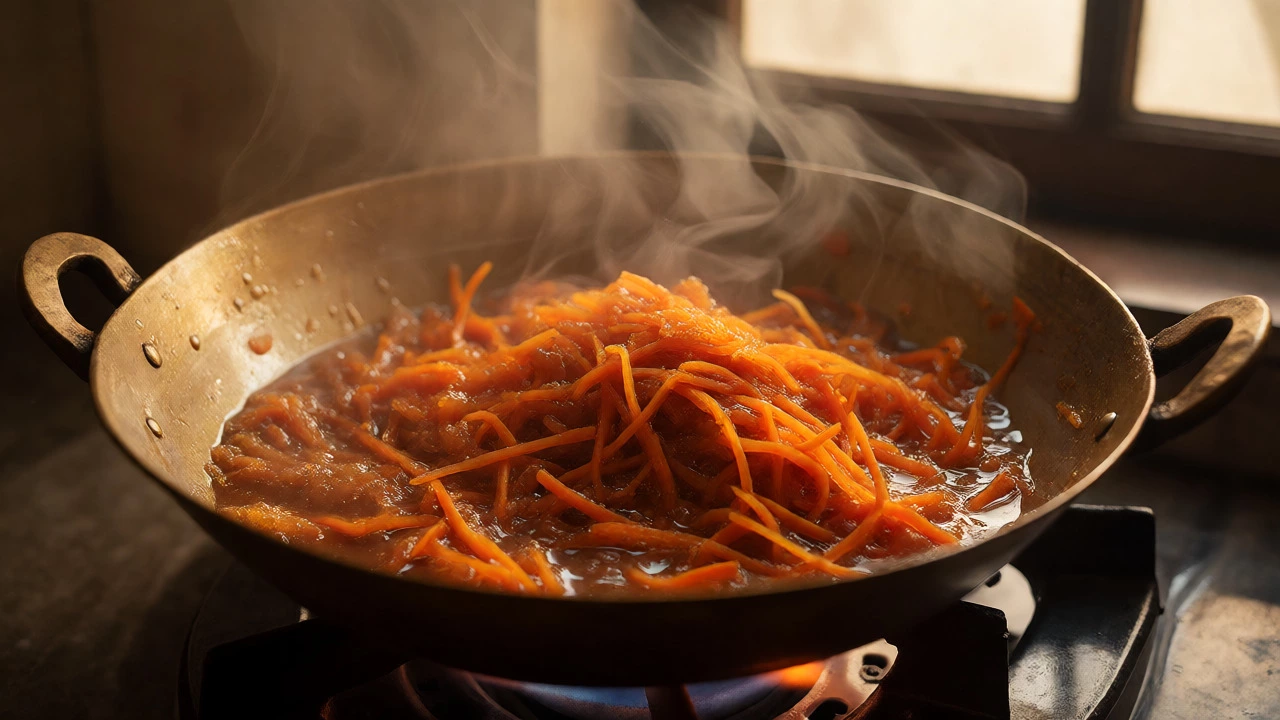
Khandsari is the go-to sweetener for dishes where you want the richness of molasses without the overpowering earthiness of jaggery. Think of gajar ka halwa (carrot pudding). While many home cooks use white sugar, premium versions use khandsari. Why? The slight acidity in the remaining molasses helps break down the carrot fibers during slow cooking, resulting in a silkier consistency. Plus, it gives the halwa a beautiful amber hue that white sugar can’t achieve without added food coloring.
If you can’t find authentic khandsari, look for "organic cane sugar" or lightly processed brown sugar. Avoid heavily processed brown sugars that contain added blackstrap molasses back in, as they can taste bitter when heated for long periods.
White Sugar: Precision and Structure
Don’t dismiss white sugar (sucrose) as "inauthentic." It plays a critical technical role in many iconic sweets. White sugar is pure sucrose, stripped of all other components. This purity allows for precise control over crystallization and melting points.
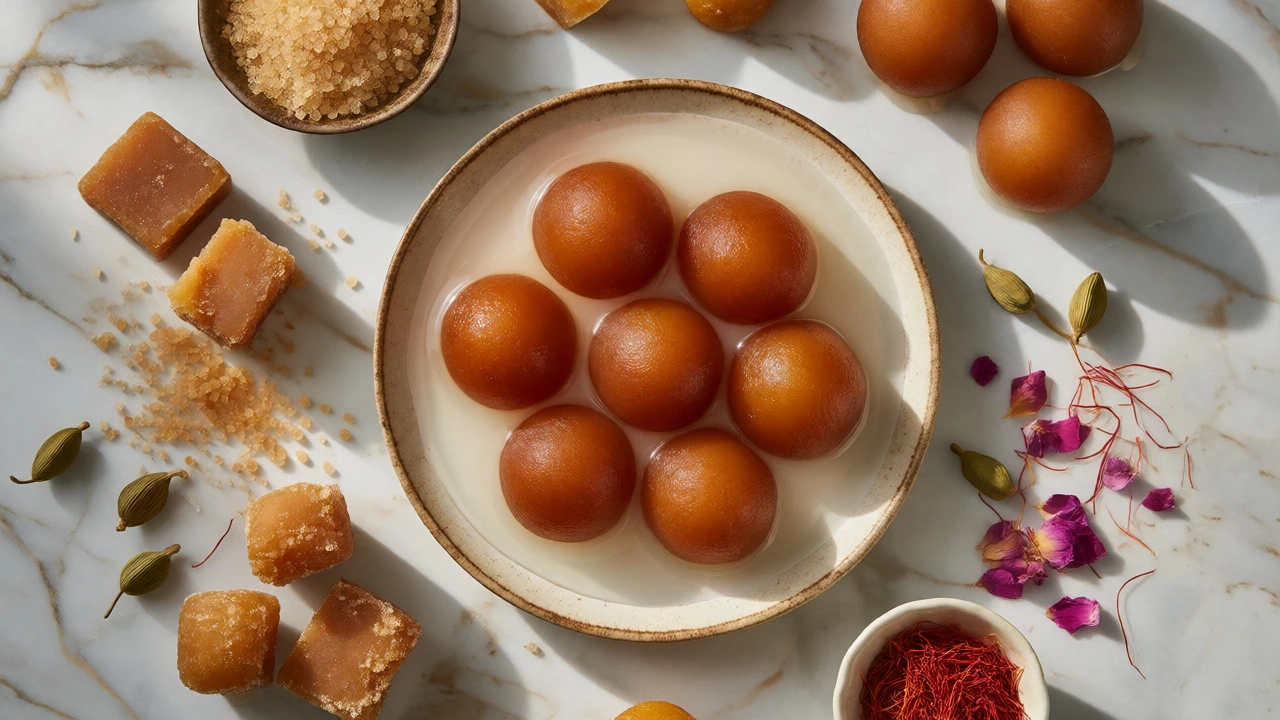
Consider gulab jamun. These milk-solid dumplings are fried and then soaked in a sugar syrup. If you use jaggery for the syrup, the acidic content interferes with the setting process, and the dark color masks the golden-brown exterior of the jamun. White sugar creates a clear, stable syrup that penetrates the dough evenly without altering its flavor profile. The result is a balanced sweetness that complements the cardamom and saffron notes.
Similarly, rasgulla, spongy cottage cheese balls boiled in syrup, require white sugar. The osmotic pressure created by pure sucrose draws water out of the chenna (curdled milk) and replaces it with syrup, creating the signature juicy interior. Jaggery’s impurities can sometimes cause the syrup to cloud or spoil faster due to microbial activity.
Beyond Cane: Date Palm, Coconut, and Maple
While sugarcane dominates, India’s vast geography introduces other sweeteners. In coastal regions like Kerala and Goa, coconut sugar is gaining traction. Made from the sap of coconut palms, it has a lower glycemic index than cane sugar and a subtle nutty flavor. It’s increasingly used in modern fusion mithai, such as coconut-sugar infused payasam.
In the Northeast, particularly Assam, kharoli (a local variant of jaggery) is standard. Meanwhile, urban health-conscious bakers are experimenting with maple syrup and agave nectar, though these are rarely found in traditional recipes. They lack the crystalline structure needed for hard candies like chikki (nut brittle).
| Sweetener | Refinement Level | Flavor Profile | Best For | Texture Impact |
|---|---|---|---|---|
| Jaggery (Gur) | Unrefined | Earthy, caramel, smoky | Laddoos, Barfi, Chikki | Moist, dense, fudgy |
| Khandsari | Semi-Refined | Mild molasses, sweet | Halwa, Peda | Soft, cohesive |
| White Sugar | Fully Refined | Clean, neutral sweet | Gulab Jamun Syrup, Rasgulla | Crisp, structured, glossy |
| Date Palm (Patali) | Unrefined | Creamy, fruity, intense | Bengali Mishti, Sandesh | Smooth, melt-in-mouth |
| Glucose Syrup | Processed Additive | Neutral, mild | Modern Shrikhand, Icings | Prevents crystallization, shiny |
How Sweeteners Interact with Dairy (Mawa/Khoya)
A huge portion of Indian sweets relies on mawa (also known as khoya), which is milk solids reduced by evaporation. The interaction between mawa and sugar determines the final shelf life and texture.
When making peda, you cook mawa with sugar until it thickens. If you use white sugar, the mixture sets firm and holds its shape well. If you use jaggery, the high moisture content from the molasses makes the peda softer and stickier. This is why jaggery-based pedas often need refrigeration sooner than their white sugar counterparts.
For kalakand, a popular dessert made from fresh paneer and sugar, white sugar is preferred. The goal is a grainy, crystalline texture that shatters slightly when bitten. Jaggery would turn kalakand into a gooey mess, losing its characteristic identity.
Common Pitfalls When Substituting Sugars
Many beginners try to swap jaggery for white sugar in equal amounts, leading to disasters. Here is what you need to know:
- Moisture Content: Jaggery contains about 10-15% moisture, while white sugar is nearly 0%. If a recipe calls for 1 cup of white sugar and you use 1 cup of jaggery, your dough will be too wet. Reduce liquid ingredients by 1-2 tablespoons per cup of jaggery used.
- Acidity: Jaggery is slightly acidic. This can react with baking soda if you’re making baked mithai variants, causing an unpleasant metallic taste. Use baking powder instead if substituting.
- Burning Point: Because jaggery contains non-sugar solids, it burns faster than white sugar. Cook jaggery syrups on lower heat and stir constantly to prevent scorching.
- Crystallization: White sugar crystals easily reform if stirred improperly. Jaggery resists crystallization due to its impurities. If you want a smooth syrup for soaking fruits, add a teaspoon of lemon juice or cream of tartar to white sugar to invert it, mimicking jaggery’s smoothness.
Regional Variations: It’s Not Just About Sugar
Geography dictates sugar choice. In Punjab, rich dairy-based sweets like sohan halwa often use white sugar to highlight the ghee and nuts. In contrast, Maharashtra’s puran poli filling uses jaggery exclusively because the wheat dough pairs better with the robust molasses flavor than with neutral sucrose.
South Indian sweets present another layer. mysore pak, a semolina-ghee-sugar cake, traditionally uses white sugar to achieve its porous, honeycomb structure. However, regional variations in Karnataka sometimes incorporate jaggery for a darker, denser version called bellam mysore pak.
Health Considerations: Is Jaggery Actually Healthier?
Marketing claims often label jaggery as a "superfood" compared to white sugar. Let’s look at the data. Per 100 grams, jaggery contains roughly 38 mg of iron and 70 mg of calcium, whereas white sugar has negligible amounts. However, the amount of jaggery consumed in a typical serving of sweets is small. You’d need to eat massive quantities to get significant nutritional benefits.
That said, jaggery has a lower glycemic index (GI ~54) compared to white sugar (GI ~65). This means it raises blood sugar levels more slowly. For diabetics or those monitoring insulin spikes, jaggery is a marginally better option, but it is still sugar. Moderation remains key. Don’t fall into the trap of thinking "jaggery means unlimited eating." It’s calorie-dense, just like sucrose.
Practical Tips for Home Cooks
Ready to experiment? Here’s how to handle these sugars in your kitchen:
- Grating Jaggery: Hard blocks of jaggery can be tough to dissolve. Grate them finely before adding to hot liquids. This ensures even melting and prevents undissolved chunks in your syrup.
- Clarifying Jaggery: Raw jaggery often contains sand or impurities. Dissolve it in warm water, let the sediment settle, and strain through a muslin cloth before using it in sensitive recipes like sandesh.
- Storage: Jaggery absorbs moisture from the air. Store it in an airtight container with a slice of bread to keep it soft. White sugar should be kept in a cool, dry place to prevent clumping.
- Taste Testing: Always taste your syrup before combining it with mawa or flour. Jaggery batches vary wildly in sweetness and bitterness based on the harvest season. Adjust ratios accordingly.
Frequently Asked Questions
Can I replace white sugar with jaggery in all Indian sweets?
No, not in all. Jaggery works best in dense, moist sweets like laddoos, barfis, and halwas where its moisture and flavor enhance the dish. It is unsuitable for delicate, airy sweets like rasgullas or clear syrups for gulab jamuns, where its color and acidity interfere with the desired texture and appearance.
What is the difference between jaggery and brown sugar?
Jaggery is unrefined whole cane sugar, retaining natural molasses and minerals. Brown sugar is typically refined white sugar with molasses added back in artificially. Jaggery has a more complex, earthy flavor and higher moisture content, while brown sugar has a more consistent, predictable sweetness and finer grain.
Why does my jaggery syrup taste bitter?
Bitterness usually comes from burning. Jaggery burns faster than white sugar due to its organic impurities. Ensure you cook it on low-medium heat and stir continuously. Low-quality jaggery may also have burnt residues from the initial boiling process.
Is khandsari sugar available outside India?
Authentic khandsari can be hard to find outside South Asia. Look for "organic cane sugar," "demerara," or "turbinado" as close substitutes. They offer a similar semi-refined profile, though the exact flavor nuances may differ slightly.
Does jaggery have a longer shelf life than white sugar?
White sugar lasts indefinitely if kept dry. Jaggery has a shorter shelf life (typically 6-12 months) because its moisture content can lead to mold growth or fermentation if stored improperly. Always store jaggery in airtight containers in a cool, dry place.