Healthy Nighttime Snack Checker
Check if your Indian snack is safe and healthy to eat before bed. Enter a snack name below to get personalized advice.
Enter a snack name and click "Check My Snack" to see if it's suitable for nighttime.
Ever lay awake at night wondering what to eat that won’t leave you feeling heavy, sluggish, or guilty? If you’re craving something Indian after dinner, you’re not alone. But not all Indian snacks work for nighttime. Too much oil, sugar, or spice can mess with your sleep and digestion. The good news? There are plenty of light, nourishing, and delicious Indian options that actually support your body when the sun goes down.
Why Your Nighttime Snack Matters
Your body doesn’t shut off when you stop eating. Digestion still runs at full speed for hours after a meal. Eating the wrong snack at night-like deep-fried samosas or sugary jalebis-can lead to acid reflux, bloating, or restless sleep. Studies show that eating heavy, greasy food within two hours of bedtime increases the chance of poor sleep quality by nearly 40%. That’s not just a myth. It’s science.
What you need is something easy to digest, low in fat, and rich in fiber or protein. Indian cuisine has a ton of these options built right in. You don’t need to skip flavor to stay healthy.
Best Healthy Indian Snacks for Nighttime
Here are the top five snacks that actually work after dinner-no frying, no sugar spikes, no guilt.
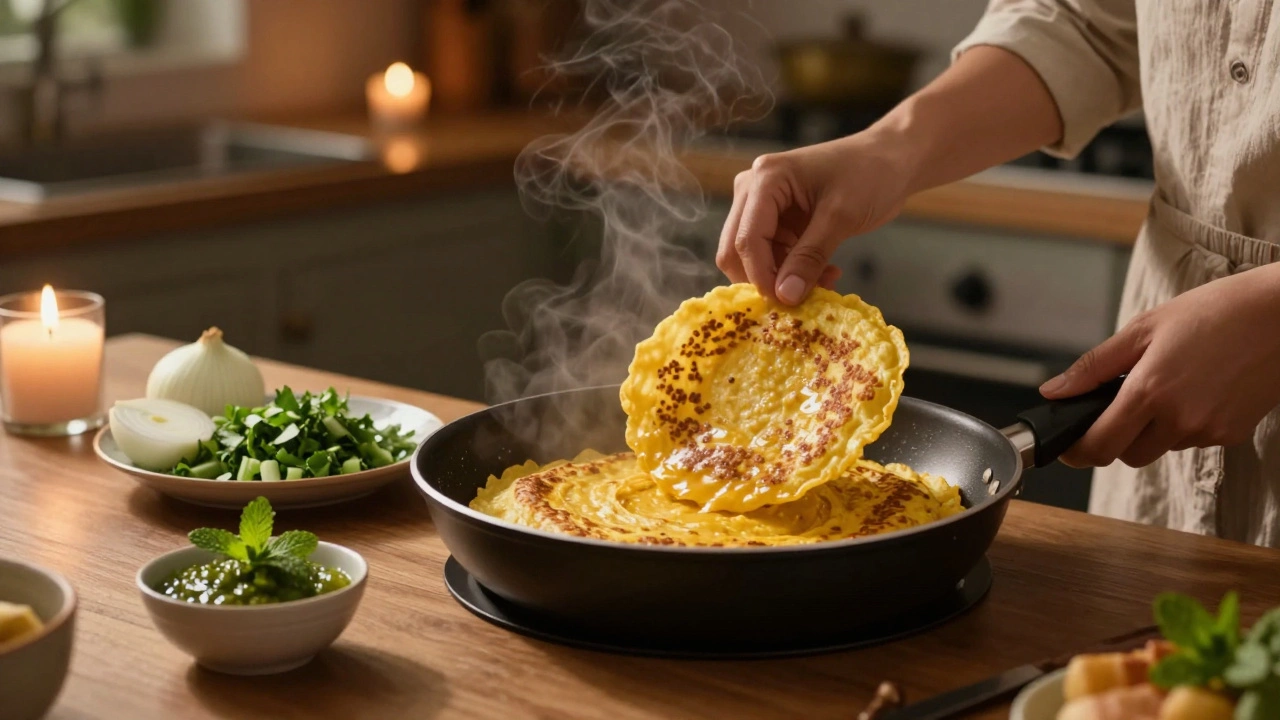
- Moong Dal Cheela - These thin lentil pancakes are made from soaked and ground yellow moong dal. They’re naturally gluten-free, packed with plant-based protein (about 12g per serving), and cook in minutes on a nonstick pan with just a drizzle of oil. Top them with chopped onion, cilantro, and a spoon of mint chutney. They’re filling without being heavy.
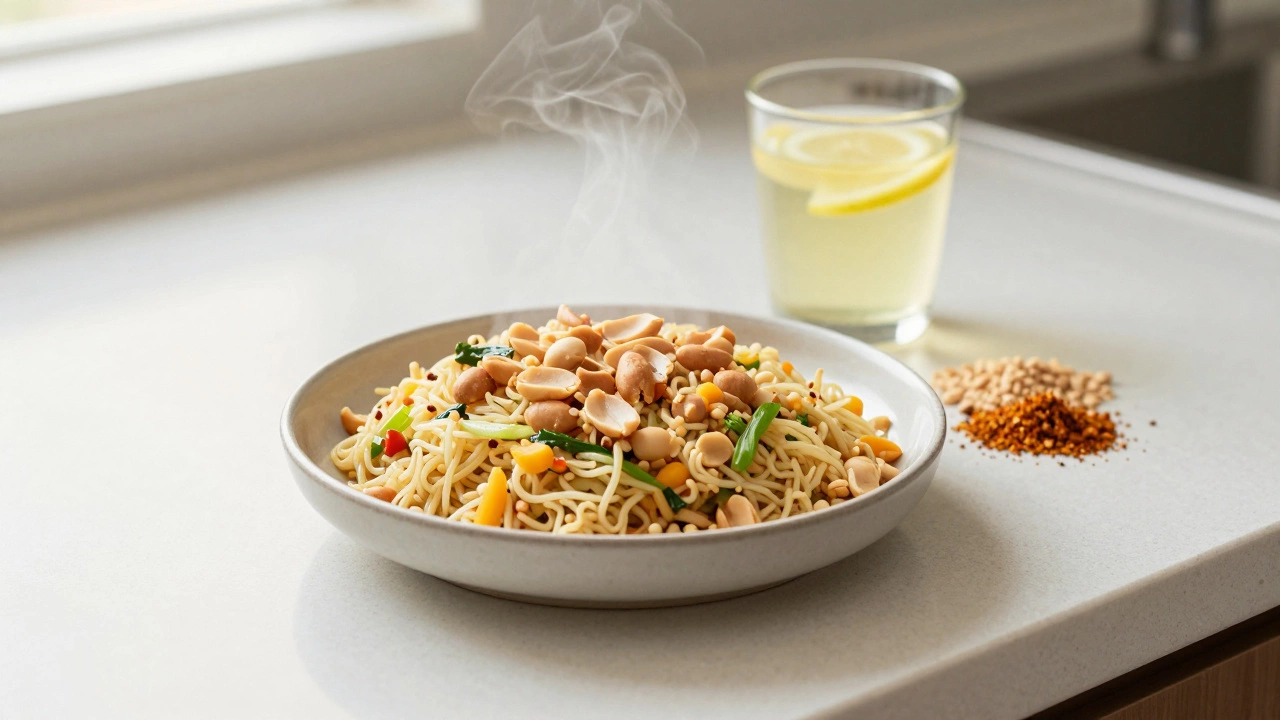
- Steamed Sukhi Bhel - Forget the oily street version. Make your own dry version with puffed rice, roasted peanuts, roasted chana, a sprinkle of chaat masala, and a squeeze of lemon. Skip the sev and sugar. It’s crunchy, satisfying, and gives you a savory hit without the fat. One cup has under 150 calories and 6g of fiber.
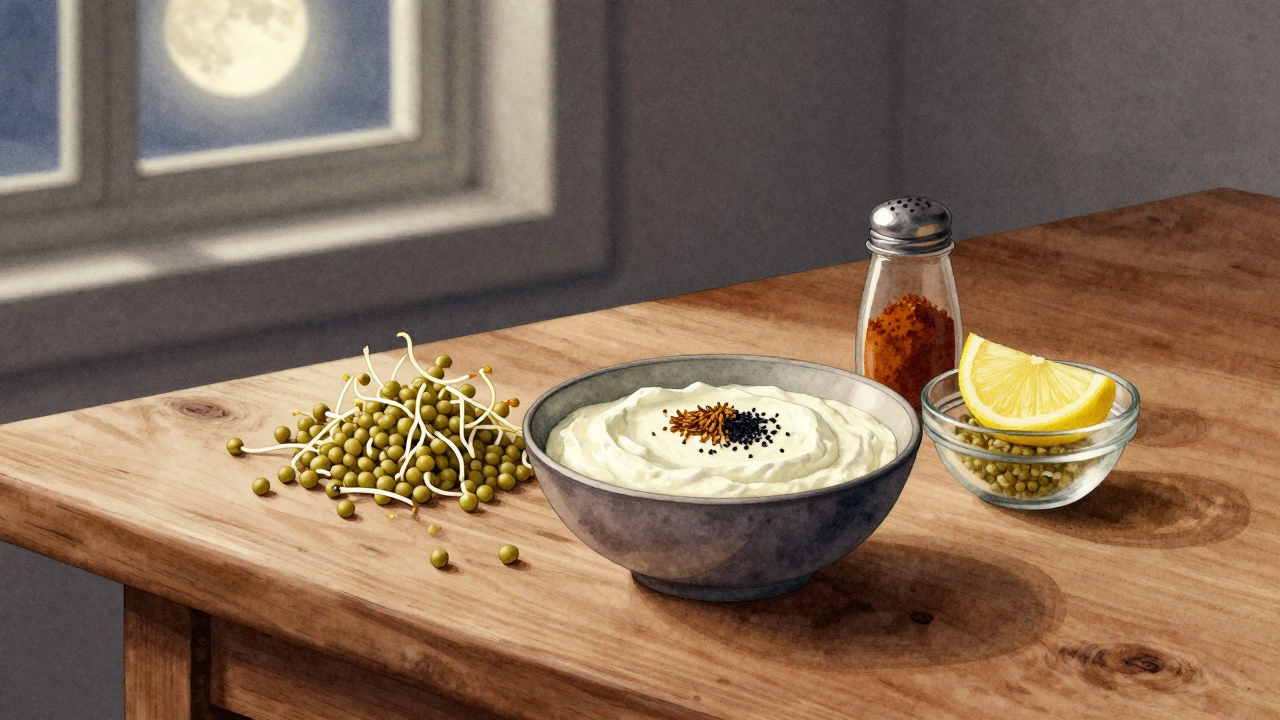
- Curd with Roasted Cumin and Black Salt - Plain, unsweetened yogurt (dahi) is a classic Indian night food for a reason. It’s loaded with probiotics that help digestion and calm your gut. Add a pinch of roasted cumin powder and black salt. It’s cooling, soothing, and helps prevent acidity. Bonus: it’s been used for centuries in Ayurveda as a nighttime digestif.
- Vegetable Upma (Low-Oil Version) - Made with semolina (rava), finely chopped veggies like carrots, peas, and spinach, and just a teaspoon of oil. Toast the rava lightly, sauté the veggies, then add hot water and simmer. Season with mustard seeds, curry leaves, and a touch of turmeric. It’s warm, comforting, and keeps you full without weighing you down. Skip the cashews and coconut.
- Boiled Sprouted Moong with Lemon - Sprouted moong is one of the easiest proteins to digest. Just rinse, soak overnight, and let it sit for 8-12 hours until tiny tails appear. Eat it cold or at room temperature with a squeeze of lemon, a pinch of salt, and a dash of chaat masala. No cooking needed. It’s crisp, refreshing, and full of enzymes that help your body process food while you sleep.
Snacks to Avoid at Night
Some Indian snacks are great for lunch or parties-but terrible after 8 p.m.
- Deep-fried snacks - Samosas, pakoras, vadas. High in trans fats and hard to digest. Your liver has to work overtime to process them.
- Sweet lassi or sugary drinks - Even if it’s made with yogurt, added sugar spikes insulin and disrupts melatonin production.
- Spicy curries - Dishes with lots of chili, garlic, or onion can trigger heartburn or acid reflux, especially when lying down.
- Store-bought namkeens - Many are loaded with hydrogenated oils, MSG, and salt. Read labels. If the ingredient list is longer than your thumb, skip it.
Timing Matters Too
Even the healthiest snack can backfire if eaten too late. Aim to have your nighttime snack at least 90 minutes before bed. That gives your body time to start digesting before you lie down. If you’re hungry right before sleep, go for something super light-like a small bowl of warm milk with turmeric or a few soaked almonds.
Also, drink water. Dehydration can mimic hunger. Sip a glass of warm water with a pinch of salt and lemon 20 minutes before your snack. It helps your stomach prepare and reduces unnecessary cravings.
How to Make These Snacks Work for Your Lifestyle
You don’t need to cook from scratch every night. Here’s how to plan ahead:
- Make a big batch of moong dal cheela batter on Sunday. Store it in the fridge for up to 3 days. Cook 1-2 per night.
- Roast a big tray of chana and peanuts. Keep them in an airtight jar. Use them for bhel, salads, or just snack on them dry.
- Buy plain curd in bulk. Add your own spices instead of buying flavored ones.
- Keep sprouted moong in the fridge. Rinse it every other day. It lasts 4-5 days.
These little habits make healthy eating effortless. No more last-minute junk runs.
Real-Life Example: A Nighttime Snack Routine
Take Priya, 34, from Wellington. She works late and often gets hungry after 10 p.m. She used to eat chips or leftover biryani. Result? Acid reflux, poor sleep, and morning bloating.
She switched to:
- Monday: Moong dal cheela with mint chutney
- Tuesday: Curd with cumin and black salt
- Wednesday: Sprouted moong with lemon
- Thursday: Sukhi bhel
- Friday: Low-oil upma
Within two weeks, her stomach felt calmer. She slept deeper. She didn’t wake up hungry anymore. And she lost 3 kg without trying.
Why This Works Beyond Weight
It’s not just about calories. These snacks support your gut microbiome, reduce inflammation, and help regulate blood sugar. That’s why they’re better than a protein bar or a banana. Indian food has centuries of wisdom built into it. You just need to pick the right pieces.
And you don’t have to give up flavor. A pinch of asafoetida, a dash of lemon, a sprinkle of roasted cumin-these are the flavors that make Indian food comforting, not heavy.
Final Tip: Listen to Your Body
Not everyone needs a snack at night. If you’re not hungry, don’t force it. But if you are, choose wisely. Your body will thank you tomorrow morning.
Can I eat paneer at night?
Yes, but only in small amounts and prepared simply. A few cubes of grilled or steamed paneer with black salt and lemon is fine. Avoid creamy paneer dishes or those cooked in heavy cream or butter. Paneer is high in protein and can be hard to digest if eaten in large portions late at night.
Is masala tea okay before bed?
Only if it’s caffeine-free. Regular masala tea made with black tea has caffeine, which can interfere with sleep. Instead, try a warm cup of turmeric milk or ginger-cumin tea. Steep fresh ginger and cumin seeds in hot water for 5 minutes. Skip the sugar. It’s soothing and aids digestion.
What’s the best Indian snack for someone with diabetes?
Sprouted moong and moong dal cheela are top choices. They have a low glycemic index and are high in fiber, which helps stabilize blood sugar. Avoid anything with added sugar, refined flour, or fried ingredients. Pair your snack with a handful of soaked almonds for healthy fats that slow digestion even further.
Can I have rice at night?
White rice is best avoided at night-it spikes blood sugar fast. If you want rice, go for brown rice or parboiled rice, and keep the portion small (half a cup). Add a side of dal or steamed veggies to balance it out. But even then, moong dal cheela or curd are better choices.
Are roasted chana good for nighttime?
Yes, roasted chana (chickpeas) are excellent. They’re high in fiber and protein, and digest slowly. Just make sure they’re not coated in sugar, oil, or artificial flavors. Buy plain roasted ones or roast your own with a little salt and cumin. A quarter cup is a perfect nighttime snack.
If you’re looking to improve your sleep, digestion, or energy levels, start with your nighttime snack. It’s one of the easiest changes you can make-and one of the most powerful.