Indian Sweetener Matchmaker
Not sure which sweetener to use? Select your dessert characteristics below to get a personalized recommendation.
Syrup-Based
Gulab Jamun, JalebiNut & Flour-Based
Ladoo, Chikki, BarfiDairy-Rich
Rasmalai, Kaju KatliSavory-Sweet
Payasam, PongalSteamed Dumplings
ModakRaw / No-Cook
Yogurt, Fruit Salad✨Your Perfect Sweetener Match
White Cane Sugar
Perfect for clear syrups that need to penetrate fried dough without crystallizing.
💡 Pro Tips & Alternatives
Alternative Options:
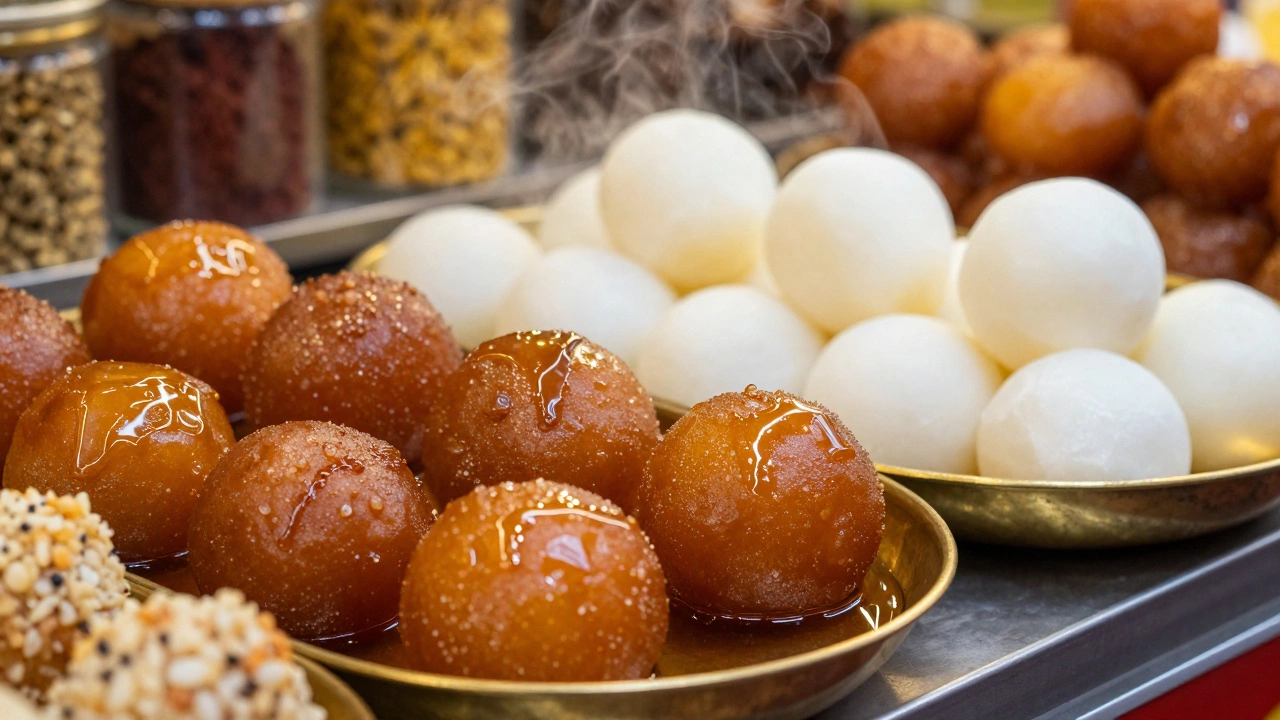
Walk into any Indian sweet shop, or mithai ki dukaan, and you are hit with a wave of rich, caramelized aromas. You see mounds of golden Gulab Jamun soaking in syrup, delicate discs of Barfi, and soft balls of Rasgulla. But what exactly is making them so incredibly sweet? It is not just one ingredient. While white cane sugar is the most common answer, it is far from the only player in the game.
The sweetness in Indian desserts comes from a complex mix of refined sugars, unrefined alternatives, and fruit-based syrups. The choice depends on the region, the occasion, and the texture required. Understanding these sweeteners changes how you cook and eat these treats. Let us break down the primary sources of sweetness in Indian cuisine.
The Dominance of White Cane Sugar
If you look at the ingredient list for 90% of mass-produced Indian sweets, you will find sugar. Specifically, refined white cane sugar. In Hindi, this is often called khanda or simply cheeni.
Why is it so popular? It dissolves completely. This is crucial for making syrups, known as chashni. When you make Gulab Jamun or Jalebi, you need a clear, thin-to-medium syrup that penetrates the fried dough without crystallizing on the surface. White sugar provides that clean dissolve. It also has a neutral flavor profile, which means it does not compete with the cardamom, saffron, or rose water used to flavor the sweets.
However, there is a nuance. Many traditional households still prefer khand, which is coarse granulated sugar, over fine powdered sugar. Khand melts slower, allowing for better control over the syrup consistency. If you have ever tasted a store-bought Gulab Jamun that feels cloyingly sweet and sticky, it is often because the maker used too much fine sugar and boiled the syrup to a hard crack instead of a soft thread stage.
Jaggery: The Earthy Alternative
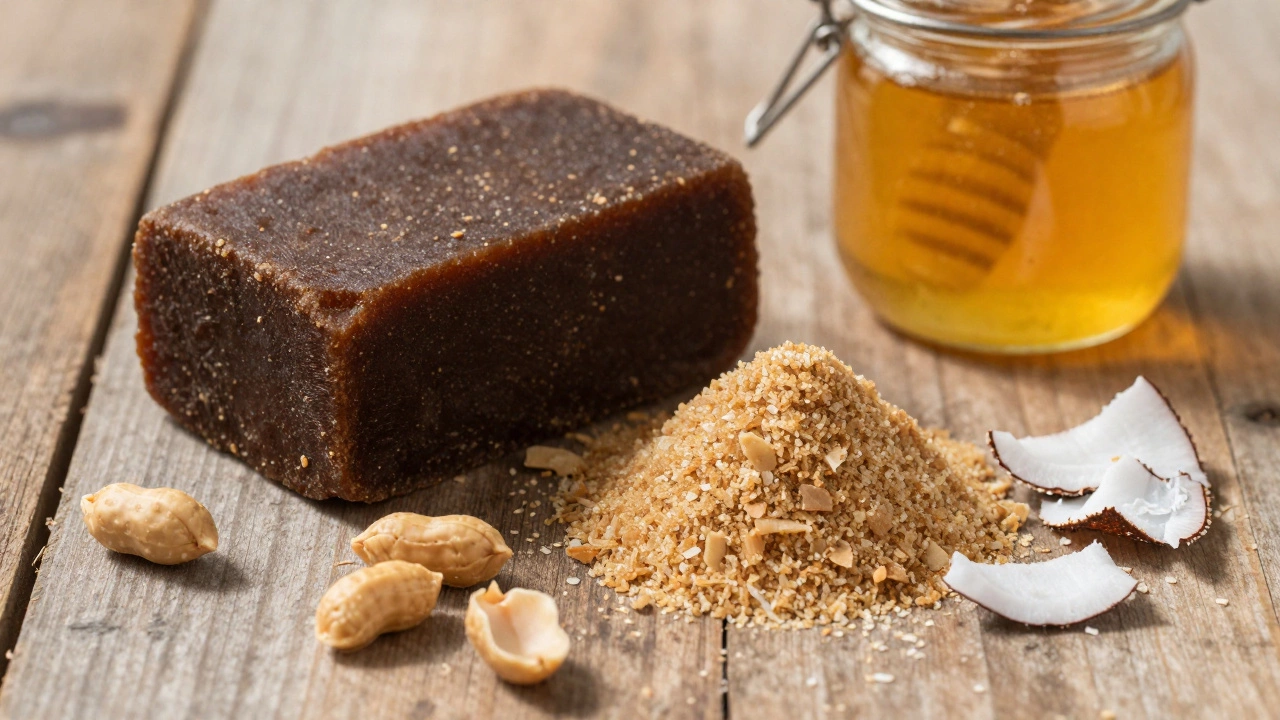
Move away from the city centers and head toward rural India or specific regional cuisines, and you will meet JaggeryGuran unrefined cane sugar product widely used in Indian cooking. Jaggery is made by boiling sugarcane juice until it solidifies. It retains the molasses, giving it a deep brown color and a rich, earthy flavor.
Jaggery is not just a substitute; it is a cultural staple. In North India, especially during festivals like Diwali, sweets made with jaggery are considered auspicious. Think of Peanut Laddoo or Coconut Ladoo. These dry-fruit and nut-based sweets rely on the binding properties of melted jaggery. Unlike sugar, which can be grainy if not fully dissolved, jaggery creates a sticky, cohesive matrix that holds nuts and flour together perfectly.
In South India, jaggery takes center stage in savory-sweet dishes. Payasam (or Pongal), a rice and milk pudding, is almost always sweetened with jaggery rather than white sugar. The mineral content of jaggery adds a depth that white sugar cannot replicate. It pairs exceptionally well with coconut milk and ghee.
| Sweetener | Flavor Profile | Best For | Dissolution |
|---|---|---|---|
| White Sugar | Neutral, pure sweet | Syrup-based sweets (Gulab Jamun) | High (clear solution) |
| Jaggery (Gur) | Earthy, caramel-like | Ladoos, Payasam, Chikki | Medium (needs straining) |
| Date Palm Sugar | Fruity, subtle | Healthy desserts, smoothies | Low (granular) |
| Honey | Floral, distinct | Ayurvedic remedies, drizzles | High (viscous) |
Date Palm Sugar and Coconut Sugar
In Western India, particularly in states like Maharashtra and Gujarat, Date Palm SugarKhajoor Gur is highly prized. It is made from the sap of date palm trees. This sweetener has a lower glycemic index compared to white sugar and jaggery, making it a preferred choice for health-conscious cooks.
It has a lighter color and a more subtle, fruity flavor. You will often find it used in Modak, a steamed dumpling filled with coconut and sugar, especially during the Ganesh Chaturthi festival. Using date palm sugar here gives the filling a sophisticated taste that isn't overpowering.
Similarly, in coastal regions like Kerala and Tamil Nadu, Coconut Sugar is harvested from the flower buds of coconut palms. It is becoming increasingly popular globally due to its minimal processing. In local sweets, it is used in small quantities to balance spicy curries or to sweeten Appam accompaniments.
The Role of Condensed Milk and Khoya
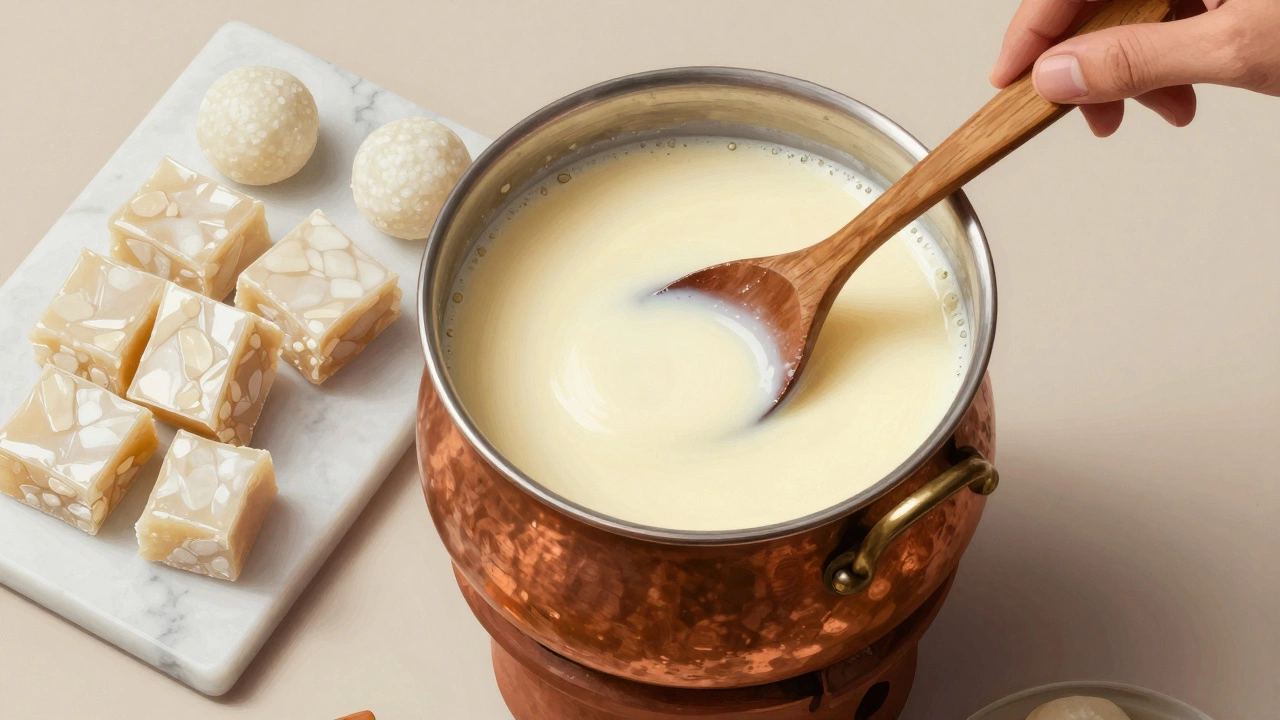
Not all sweetness in Indian sweets comes from dry crystals. A huge category of Indian desserts relies on concentrated dairy solids. KhoyaMawareduced milk solids used as a base for many Indian sweets is essentially milk that has been simmered for hours until all the water evaporates, leaving behind a thick, creamy paste rich in lactose (milk sugar) and fat.
Sweets like Kaju Katli (cashew fudge) or Rasmalai use khoya as their base. While additional sugar is often added, the inherent sweetness of the reduced milk plays a massive role. The Maillard reaction during the reduction process creates complex flavor compounds that enhance the perception of sweetness without needing excessive added sugar.
Condensed milk, a modern import but now deeply integrated, serves a similar purpose. It allows home cooks to skip the hours-long process of making khoya. A spoonful of condensed milk in a cake or a fudge recipe provides both sweetness and moisture, acting as a binder and a sweetener simultaneously.
Honey and Fruit-Based Sweeteners
In Ayurveda, honey is revered not just for its taste but for its medicinal properties. However, traditional Ayurvedic texts advise against heating honey above body temperature, as it is believed to become toxic. Therefore, honey is rarely used in cooked Indian sweets like Barfi or Laddoos.
Instead, you will find honey used in raw preparations. For example, it might be drizzled over fresh fruit salads served as dessert, or mixed with warm (not hot) milk and turmeric for a soothing evening drink. In some northern Indian villages, wildflower honey is used to sweeten yogurt-based desserts like Lassi or Chaas (buttermilk).
Fruit reductions are another ancient method. Tamarind, while sour, is balanced with sugar to create a sweet-tangy profile in snacks like Imli Chikki. Similarly, mango pulp is reduced with sugar to make Aam Papad, a translucent, chewy candy. Here, the sugar acts as a preservative and texture modifier, while the fruit provides the primary flavor.
Modern Shifts: Artificial and Natural Substitutes
With rising health awareness, the landscape of Indian sweetening is changing. Many commercial brands now offer "sugar-free" versions of popular sweets. These typically use artificial sweeteners like aspartame or sucralose, or natural alternatives like stevia and monk fruit extract.
However, baking with these substitutes is tricky. Sugar provides structure, browning, and moisture retention. Replacing it entirely with stevia can result in dry, pale sweets that lack the characteristic melt-in-the-mouth texture. Most successful sugar-free Indian sweets still use a bulk sweetener like erythritol or maltitol alongside a high-intensity sweetener to mimic the volume and texture of sugar.
For home cooks looking to reduce sugar intake without losing authenticity, blending half white sugar with half mashed ripe bananas or applesauce is a growing trend. It works surprisingly well in dense sweets like carrot halwa or pumpkin ladoos, where the fruit's moisture complements the dish.
How to Choose the Right Sweetener
Selecting the right sweetener depends on your goal. Are you aiming for traditional authenticity, health benefits, or ease of preparation?
- For Syrup-Based Sweets: Stick to white sugar. Jaggery will cloud the syrup and alter the color, which may not be desirable for transparent treats like Jalebi.
- For Nut and Flour-Based Sweets: Use jaggery. Its binding ability and earthy flavor complement roasted nuts and semolina beautifully.
- For Health-Conscious Cooking: Try date palm sugar or coconut sugar. They offer a lower glycemic impact and retain some minerals, though they should still be consumed in moderation.
- For Dairy-Rich Desserts: Rely on the natural lactose in khoya and milk. Add minimal white sugar to enhance, not dominate, the dairy flavor.
Understanding these distinctions empowers you to cook with intention. Next time you reach for the sugar jar, consider whether a piece of jaggery or a spoonful of date sugar might elevate your dish. The world of Indian sweets is vast, and its sweetness is just as diverse as its spices.
Is jaggery healthier than white sugar?
Jaggery contains trace amounts of iron, magnesium, and potassium, which are removed during the refining of white sugar. However, it is still primarily sucrose and has a similar caloric density. While it offers minor nutritional benefits, it should not be consumed in excess if you are monitoring blood sugar levels.
Can I substitute jaggery for sugar in all Indian sweets?
No. Jaggery has a strong, earthy flavor and a darker color. It works well in ladoos, payasam, and chikkis, but it will ruin the appearance and taste of light-colored, syrup-based sweets like Gulab Jamun or Rasgulla, where a neutral sweetness is preferred.
What is the difference between khoya and condensed milk?
Khoya is made by reducing whole milk until all water evaporates, resulting in a solid or semi-solid paste with no added sugar. Condensed milk is cow's milk that has been evaporated and has significant amounts of white sugar added. Khoya is richer in fat and protein, while condensed milk is sweeter and more liquid.
Why is honey not used in cooked Indian sweets?
According to Ayurvedic principles, heating honey alters its molecular structure, making it difficult to digest and potentially creating toxins in the body. Therefore, traditional recipes avoid cooking with honey, reserving it for raw applications or mixing with lukewarm liquids.
What is the best sweetener for diabetic-friendly Indian sweets?
Natural zero-calorie sweeteners like stevia or monk fruit extract are good options, but they do not provide bulk. For texture, erythritol or allulose are better choices as they mimic the physical properties of sugar. Always consult a healthcare provider before making significant dietary changes.