Creaminess Factor Calculator
How It Works
This calculator estimates your curry's creaminess potential based on ingredient quality and cooking techniques. Higher scores mean smoother, richer texture.
Creaminess Score
Tip: Your curry scored 0. To improve creaminess:
- 1Temper yogurt slowly to prevent curdling
- 2Use full-fat coconut cream, not milk
- 3Simmer at low heat for 15+ minutes
- 4Slow-cook onion-tomato base for 25+ minutes
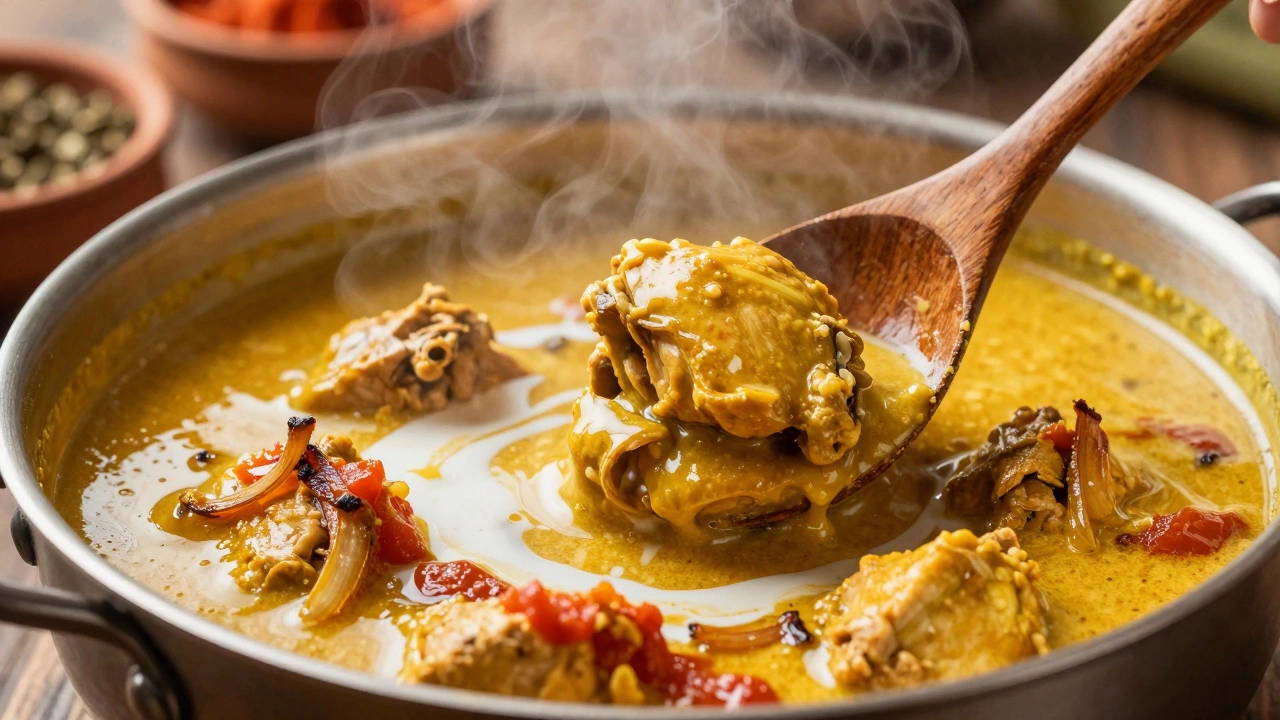
Ever bite into a chicken curry that feels like silk on your tongue? It’s not magic. It’s not even secret ingredients. It’s science-and a few simple tricks most home cooks miss.
It’s Not Just Cream
A lot of people think creamy curry means heavy cream, butter, or even cashew paste. But that’s not how it works in most Indian kitchens. The creaminess comes from how fats, starches, and proteins work together under heat. Think of it like a sauce that’s been gently coaxed into richness, not dumped into it.Take a classic North Indian chicken curry. The base isn’t cream. It’s onions, garlic, ginger, and tomatoes-slowly cooked until they collapse into a jammy paste. That’s the first layer of texture. Then you add spices. Then you add liquid. But the magic? That happens when you stir in yogurt or coconut milk.
Yogurt: The Secret Thickener
Yogurt is the unsung hero of creamy curries. Not because it’s fatty (though full-fat yogurt helps), but because of its proteins. When you heat yogurt slowly, the casein proteins unfold and bind with water, creating a smooth, stable emulsion. That’s what gives curry its velvety mouthfeel.But here’s the catch: if you add cold yogurt directly to a boiling pot, it’ll curdle. You’ll get lumps. No creaminess. Just disappointment.
The fix? Temper it. Take a spoonful of warm curry sauce, mix it into the yogurt, stir well, then pour the whole thing back into the pot. Do it slowly. Let the temperature rise together. That’s how restaurants do it-and how your curry stays smooth.
Coconut Milk: Fat That Flows
In South Indian and Thai-style curries, coconut milk does the heavy lifting. It’s not just flavor-it’s texture. Coconut milk has natural emulsifiers called lecithin and proteins that help suspend fat droplets evenly. That’s why a good coconut milk curry doesn’t separate. It clings to the chicken like a second skin.Not all coconut milk is the same. Canned coconut milk labeled "full-fat" has around 17-24% fat. That’s the sweet spot. Light coconut milk? Skip it. It’s mostly water and stabilizers. It won’t thicken. It won’t cling. It’ll just make your curry watery.
Pro tip: Don’t shake the can before opening. Let the thick cream settle at the top. Scoop that out first. That’s your base. Add the thinner liquid below later, if needed. You’ll get a richer, creamier result every time.
Ground Nuts and Seeds: Texture in Disguise
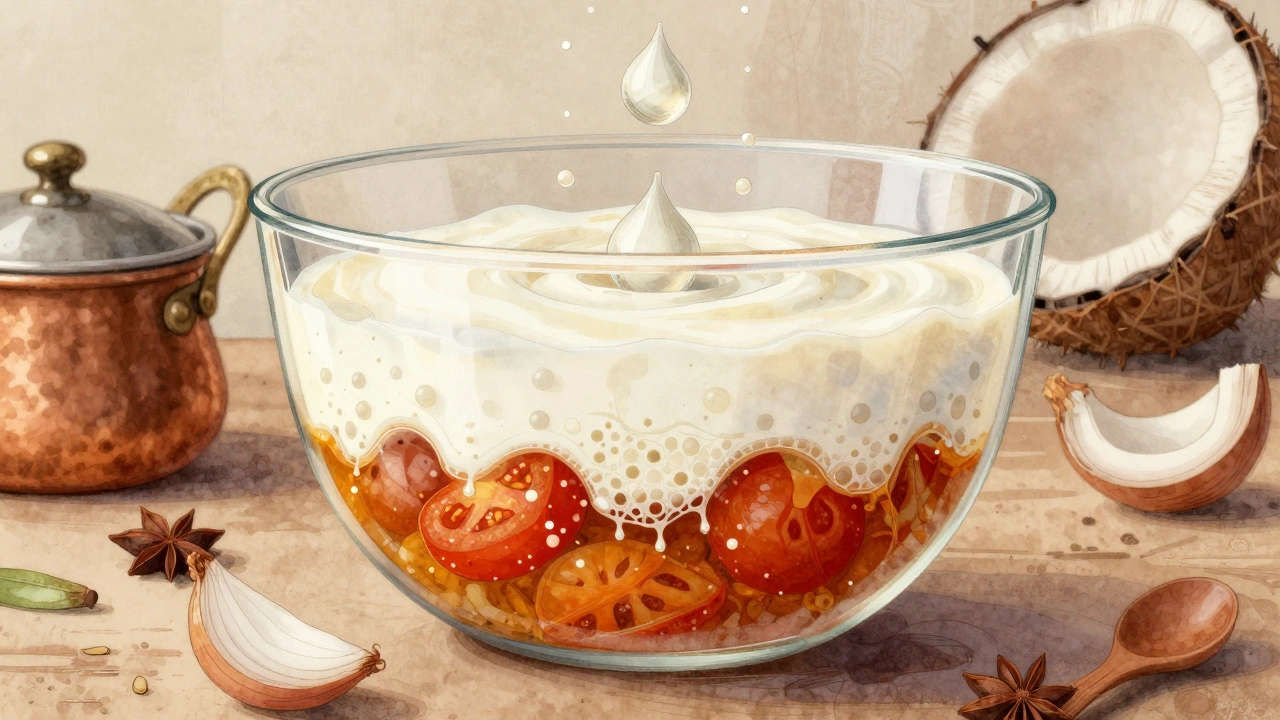
Cashews, almonds, poppy seeds, and even sesame paste aren’t just for flavor. They’re thickening agents. When you grind them into a fine paste with a little water or yogurt, you release their oils and starches. That paste, when stirred into the curry and simmered, acts like a natural roux.In Punjabi butter chicken, cashew paste is the backbone of the sauce. In Bengali kosha mangsho, poppy seed paste gives the curry its deep, nutty thickness. You don’t taste the nuts-you feel them. That’s the point.
Toast your nuts lightly before grinding. Raw nuts taste flat. Toasted ones release more oil, blend smoother, and add a subtle caramel note that deepens the whole dish.
Tomatoes and Onions: The Slow-Cooked Foundation
Creaminess doesn’t come from one ingredient. It’s built. The real foundation of a creamy curry is the slow-cooked onion-tomato paste. Cook them on low heat for 20-30 minutes. Stir often. Let the moisture evaporate. Let the sugars caramelize. Let the acids mellow.That paste is packed with pectin-a natural thickener found in fruit and vegetables. When you cook tomatoes long enough, their pectin breaks down and thickens the sauce. Same with onions. They dissolve into the sauce, adding body without a grain of flour.
This is why your curry tastes better the next day. The pectin keeps working. The fats settle in. The flavors fuse. What was a good curry becomes unforgettable.
Don’t Rush the Simmer
You can add all the coconut milk and yogurt in the world, but if you boil your curry on high heat, you’ll break the emulsion. High heat makes fat globules clump. It separates. It looks oily. It tastes flat.Keep it low. Keep it slow. Let it bubble gently. That’s when the magic happens. Proteins bind. Fats emulsify. Starches swell. The sauce thickens naturally. It takes time. But it’s the only way to get that restaurant-quality creaminess.
Try this: After you add your yogurt or coconut milk, turn the heat to the lowest setting. Cover the pot. Let it sit for 15 minutes. Then uncover and let it reduce another 10. No stirring. Just patience.
What Not to Do
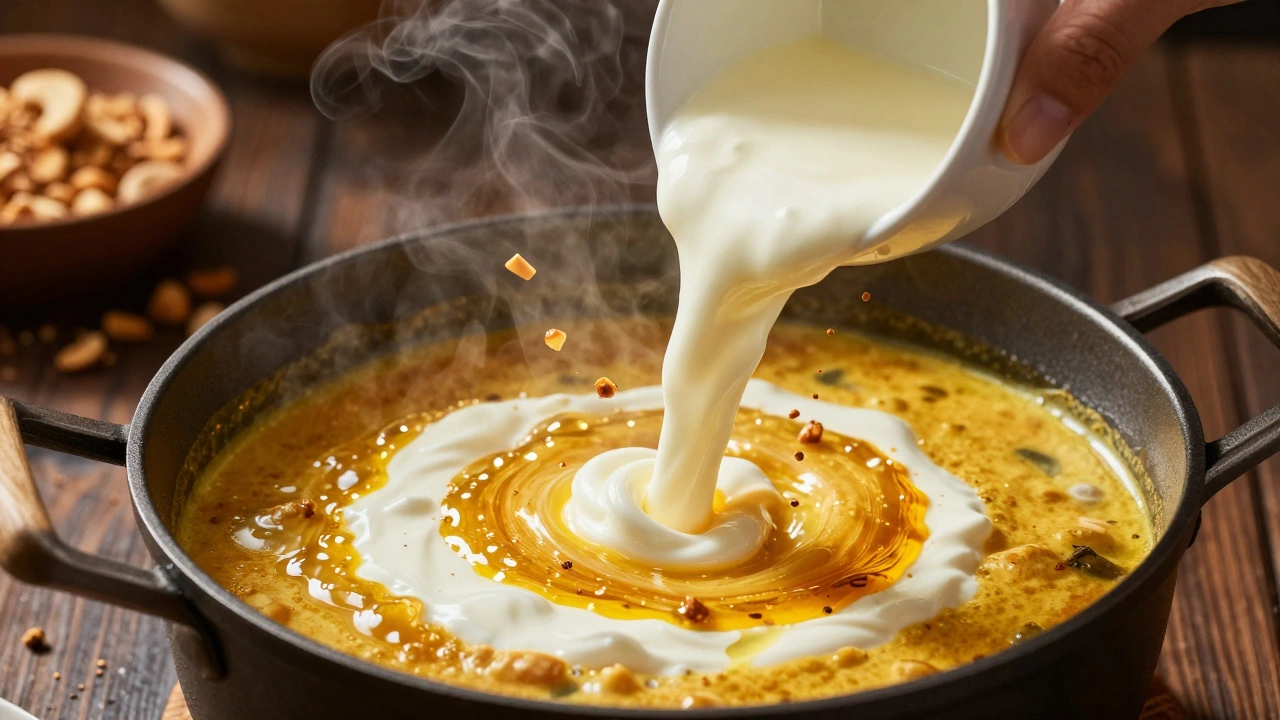
Don’t add cream at the end. It’s a band-aid. It masks poor technique. It doesn’t integrate. It just floats.Don’t use cornstarch or flour to thicken. Yes, it works. But it makes the sauce cloudy and pasty. Real Indian curries are clear, rich, and glossy-not chalky.
Don’t skip the tempering. A final splash of hot oil with cumin or mustard seeds? It’s not just flavor. It’s texture. The oil helps carry fat-soluble spices into the sauce, making every bite more cohesive.
Real Recipe Tip: The 3-Layer Creaminess Method
Here’s how to build a truly creamy chicken curry, step by step:- Layer 1: Base - Cook chopped onions, garlic, ginger, and tomatoes on low heat for 25 minutes until they’re a thick, dark paste.
- Layer 2: Thickener - Stir in 1/2 cup full-fat yogurt (tempered) or 1/2 cup canned coconut cream. Simmer gently for 15 minutes.
- Layer 3: Finish - Add a tablespoon of ground cashew paste and a pinch of ground cardamom. Simmer 10 more minutes. No stirring after the last addition.
That’s it. No cream. No flour. No shortcuts. Just three layers, each doing its job.
Why This Works Everywhere
This isn’t just for Indian curries. It’s the same technique used in Thai green curry, Jamaican curry goat, and even French coq au vin. Creaminess isn’t about dairy. It’s about control. Control over heat. Control over time. Control over ingredients that naturally bind and thicken.When you understand that, you stop following recipes. You start understanding food. And that’s when your chicken curry stops being just a meal-and becomes something people ask for again and again.
Can I use heavy cream instead of yogurt or coconut milk?
You can, but it changes the flavor. Heavy cream adds a sweet, dairy richness that’s not traditional in most Indian curries. It also doesn’t integrate as well. Yogurt and coconut milk thicken through natural proteins and fats. Cream just adds fat without the structure. If you use it, add it at the very end, off the heat, to avoid curdling.
Why does my curry separate when I reheat it?
Separation happens when the emulsion breaks. That’s usually because you reheated it too fast on high heat. Always reheat curry gently on low, stirring slowly. If it’s too thick, add a splash of warm water or broth-not cold. Cold liquid shocks the fat and causes separation.
Is coconut milk the same as coconut cream?
No. Coconut milk is thinner, with about 10-17% fat. Coconut cream is the thick layer that rises to the top of the can-it’s 20-24% fat. For creamy curries, you want coconut cream. If you only have coconut milk, reduce it on the stove for 10-15 minutes to thicken it before adding to your curry.
Can I make curry creamy without dairy or coconut?
Yes. Use ground nuts like cashews, almonds, or sesame seeds. Soak them in warm water for 20 minutes, then blend into a smooth paste. Stir that into your curry during the last 10 minutes of cooking. It gives you the same rich texture without any animal or tropical ingredients.
Why does my curry taste bland even though it’s creamy?
Creaminess doesn’t equal flavor. You probably skipped the slow-cooked onion-tomato base. Or you didn’t toast your spices properly. Or you didn’t use enough salt. Creamy texture is just one part. The flavor comes from browning, toasting, and layering spices over time. Don’t rush any step.
Next time you make chicken curry, think of it like building a wall-not pouring a liquid. Each layer adds strength. Each step adds depth. The creaminess isn’t the goal. It’s the side effect of doing things right.