Indian Dairy Fat Calculator
Select Milk Type
7-8% fat content, ideal for paneer, ghee, and sweets
3-4% fat content, common in southern India
Results
Select milk type and quantity to see results
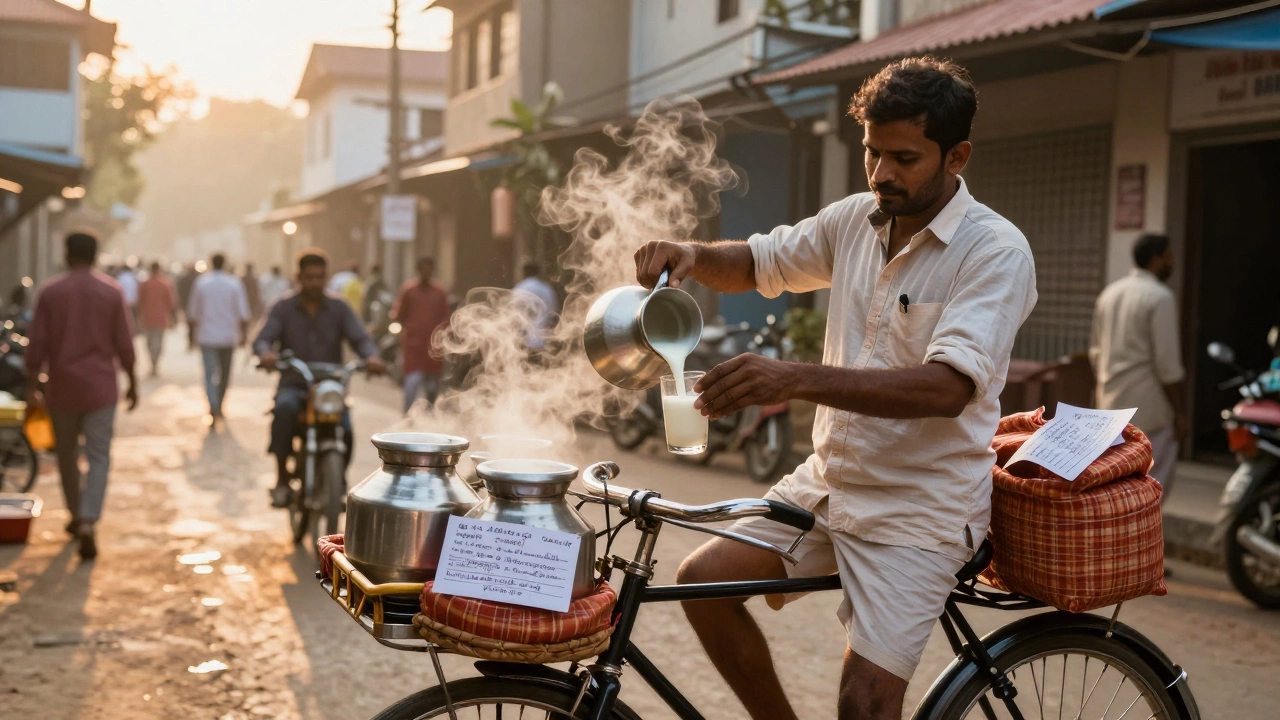
When you think of milk in India, you might picture a street vendor pouring warm milk into a glass from a swinging metal pot. That’s not a scene from a movie-it’s real life, happening every morning across villages, towns, and cities. But what kind of milk are they actually drinking? It’s not just cow’s milk like in the U.S. or Europe. In India, the answer depends on where you are, what you can afford, and what your family has always used.
Cow milk is common, but not the most popular
Many people assume cow milk is the default in India because of its global image. But in reality, buffalo milk makes up over 60% of the country’s total milk production, according to India’s Department of Animal Husbandry and Dairying. Why? Because buffaloes produce more milk per animal, and their milk is richer-about 7-8% fat compared to cow milk’s 3-4%. That thick, creamy texture is perfect for making paneer, ghee, and traditional sweets like rasgulla and kheer.
In northern states like Uttar Pradesh, Punjab, and Haryana, buffalo milk dominates. You’ll see it in households, tea stalls, and even in the small plastic bags sold outside metro stations. In contrast, cow milk is more common in southern and western regions, especially where there’s a cultural preference for lighter dairy or where cows are raised for religious reasons. But even there, buffalo milk often finds its way into cooking.
Why buffalo milk rules the kitchen
If you’ve ever tried making homemade paneer, you know how important fat content is. Buffalo milk gives you a firmer, creamier curd with less waste. That’s why most commercial paneer producers in India use buffalo milk-it’s more efficient. Same goes for ghee: the higher fat content means you get more butterfat per liter, and the flavor is deeper and nuttier.
Indian households rarely buy skimmed or low-fat milk. Whole milk is the standard, whether it’s from a cow or buffalo. Even in urban apartments, people boil milk every morning and let the cream rise to the top. That layer of malai? It’s scooped off and saved for desserts or stirred into tea. No one wastes it.
Raw milk is still the norm
Most Indians drink milk straight from the source-literally. Pasteurized, packaged milk from big brands like Amul or Mother Dairy is growing, especially in cities. But in small towns and rural areas, milk is delivered daily by local dairy farmers or milkmen on bicycles. The milk is raw, unpasteurized, and often delivered warm in the morning.
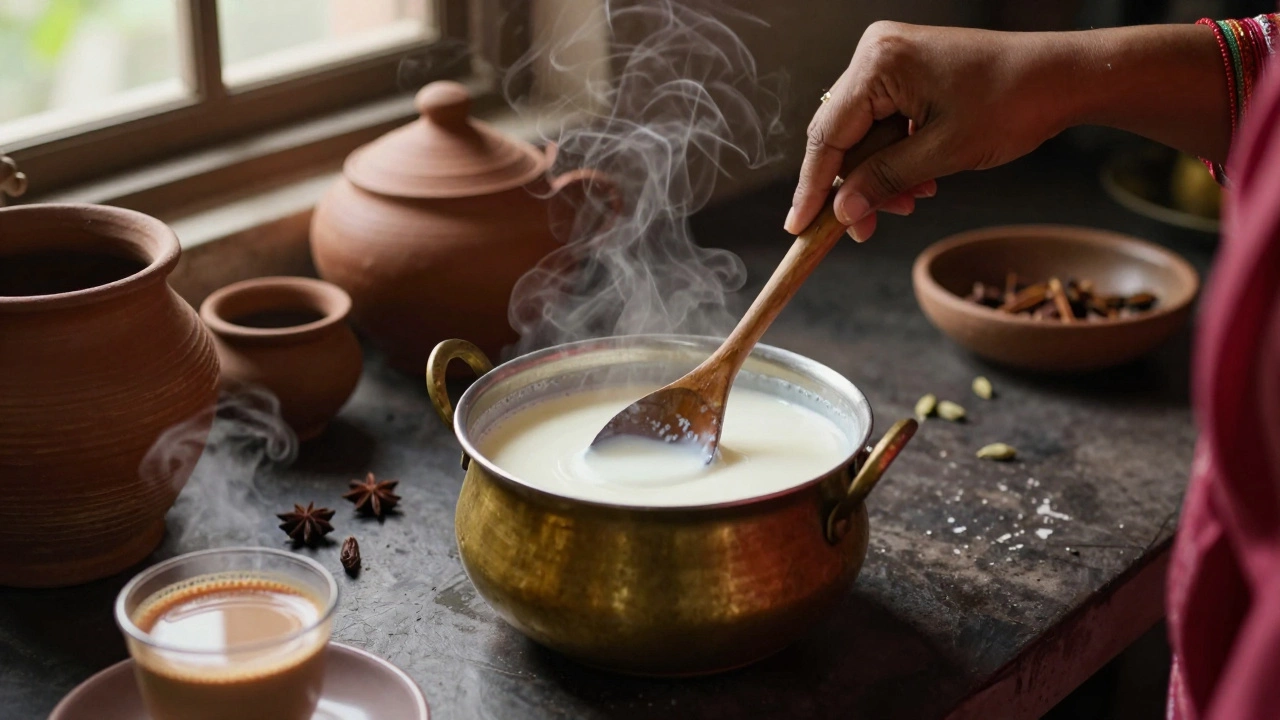
Boiling milk at home is a daily ritual. Almost every Indian household boils milk before drinking it, even if it’s labeled as pasteurized. It’s not just about safety-it’s tradition. Boiling kills any lingering bacteria and gives the milk a slightly caramelized taste that people love. It’s also believed to make it easier to digest, especially in humid climates.
Milk in Indian tea isn’t optional
Chai is more than a drink-it’s a social ritual. And the milk you use changes the whole experience. In most parts of India, tea is made with whole milk, not water. Buffalo milk makes chai thicker and creamier. Cow milk gives it a lighter body. Either way, the milk is boiled with the tea leaves and spices, not added afterward.
Street vendors use whatever milk is cheapest and most available. In Delhi, you’ll often get buffalo milk chai. In Kerala, it’s more likely to be cow milk. The taste difference is subtle but noticeable if you’ve tried both. Some people even mix the two for balance.
Plant-based milk? Not yet mainstream
You might expect almond, oat, or soy milk to be popular in India given its history of plant-based diets. But in reality, plant-based alternatives are still niche. Only about 2% of urban consumers regularly use them, mostly young professionals in big cities like Bangalore or Mumbai who are influenced by global trends.
Traditional alternatives like coconut milk or almond milk do exist-but they’re used in specific dishes, not as replacements for cow or buffalo milk. Coconut milk is common in South Indian curries. Almond milk is sometimes used in festive sweets like badam milk, but it’s a luxury item, not a daily drink.
Most Indians don’t see plant-based milk as a substitute. They see it as an extra. Milk from animals is still the foundation of nutrition, especially for children and the elderly.

How milk shapes Indian meals
Indian meals aren’t complete without dairy. Breakfast might include lassi-a yogurt drink made with whole milk. Lunch could have dal with a side of curd. Dinner often ends with kheer, a rice pudding made with milk, sugar, and cardamom. Even snacks like paneer tikka or shrikhand rely on full-fat dairy.
There’s also a cultural belief that milk is cooling and calming. It’s often given to children when they’re sick, to new mothers after delivery, and to people recovering from illness. It’s not just food-it’s medicine.
What’s changing in Indian dairy
Urbanization and rising incomes are slowly shifting habits. Supermarkets now sell organic cow milk, lactose-free options, and flavored milk in cartons. Younger generations are more aware of cholesterol and are experimenting with lower-fat versions. But these are still exceptions.
What hasn’t changed? The morning milk delivery. The smell of boiling milk in a brass pot. The sound of a metal ladle scraping the bottom of a pan to get every last bit of malai. These aren’t just habits-they’re part of daily rhythm in India.
So if you’re cooking an Indian recipe and the instructions say ‘add milk,’ don’t reach for the skimmed carton from your local grocery. Use whole milk-preferably buffalo milk if you can find it. If not, whole cow milk will do. And don’t skip boiling it first. That small step makes all the difference.
Do Indians drink milk every day?
Yes, almost every household in India consumes milk daily. It’s part of breakfast, tea, desserts, and even medicinal remedies. Even in poorer families, milk is often prioritized over other dairy products because it’s seen as essential for health.
Is buffalo milk better than cow milk for cooking?
For traditional Indian cooking, buffalo milk is preferred because of its higher fat and protein content. It makes richer paneer, thicker ghee, and creamier sweets. Cow milk works fine for everyday tea or drinking, but buffalo milk gives better results in recipes that require texture and richness.
Why do Indians boil milk before drinking it?
Boiling milk is a cultural habit rooted in hygiene and taste. Even pasteurized milk is boiled to kill any bacteria that may have entered after packaging. It also enhances flavor-slight caramelization from boiling gives milk a deeper, sweeter taste that’s preferred in Indian households.
Can I use almond milk instead of cow or buffalo milk in Indian recipes?
It’s not recommended for most traditional recipes. Almond milk lacks the fat and protein needed to make paneer curdle properly or to thicken kheer. It also has a different flavor profile that clashes with spices like cardamom or saffron. Use it only if you’re adapting a recipe for dietary restrictions, and expect a different result.
Where can I buy buffalo milk outside India?
Buffalo milk is rare outside South Asia. Some specialty dairy shops in the U.S., U.K., or Australia may carry it under brands like ‘Murrah’ or ‘Nili-Ravi,’ but it’s expensive and hard to find. Most Indian grocery stores import it in small quantities. If you can’t find it, use whole cow milk and add a tablespoon of heavy cream to mimic the richness.