Indian Street Food Explorer
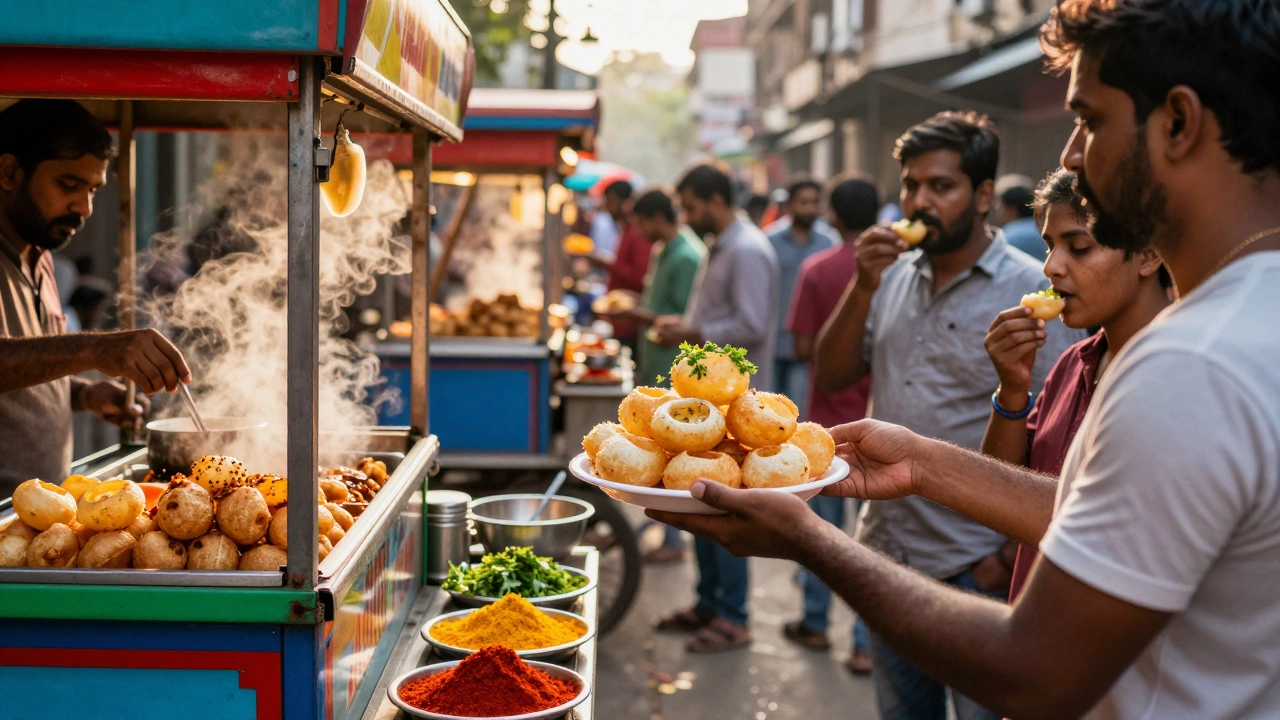
You walk down a busy lane in Mumbai or Delhi, and the air smells like cumin, frying onions, and something tangy. You see carts everywhere, people eating standing up, and plates piled high with colorful bites. But if you ask someone, “What is the word for Indian street food?” they might pause. There isn’t just one word. And that’s exactly what makes it special.
Indian street food isn’t a single dish-it’s a whole culture. It changes depending on where you are, who’s cooking, and what season it is. Some people call it chaat, which is a category of savory snacks from North India that mix sweet, sour, spicy, and crunchy textures. Others might say thali, meaning a meal served on a platter with multiple small dishes. Or they’ll just point at a cart and say, “Try that.”
If you’re looking for a single label, you won’t find one that fits everything. But if you want to understand how Indians talk about their street food-and how to order like a local-you need to know the real words behind the scenes. Let’s break it down.
The Most Common Word: Chaat
When most people think of Indian street food, they picture chaat. This term comes from the Hindi word chatna, which means “to taste” or “to nibble.” Chaat isn’t just one thing-it’s a family of snacks designed to hit every flavor note at once.
A classic chaat includes:
- A base (like fried dough, potatoes, or chickpeas)
- Tangy tamarind chutney
- Sweet yogurt or mint chutney
- Spicy red chili powder
- Crispy sev (thin gram flour noodles)
- Fresh cilantro and onion
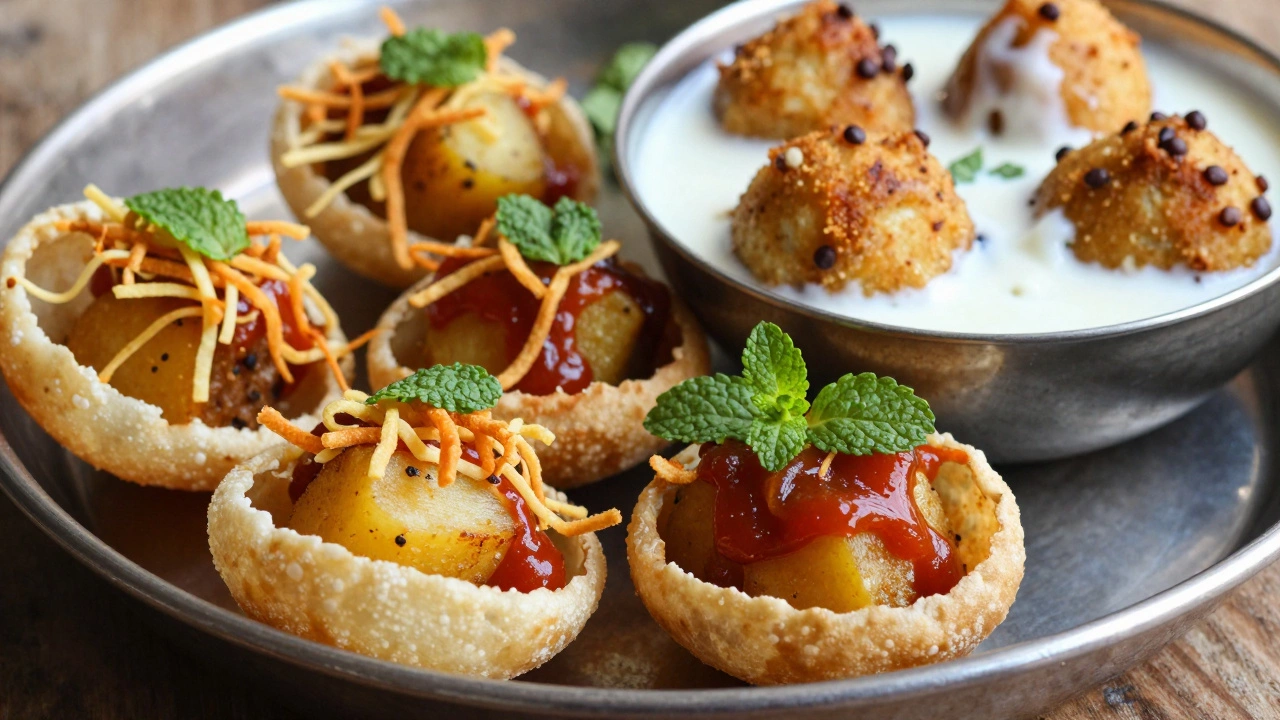
Popular examples include Pani Puri, also known as Gol Gappa or Gup Chup depending on the region-hollow crispy shells filled with spiced water and potato filling. Then there’s Bhel Puri, a mix of puffed rice, vegetables, chutneys, and sev tossed together. And don’t forget Dahi Vada, soft lentil dumplings soaked in sweetened yogurt.
Chaat is mostly vegetarian, but not always. In some places, you’ll find meat-based versions too. The key is balance-every bite should surprise your tongue.
Thali: The All-in-One Meal
If chaat is about snacking, then thali is about eating a full meal. A thali is a round metal plate divided into sections, each holding a different dish. At street stalls, you might get a mini-thali with:
- One main curry (vegetable or chicken)
- Rice or roti
- Dal (lentil soup)
- Pickle (achar)
- Salad or raita
In cities like Jaipur or Udaipur, street vendors serve thalis for under $1. It’s fast, cheap, and balanced. You don’t have to choose between sides-you get them all.
Thali isn’t exclusive to street food. Restaurants use it too. But on the streets, it’s often simpler, quicker, and more affordable. Think of it as the Indian version of a combo meal-but with more variety.
Regional Words That Matter
India has dozens of languages and hundreds of dialects. So while “chaat” works in the north, other regions have their own terms.
In South India, especially Tamil Nadu and Kerala, people often refer to street food as kai karupu or simply snacks in English. But locally, you’ll hear names like:
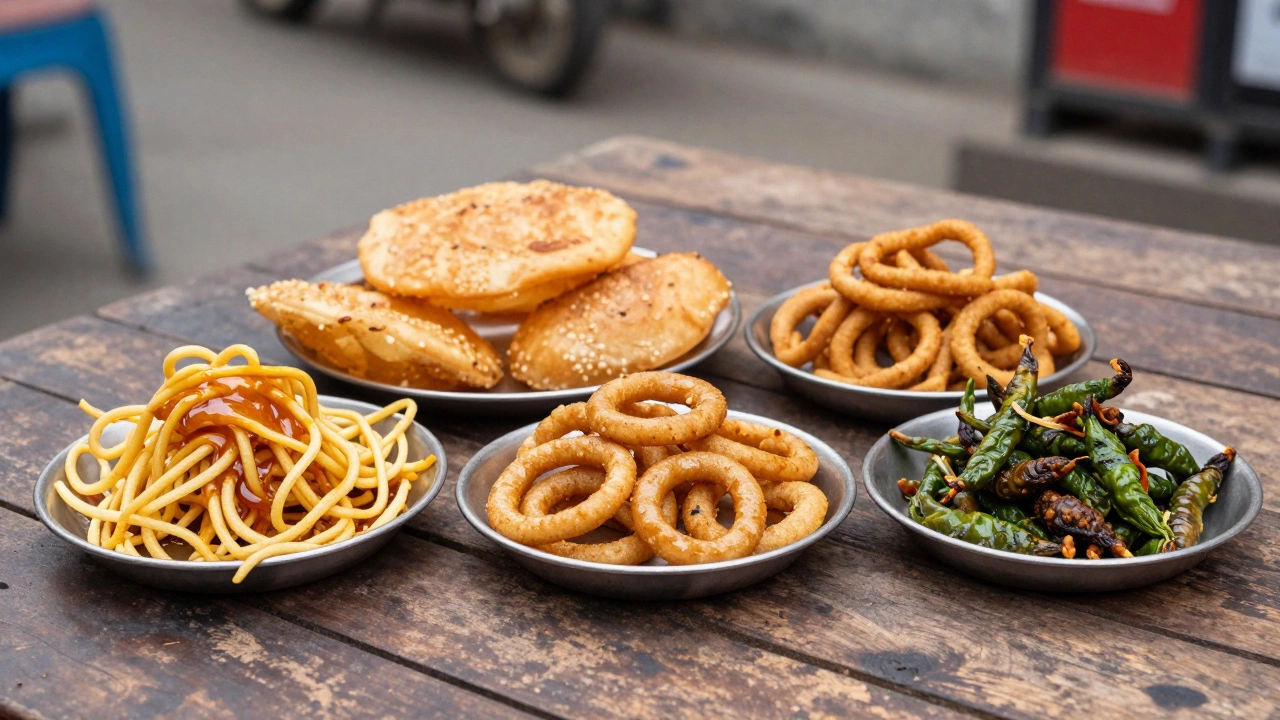
- Murukku: Crispy spiral-shaped snack made from rice and urad dal flour.
- Bonda: Deep-fried balls made from fermented batter and potato.
- Vada: Savory donut-shaped fritters, often served with sambar and coconut chutney.
In West Bengal, street food is called bhatra or phuchka (their version of pani puri). Phuchka uses a sweeter, less spicy water inside the shell compared to northern pani puri.
Gujarat calls its famous snack fafda, a crispy fried strip eaten with jalebi during festivals. Rajasthan has mirchi bajji, green chilies dipped in batter and deep-fried.
So no single word covers all of India. But knowing these regional names helps you connect better with locals-and discover hidden gems.
Why There’s No Single Word
Here’s the truth: Indian street food doesn’t fit into one box because it wasn’t meant to. It grew organically over centuries, shaped by trade routes, colonial history, migration, and climate.
During British rule, railways brought workers from different states to new cities. They carried their recipes with them. A Bengali worker in Mumbai started selling phuchka. A Punjabi vendor in Chennai began making chole bhature. Over time, these foods blended, adapted, and became part of the city’s identity.
Today, street food reflects this diversity. In Kolkata, you’ll find both Chinese-style noodles and traditional kathi rolls. In Hyderabad, biryani vendors sit next to osmania biscuits sellers. In Pune, vada pav shares space with misal pav.
This mix means there’s no universal term. Instead, we rely on context. If you’re in Delhi, “chaat” makes sense. In Bangalore, “snack” or “tiffin” might work better. In Goa, “fish fry” says enough.
How to Talk About Indian Street Food Like a Local
Want to sound like you’ve been around the block? Use these phrases:
- “Chalo, chaat khaate hain.” → “Let’s go eat chaat.”
- “Yeh kya hai?” → “What is this?” (pointing at a cart)
- “Ek number wala lo.” → “Take the big size.”
- “Thoda kam teekha karo.” → “Make it slightly less spicy.”
Vendors appreciate when you try to speak even a little Hindi or regional language. It shows respect-and sometimes gets you extra sev on top.
Also, avoid saying “junk food.” To many Indians, street food is comfort food. It’s tied to memories-school days, college nights, first dates, rainy afternoons. Calling it junk misses the point entirely.
Is Indian Street Food Safe?
This is the question everyone asks. Short answer: Yes-if you pick wisely.
Look for these signs:
- High customer turnover (busy carts = fresh food)
- Clean utensils and covered ingredients
- Boiled or freshly cooked items (avoid raw salads unless washed well)
- Vendors wearing gloves or using tongs
Avoid places where flies swarm, water looks murky, or food sits uncovered for hours. Stick to popular spots near markets, temples, or colleges-they tend to be safer due to higher demand and scrutiny.
And yes, drink bottled or filtered water. Don’t sip tap water, even if it looks clear.
| Region | Local Term | Example Dish | Description |
|---|---|---|---|
| North India | Chaat | Pani Puri | Crispy shell with spiced water and potato filling |
| South India | Kai Karupu / Snack | Murukku | Crispy spiral snack made from rice and lentil flour |
| West Bengal | Phuchka | Phuchka | Sweeter version of pani puri with tamarind-spiced water |
| Gujarat | Fafda-Jalebi | Fafda | Crispy fried strips paired with sweet jalebi |
| Rajasthan | Mirchi Bajji | Mirchi Bajji | Green chilies coated in batter and deep-fried |
| Maharashtra | Vada Pav | Vada Pav | Potato fritter sandwiched in bread with chutneys |
Final Thoughts: Embrace the Chaos
There’s no single word for Indian street food because it’s not supposed to be simple. It’s messy, loud, unpredictable, and deeply personal. One person’s favorite might be another’s nightmare. That’s okay.
Instead of searching for one label, start exploring. Try pani puri in Delhi. Eat vada pav in Mumbai. Sample bonda in Chennai. Order phuchka in Kolkata. Each place teaches you something new-not just about food, but about people.
Next time someone asks, “What is the word for Indian street food?” smile and say: “It depends where you are.” Then hand them a plate. They’ll figure it out fast.
What is the most common word for Indian street food?
The most widely recognized term is "chaat," especially in North India. However, there is no single universal word since street food varies greatly by region. Other common terms include "thali" for meals, "phuchka" in Bengal, and "vada pav" in Maharashtra.
Is chaat always vegetarian?
Most chaat dishes are vegetarian, including pani puri, bhel puri, and dahi vada. However, some regional variations may include meat fillings or toppings, especially in urban areas. Always check with the vendor if you have dietary restrictions.
Can I eat Indian street food safely as a tourist?
Yes, if you choose busy, reputable vendors with high turnover. Avoid raw salads, unfiltered water, and food left uncovered. Stick to hot, freshly prepared items and observe hygiene practices before ordering.
What does "thali" mean in Indian street food?
Thali refers to a complete meal served on a divided plate, typically including rice, roti, dal, curry, pickle, and salad. On the streets, it’s an affordable way to enjoy a balanced, multi-dish experience without ordering individually.
Why do different regions have different names for similar snacks?
India’s linguistic and cultural diversity leads to regional adaptations. For example, pani puri becomes phuchka in Bengal due to differences in spice levels and preparation methods. These variations reflect local tastes, ingredients, and historical influences.