Tandoori Chicken Color Estimator
Estimate Color Intensity
Enter your marinade details to see how deep the color will be.
Color Results
Select your ingredients to see results
Estimated color intensity based on your inputs
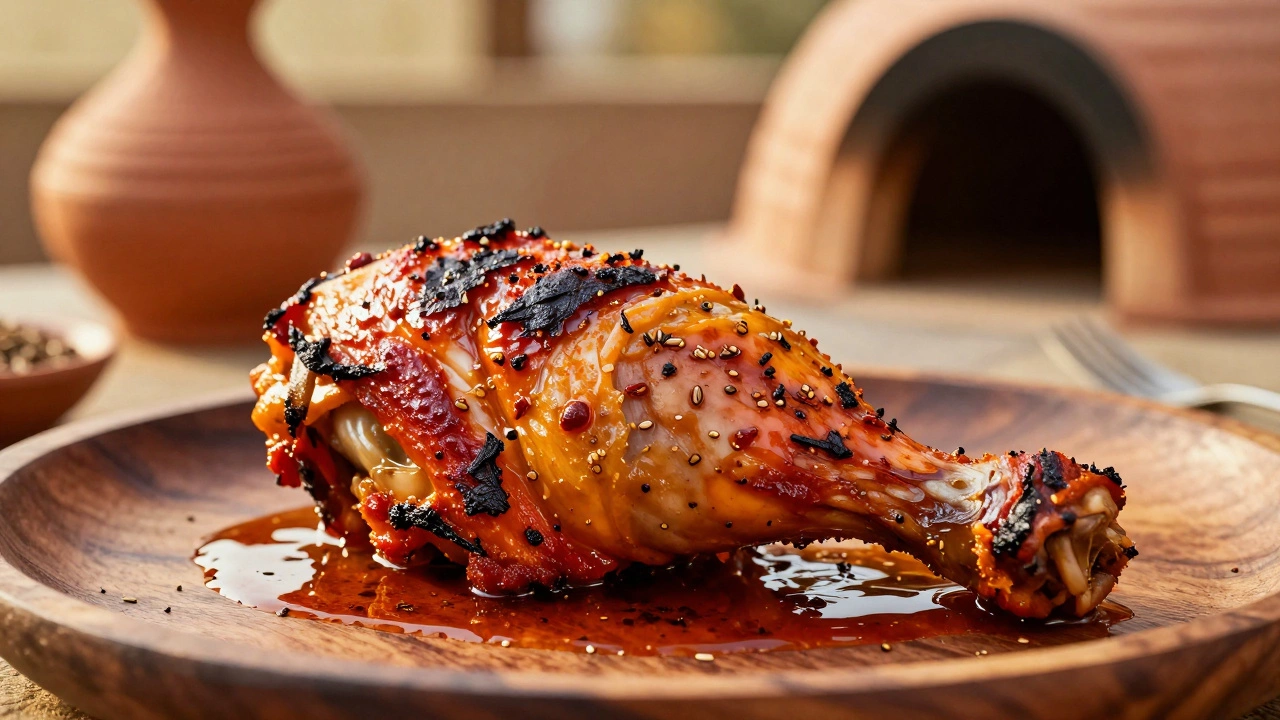
Ever cut into a juicy piece of tandoori chicken and wondered what that bright red liquid pooling on the plate is? It’s not blood. It’s not poison. And it’s definitely not something you should throw out. That red ooze is a mix of spices, yogurt, and natural juices - all working together to make your chicken taste incredible.
Why Does Tandoori Chicken Look So Red?
The red color in tandoori chicken comes from red chili powder and a spice blend that includes Kashmiri chili, paprika, and sometimes food-grade red color. These aren’t just for heat - they’re for color. Kashmiri chili is especially popular because it gives a deep, vibrant red without turning your dish spicy-hot. It’s mild, rich, and stains everything it touches.
When you mix this with yogurt and a marinade of garlic, ginger, cumin, and coriander, the liquid doesn’t just sit on the surface. It seeps into the meat over hours, even overnight. The acid in the yogurt breaks down proteins slightly, letting those red pigments sink deep. That’s why the color isn’t just on the outside - it’s in the fibers.
Is the Red Liquid Blood?
No. Blood in chicken drains out during processing. By the time you buy chicken at the store, it’s been hung, rinsed, and chilled. Any remaining blood is minimal and dark, not bright red. What you’re seeing is myoglobin and spice-infused juices. Myoglobin is the protein that gives meat its color - it turns red when exposed to air, and when you cook it, it releases moisture mixed with the marinade.
If you’ve ever seen red juice from rare steak, that’s the same thing. Chicken doesn’t have as much myoglobin as beef, but the strong coloring from the spices makes it look like there’s more than there really is. It’s visual trickery - and it’s totally safe.
What’s in the Marinade?
A classic tandoori marinade has five core ingredients:
- Yogurt - the base. It tenderizes and holds the spices to the meat.
- Kashmiri chili powder - the color king. It’s mild, earthy, and gives that signature red.
- Garlic and ginger paste - for depth and punch.
- Cumin and coriander - warm, citrusy notes that balance the heat.
- Lemon juice - adds brightness and helps the yogurt cling.
Some recipes add a pinch of red food coloring and (natural beetroot extract or synthetic FD&C Red 40) to make the color pop. It’s optional. Traditional cooks skip it. But if you’re serving it at a party and want it to look like the restaurant version, a drop won’t hurt.
Why Doesn’t the Liquid Look Like Blood When Cooked?
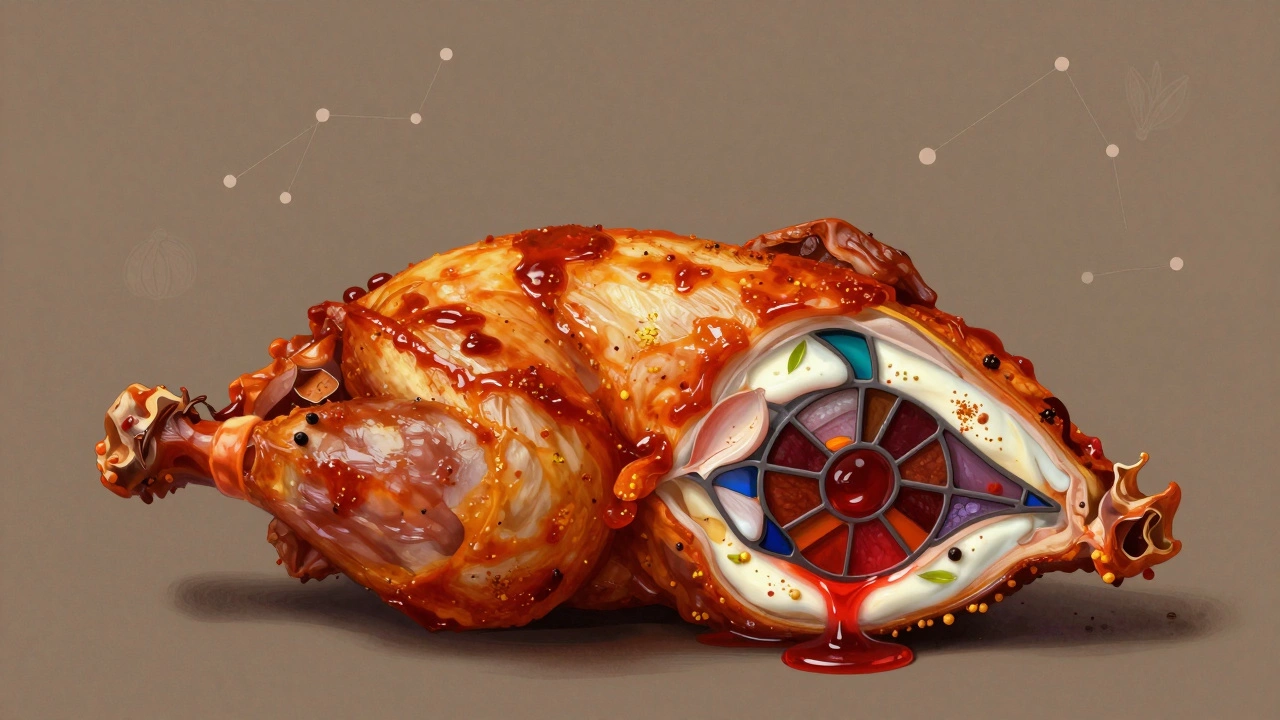
When you cook chicken, the heat causes proteins to contract and squeeze out moisture. That moisture carries dissolved spices - especially the red pigments - to the surface. The longer the chicken marinates, the more color gets absorbed. When it hits the grill or oven, that liquid turns into steam and caramelizes. What’s left on the plate is just the leftover marinade that didn’t cook off.
That’s why it’s important to pat the chicken dry before cooking. If you leave too much wet marinade on the surface, it steams instead of sears. You’ll end up with pale, soggy skin instead of that crispy, charred crust that makes tandoori chicken unforgettable.
What Happens If You Don’t Marinate Long Enough?
If you skip the overnight soak, you’ll get chicken that’s just bland meat with a dusting of spice on top. The red color won’t penetrate. The flavor will sit on the surface. And the texture? Tougher. Yogurt needs time to work its magic - at least 4 hours, but 12 to 24 is ideal.
Here’s a quick rule: Marinate chicken in the fridge for every hour you plan to cook it. So if you’re grilling for 30 minutes, marinate for 30 minutes. But for tandoori? Go longer. The flavor deepens, the color deepens, and the meat stays juicy even when it’s well-done.
Can You Skip the Red Color?
You can - but you’ll lose something essential. The color isn’t just for show. It’s part of the experience. People expect tandoori chicken to be red. It signals flavor, heat, and tradition. Skip the chili, and you’re just making grilled yogurt chicken.
But if you’re sensitive to spice or want a milder version, use smoked paprika instead of Kashmiri chili. It gives a deep orange-red and a subtle smokiness. It’s not traditional, but it’s delicious.
How to Tell If the Red Liquid Is Safe
Safe tandoori chicken juice looks like this:
- Deep red or brick-colored, not dark brown or black
- Clear, not cloudy
- Smells like spices and herbs, not sour or metallic
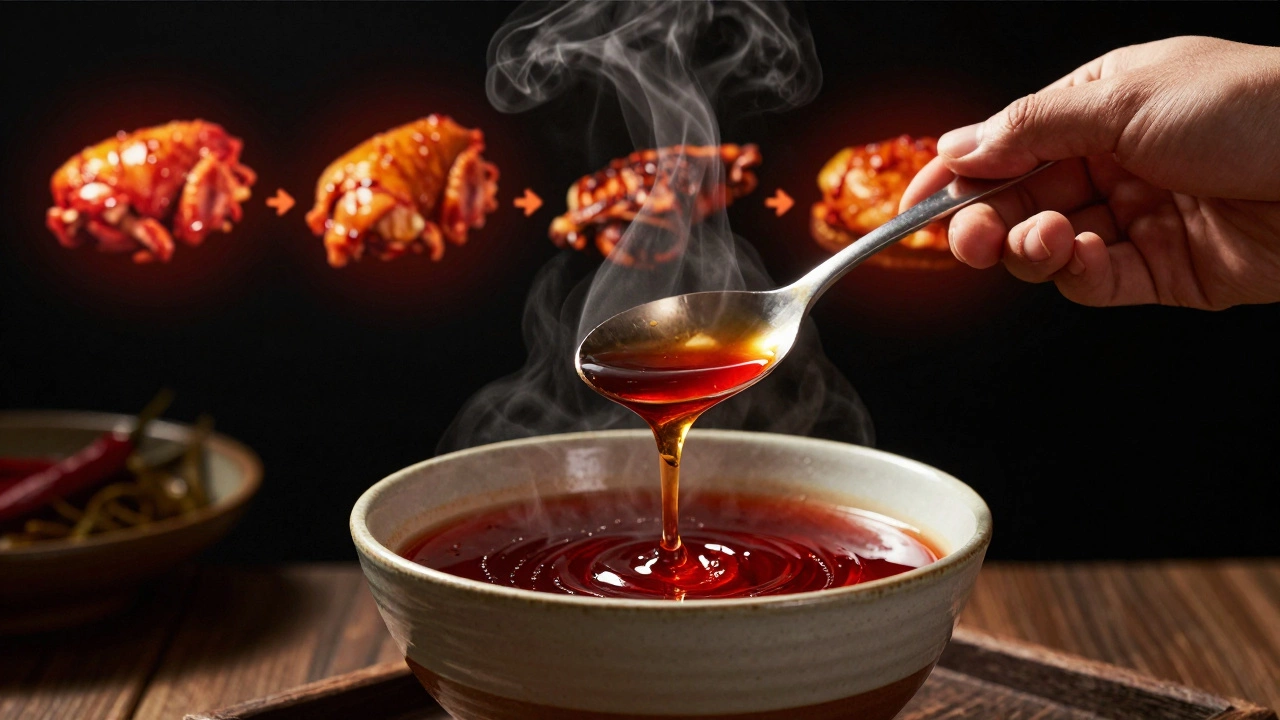
If it smells off, looks slimy, or has a weird odor, toss it. But if it’s bright, smells like cumin and garlic, and comes from properly stored, fresh chicken - it’s perfectly fine. In fact, it’s the sign of a well-made dish.
Pro Tip: Save the Juice
Don’t pour that red liquid down the drain. It’s flavor gold. Scoop it up with a spoon and drizzle it over rice, mix it into a salad dressing, or stir it into a yogurt sauce. That leftover marinade is packed with spice, acid, and umami. You can even boil it down into a glaze for extra chicken or vegetables.
Just don’t reuse raw marinade on cooked food unless you boil it first. Raw chicken juices can carry bacteria. But if you heat it to a rolling boil for a minute, it’s safe to use as a sauce.
Final Thought: It’s Not a Flaw - It’s a Feature
The red liquid in tandoori chicken isn’t a mistake. It’s not a sign of poor handling. It’s not blood. It’s the delicious result of patience, spice, and science. That juice is what makes the difference between ordinary grilled chicken and something that makes you close your eyes and sigh.
Next time you see it, don’t wipe it away. Taste it. Smell it. Appreciate it. That’s the soul of tandoori chicken.
Is the red liquid in tandoori chicken safe to eat?
Yes, absolutely. The red liquid is a mix of spice-infused juices and natural meat moisture. It’s safe as long as the chicken was stored properly and cooked to an internal temperature of 165°F (74°C). If it smells sour or looks slimy, discard it - but bright red, spicy-smelling juice is a sign of good flavor.
Can I use beet juice instead of chili powder for color?
You can, but it won’t taste the same. Beet juice gives color but no spice. Kashmiri chili adds both color and flavor - earthy, warm, slightly sweet. Beet juice will make your chicken look red but taste bland. If you want natural color without artificial dyes, use paprika or a pinch of annatto powder instead.
Why does my tandoori chicken turn brown instead of red?
This usually happens if you used too much heat too fast, or if your chili powder is old or low quality. Kashmiri chili powder should stay vibrant even after cooking. If your chicken turns brown, try fresh, high-grade Kashmiri chili, or mix in a little paprika. Also, don’t over-marinate with lemon juice - too much acid can break down the color pigments.
Do I need to use food coloring in tandoori chicken?
No. Traditional recipes don’t use it. The color comes from Kashmiri chili powder and paprika. Food coloring (like FD&C Red 40) is sometimes added in restaurants to make the color brighter, especially if the chili powder is weak. At home, skip it. You’ll get better flavor and avoid unnecessary additives.
How long should I marinate chicken for tandoori?
For best results, marinate for at least 8 hours, but 12 to 24 hours is ideal. The longer it sits, the deeper the color, the more tender the meat, and the more flavor it absorbs. If you’re short on time, 4 hours will still help - but don’t expect the same depth.