Indian Sweet Matchmaker & Quality Checker
Not sure which Indian sweet to try next? Or worried you bought a bad batch of Gulab Jamun? Use these tools to find your match or verify quality.
Answer these questions about your Gulab Jamun to determine if it's high-quality or a cheap imitation.
Ask ten people from different parts of India what their favorite dessert is, and you might get ten different answers. But if you ask which Gulab Jamun is, you will likely get a nod of recognition from almost everyone. It is the undisputed king of traditional Indian sweets, the one that shows up at every wedding, Diwali box, and street food stall from Delhi to Chennai.
Why does this soft, syrup-soaked dumpling hold such a massive spot in our hearts? Is it just the sugar rush, or is there something deeper about its texture and cultural weight? This article breaks down why Gulab Jamun takes the crown, how it compares to other heavy hitters like Rasgulla and Kaju Katli, and what makes it the go-to choice for millions of Indians and diaspora communities worldwide.
The Undisputed King: Why Gulab Jamun Wins
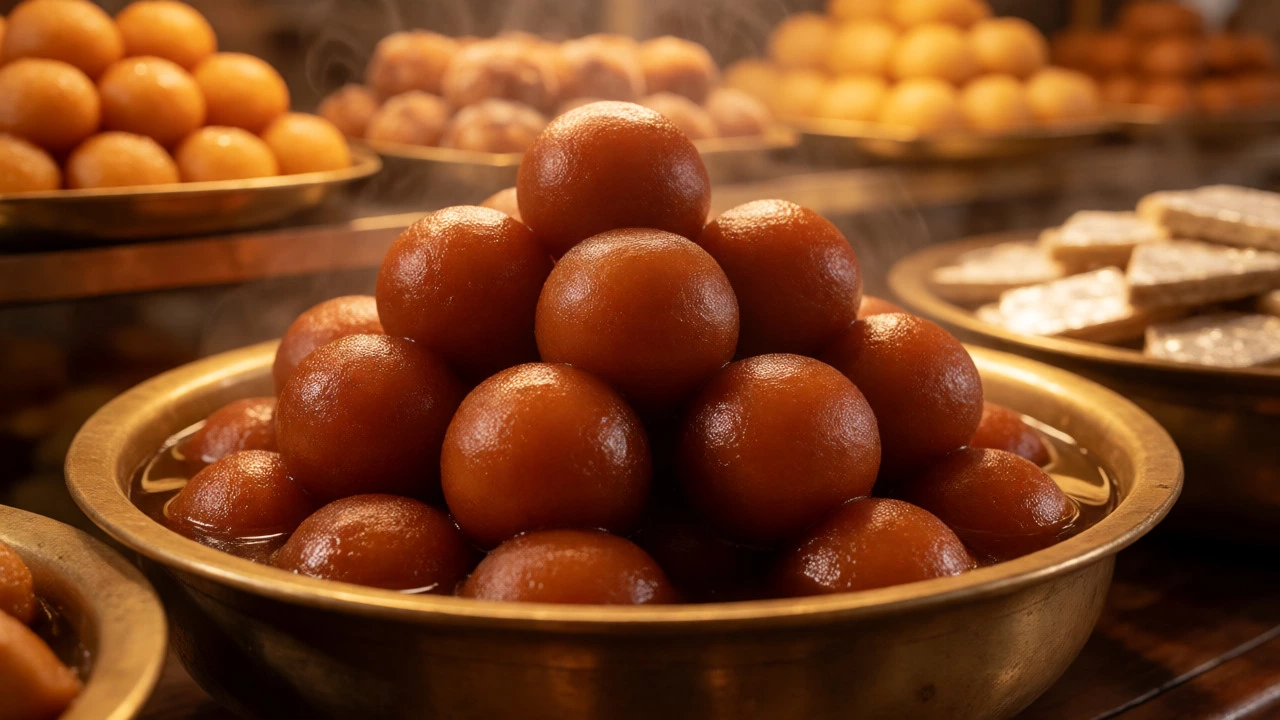
Gulab Jamun is a deep-fried milk solid dumpling soaked in rose-scented sugar syrup. Its popularity isn't an accident; it's engineered by history and taste buds. Unlike many regional sweets that are niche or seasonal, Gulab Jamun is ubiquitous. You can find it in high-end restaurants in London, tiny dhabas on Indian highways, and homemade kitchens in Auckland.
The appeal lies in its simplicity and sensory experience. The exterior is slightly crisp when fresh, giving way to a dense, moist interior made from khoya (reduced milk solids). When you bite into it, the warm syrup bursts out, mixing with the rich dairy flavor. It’s comforting. It’s familiar. For many, it triggers memories of childhood festivals and family gatherings.
Statistically, it dominates search trends and sales data during festive seasons. During Diwali, searches for "Gulab Jamun recipe" spike globally. In commercial bakeries across India, it often accounts for over 30% of total sweet sales. That’s a huge market share for a single item in a country with thousands of confectionery options.
The Contenders: Who Else Makes the List?
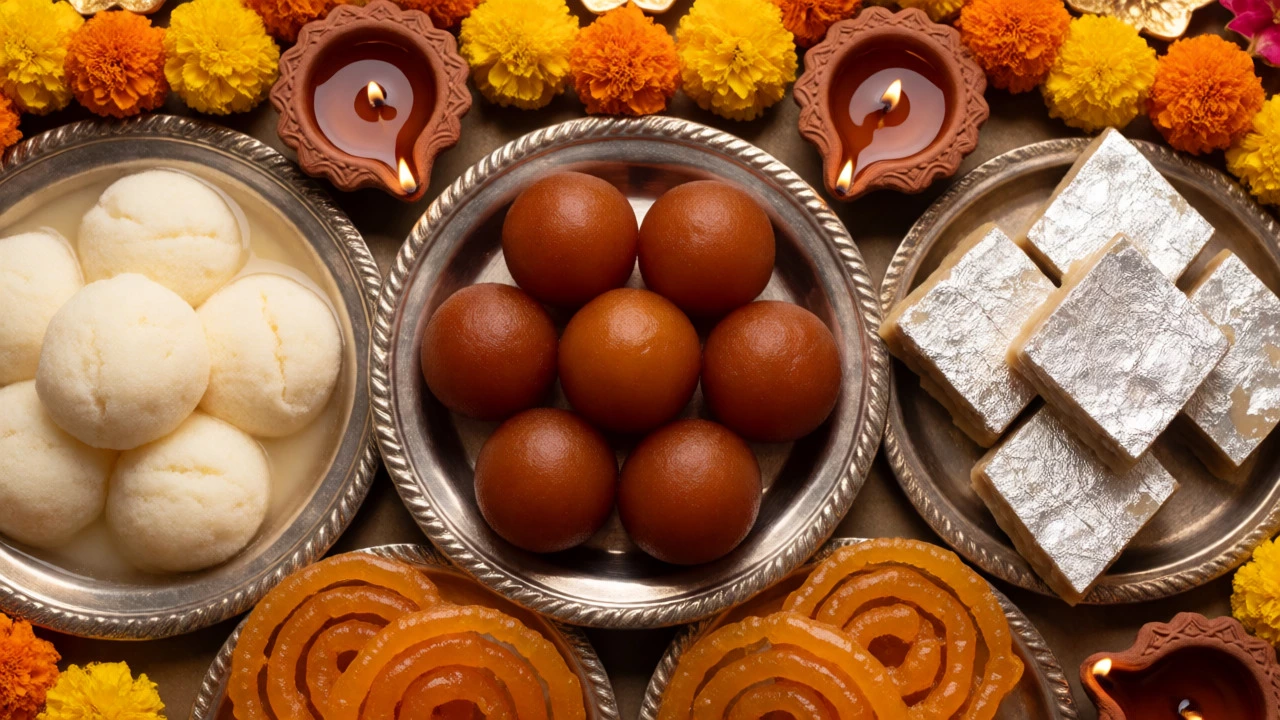
While Gulab Jamun wears the crown, it has strong rivals. Understanding them helps appreciate why the king remains undefeated. Here is how the top contenders stack up against each other.
| Sweet Name | Main Ingredient | Texture | Regional Origin | Popularity Factor |
|---|---|---|---|---|
| Gulab Jamun | Khoya (Milk Solids) | Soft, Dense, Syrupy | Pan-India | Highest overall recognition |
| Rasgulla | Chhena (Cottage Cheese) | Spongy, Light, Wet | Bengal/Odisha | Iconic in East India |
| Kaju Katli | Cashew Nuts | Firm, Nutty, Dry | Rajasthan/Gujarat | Preferred for gifting |
| Laddu | Gram Flour/Milk | Granular, Crumbly | Pan-India | Religious offerings |
| Jalebi | Maida (Flour) & Sugar | Crispy, Sticky | Pan-India | Best eaten hot/fresh |
Notice the pattern? Gulab Jamun scores highest on "Pan-India" reach. Rasgulla is beloved but has a stronger regional identity tied to Bengal. Kaju Katli is premium and great for gifts because it doesn’t melt or spoil quickly, but it lacks the emotional warmth of a warm jamun. Laddu is religiously significant but often considered more of a prasad (offering) than a dessert you crave after dinner.
The Science Behind the Sweetness
Why do we love these sweets so much? It’s not just culture; it’s biology. Indian sweets are typically high in both fat and sugar. This combination hits the brain’s reward system harder than either component alone. Khoya, the base for Gulab Jamun, is essentially concentrated milk fat and protein. When fried, the Maillard reaction creates complex flavors. Then, the sugar syrup adds rapid glucose energy.
Contrast this with Western desserts like fruit tarts or sorbets, which rely more on acidity or freshness. Indian sweets are designed for preservation and richness. Before refrigeration was common, reducing milk to khoya or soaking sweets in thick syrup helped them last longer. Today, that necessity has become a culinary tradition. We eat them because they taste good, but the roots are practical.
Also, consider the role of spices. Cardamom, saffron, and rose water aren't just flavorings; they aid digestion in Ayurvedic thought. So, eating a sweet isn't just indulgence; it's framed as a balanced act of nourishment and pleasure.
Regional Variations: It’s Not Just One Thing
When you ask "what is the most popular Indian sweet," you have to acknowledge the diversity. In the North, Gulab Jamun rules. In the East, Rasgulla challenges it fiercely. In the South, Mysore Pak (a gram flour fudge) holds court. In the West, Mohanthal (a semolina-based sweet) is a staple.
However, globalization has blurred these lines. A person in Mumbai might grow up eating Modak during Ganesh Chaturthi but crave Gulab Jamun at weddings. A student in New Zealand might discover Jalebi through a local Indian restaurant and make it their new favorite. The "popularity" of Gulab Jamun comes from its adaptability. It travels well. It freezes well. It tastes acceptable even if slightly stale, unlike Jalebi, which dies without immediate consumption.
This versatility makes it the default choice for caterers and home cooks alike. If you don't know what to serve guests, you make Gulab Jamun. It’s safe. It’s expected. It delivers.
How to Spot Quality Gulab Jamun
Not all Gulab Jamuns are created equal. Since it’s the most popular, it’s also the most mass-produced poorly. Here is how you can tell if you’re getting the real deal versus a cheap imitation:
- Color: Look for a deep brown, not black. Black usually means burnt oil or excessive caramelization, which tastes bitter. Golden brown is ideal.
- Texture: Press it gently. It should spring back slightly. If it feels hard like a stone, it’s old or overcooked. If it falls apart instantly, it wasn’t kneaded properly.
- Syrup Consistency: The syrup should coat the back of a spoon. If it’s watery, the sweet won’t stay moist long-term. If it’s too thick, it becomes sticky and cloying.
- Aroma: Real cardamom and rose smell distinct. Artificial essences smell sharp and chemical.
If you are buying pre-made mixes, check the ingredient list. Good mixes use milk powder or khoya. Cheap ones use vegetable fat and artificial colors. Your palate knows the difference, even if your eyes don’t.
Making It at Home: Tips for Success
You don’t need to be a chef to make decent Gulab Jamun. But you do need patience. Here are three quick tips to avoid common disasters:
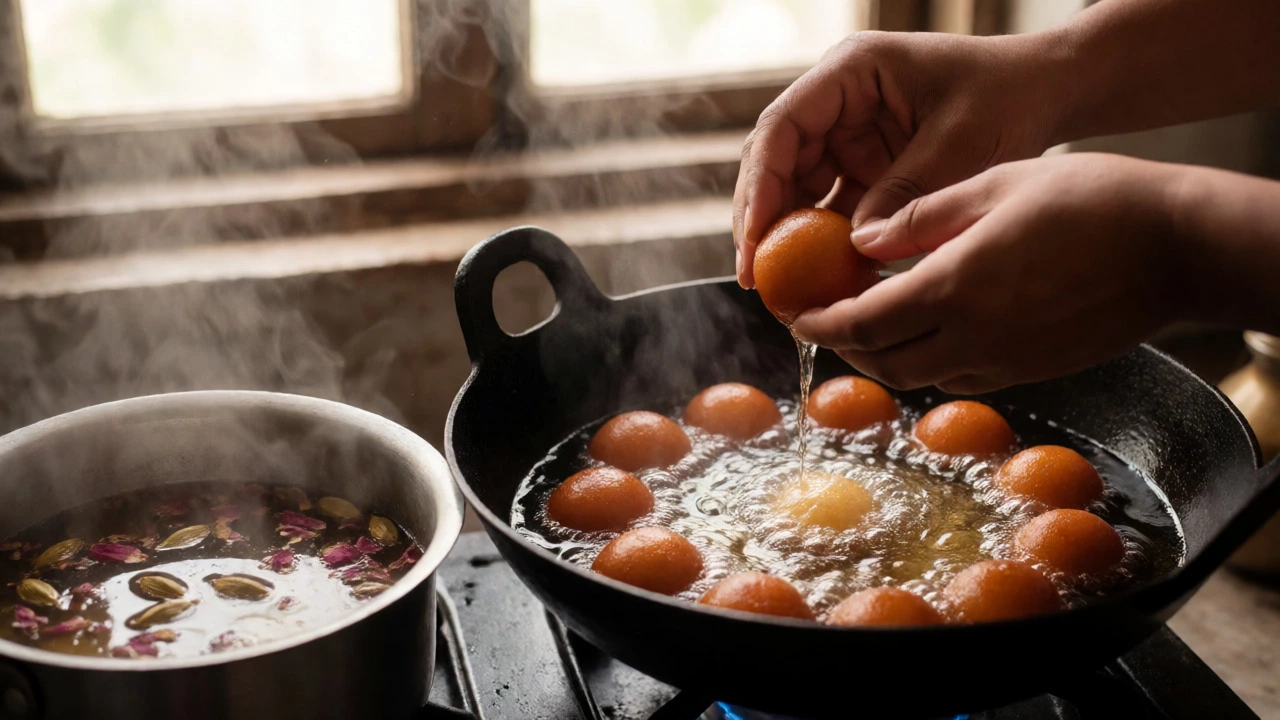
- Knead the dough well: Whether using khoya or milk powder, the dough must be smooth. Any cracks in the raw ball will cause it to break in the oil. Let it rest for 15 minutes before rolling.
- Control the oil temperature: Fry on low-medium heat. High heat browns the outside while leaving the inside raw and floury. Low heat allows the center to cook through evenly.
- Soak while warm: Transfer the fried jamuns directly into warm syrup. Cold jamuns in cold syrup won’t absorb moisture effectively. Warmth opens up the pores of the dumpling.
Many people skip the soaking step or rush it. Give them at least two hours in the syrup before serving. Overnight is better. The wait transforms a dry dumpling into a juicy delight.
Health Considerations: Can You Eat Them Daily?
Let’s be honest: Gulab Jamun is a calorie bomb. One medium-sized piece can have around 150-200 calories, mostly from fat and sugar. Eating five of them equals a full meal’s worth of energy. So, no, you probably shouldn’t eat them daily if you’re watching your weight.
But moderation works. Many diabetics in India manage their intake by pairing sweets with tea (without sugar) or sharing portions. There are also healthier versions now, baked instead of fried, or made with stevia instead of sugar syrup. They lack the authentic crunch and richness, but they scratch the itch without the guilt trip.
Remember, food is part of joy. Depriving yourself entirely often leads to bingeing later. Enjoy the sweet, savor it slowly, and balance it with lighter meals throughout the day.
Conclusion: More Than Just Sugar
Gulab Jamun isn’t just the most popular Indian sweet because it tastes good. It’s popular because it connects us. It bridges generations, regions, and borders. It appears in moments of celebration and comfort. While recipes evolve and health trends shift, the core appeal of that warm, milky, syrupy sphere remains constant.
Next time you see a box of sweets, look for the Gulab Jamun first. It’s the anchor of the collection. And if you’re feeling adventurous, try making it yourself. The process is messy, the smell is heavenly, and the result is deeply satisfying. That’s the magic of Indian mithai.
Is Gulab Jamun really the most popular Indian sweet?
Yes, by broad metrics including search volume, sales in sweet shops, and presence at social events, Gulab Jamun is widely considered the most popular. However, regional favorites like Rasgulla in Bengal or Mysore Pak in Karnataka may dominate locally.
What is Gulab Jamun made of?
Traditional Gulab Jamun is made from khoya (dried evaporated milk solids), flour, baking soda, and ghee, formed into balls, deep-fried, and then soaked in a sugar syrup flavored with cardamom and rose water.
Can I make Gulab Jamun without khoya?
Yes, you can use milk powder mixed with ghee and a little flour to mimic the texture of khoya. While purists prefer real khoya for its richer taste, milk powder versions are easier to source and still delicious.
Why is my Gulab Jamun hard?
Hard Gulab Jamun usually results from frying at too high a temperature, which seals the outside too quickly, preventing proper internal cooking and absorption. Over-kneading the dough or using too much flour can also lead to a tough texture.
How long does Gulab Jamun last?
Stored in their syrup in an airtight container in the refrigerator, Gulab Jamun can last up to a week. At room temperature, they are best consumed within 24-48 hours, especially in warmer climates.