Indian Street Food Matchmaker
Step 1: Choose a dish to explore its flavor profile:
Pani Puri
The Bursting KingVada Pav
Mumbai BurgerSamosa
Crispy ClassicDosa
Southern CrepeJalebi
Sweet SpiralChaat Plate
Mixed FlavorsCustomize Your Experience
Result Title
Description goes here.
Flavor Breakdown
Walk down any busy lane in Mumbai, Delhi, or Kolkata, and you will smell it before you see it. It is a mix of frying oil, roasted spices, tangy tamarind, and fresh cilantro. For millions of Indians, this aroma is the heartbeat of daily life. But if you ask someone what the most common Indian street food is, they might not give you a single answer. They will likely point to a handful of iconic snacks that define the country’s culinary soul.
The truth is, India is too vast for one single dish to rule them all. However, there is a clear winner when we look at popularity, availability, and cultural impact. That winner belongs to a category called Chaat, which is a popular style of savory snack originating from the Indian subcontinent, characterized by a mix of sweet, spicy, sour, and salty flavors. Within this category, specific dishes like Pani Puri (also known as Golgappa) and Golgappa dominate the streets. Yet, in other regions, contenders like Vada Pav and Samosa fight hard for the top spot.
The Reign of Chaat: More Than Just a Snack
To understand why certain foods are so common, you have to understand Chaat is a family of savory snacks from Northern and Western India that combines boiled potatoes, chickpeas, yogurt, chutneys, and fried dough. The word "chaat" comes from the Hindi word for "lick," implying that these snacks are so flavorful you will lick your fingers clean. This concept is the backbone of Indian street food culture.
Why is chaat everywhere? It is cheap, filling, and incredibly versatile. A vendor can set up a small cart with just a few ingredients-potatoes, chickpeas, sev (crispy noodles), yogurt, and two types of chutney-and serve thousands of people. The flavor profile is addictive because it hits every taste bud at once. You get the heat from green chilies, the tang from tamarind, the creaminess from yogurt, and the crunch from fried elements. This balance makes it accessible to almost everyone, regardless of their background.
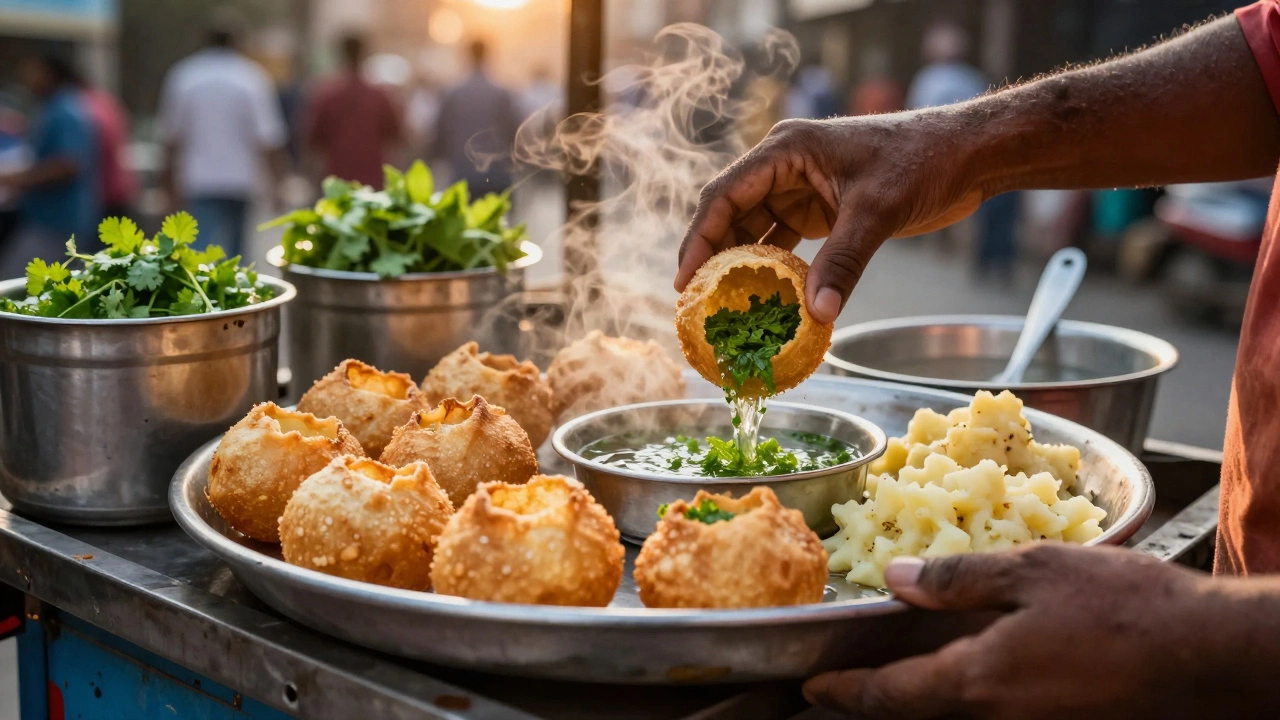
The most famous example of chaat is Pani Puri, also known as Golgappa or Puchka depending on the region. Imagine a hollow, crispy sphere made of wheat flour. Inside, you fill it with spiced water (pani means water), mashed potatoes, and chickpeas. You bite into it, and the shell bursts, releasing a flood of flavors. It is an experience, not just a meal. In cities like Delhi and Mumbai, you will find hundreds of vendors selling pani puri near offices, schools, and markets. It is the ultimate crowd-pleaser.
The Regional Champions: Vada Pav and Samosa
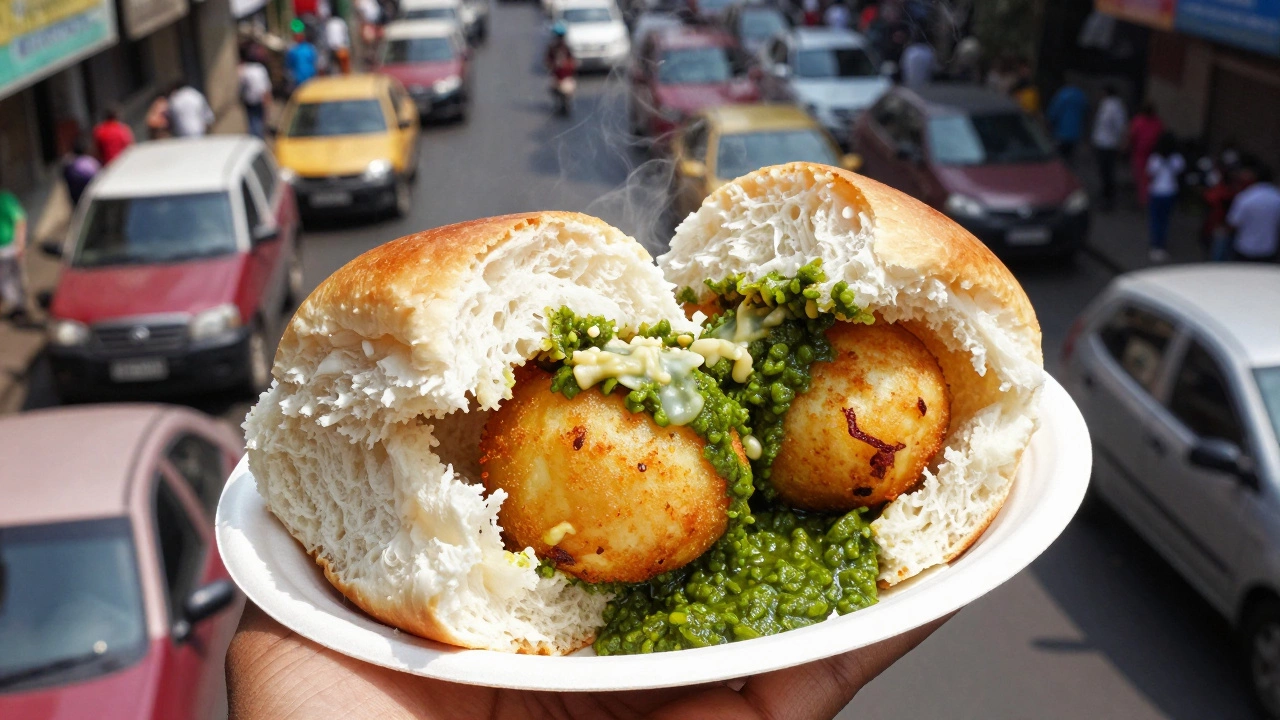
While chaat dominates the North and West, other regions have their own kings. If you travel to Maharashtra, specifically Mumbai, the answer changes immediately. Here, the most common street food is undoubtedly Vada Pav, which is a fast food item consisting of a deep-fried potato dumpling (vada) placed inside a bread bun (pav) with chutneys. Often called the "Indian Burger," Vada Pav was created in the 1960s to feed dockworkers who needed cheap, high-energy food. Today, it is eaten by everyone from laborers to Bollywood stars.
Vada Pav works because it is portable and hearty. The potato filling is spiced with mustard seeds, turmeric, and curry leaves, then dipped in a besan (gram flour) batter and fried until golden. Sliding it into a soft bun with garlic chutney and green chili creates a perfect handheld meal. Its simplicity and affordability have made it a staple across Mumbai, and its popularity is spreading to other major cities.
Then there is the Samosa, a deep-fried pastry with a thin crust filled with spiced potatoes, peas, onions, and sometimes meat. The samosa is perhaps the most recognized Indian food globally. In India, it is ubiquitous. You can find it in every state, often adapted to local tastes. In the North, it is filled with potatoes and peas. In the South, it might include lentils or vegetables. In the East, it could be stuffed with minced meat. Because it travels well and stays warm for hours, it is the go-to snack for commuters and office workers nationwide.
| Dish Name | Primary Region | Main Ingredients | Key Characteristic |
|---|---|---|---|
| Pani Puri / Golgappa | National (North/West) | Crispy shell, spiced water, potatoes | Bursting flavor experience |
| Vada Pav | Maharashtra (Mumbai) | Potato fritter, bread bun, chutney | Portable, high-energy |
| Samosa | National | Fried pastry, spiced potato/meat filling | Travel-friendly, versatile |
| Dosa | South India | Rice and lentil batter | Thin, crispy crepe |
| Jalebi | National | Fried batter soaked in sugar syrup | Sweet, crunchy dessert |
The Southern Flavor: Dosa and Idli
You cannot talk about Indian street food without mentioning the South. While the North relies on wheat and fried snacks, the South leans heavily on rice and lentils. The most common street food here is Dosa, a thin pancake made from fermented rice and black gram (urad dal) batter. Originally from Karnataka, dosa has taken over the entire country. In cities like Bangalore and Chennai, you will find dosai stalls on almost every corner.
Dosa is unique because it is often considered healthier than fried snacks. The fermentation process makes it easier to digest and rich in probiotics. It is served hot with coconut chutney and sambar (a lentil-based vegetable stew). Variations like Masala Dosa (filled with potatoes) and Paper Dosa (extra thin and crispy) keep the menu exciting. Alongside dosa, Idli, which are steamed rice cakes made from the same fermented batter as dosa, are a breakfast staple sold by street vendors early in the morning.
Sweet Tooths: Jalebi and Gulab Jamun
Street food isn't just about savory bites. Indians love their sweets, and street vendors cater to this craving aggressively. The most common sweet street food is Jalebi, a spiral-shaped sweet made by deep-frying batter and soaking it in sugar syrup. Freshly made jalebis are hot, crunchy on the outside, and soft on the inside. They are often paired with savory snacks like samosas to balance the flavors.
Another contender is Gulab Jamun, deep-fried milk solids soaked in rose-flavored sugar syrup. While often found in restaurants, many street carts sell them in bulk during festivals and evenings. These sweets are affordable and provide a quick energy boost, making them popular among students and young adults.
Hygiene and Safety: What Travelers Should Know
If you are visiting India, the temptation to try street food is strong. However, safety is a valid concern. The "most common" food can also carry risks if not prepared correctly. Water quality is the biggest issue. Dishes like Pani Puri use water extensively. If the water is not purified, it can cause stomach issues.
Here is how to navigate street food safely:
- Watch the Crowd: High turnover means fresh food. If a stall is busy, the ingredients are likely being used quickly, reducing spoilage risk.
- Avoid Raw Chopped Vegetables: Cucumber or onion salads may have been washed in untreated water. Stick to cooked items like samosas or dosas.
- Check the Water: Ask if the vendor uses bottled or filtered water for drinks and chutneys. Many reputable vendors now display sealed water bottles.
- Peelable Fruits: Bananas and oranges are safe bets since you peel them yourself.
Many modern street food chains in cities like Delhi and Mumbai have adopted hygienic practices, using sealed containers and wearing gloves. These "organized" street food outlets offer a safer entry point for beginners while still delivering authentic flavors.
Why Street Food Matters Culturally
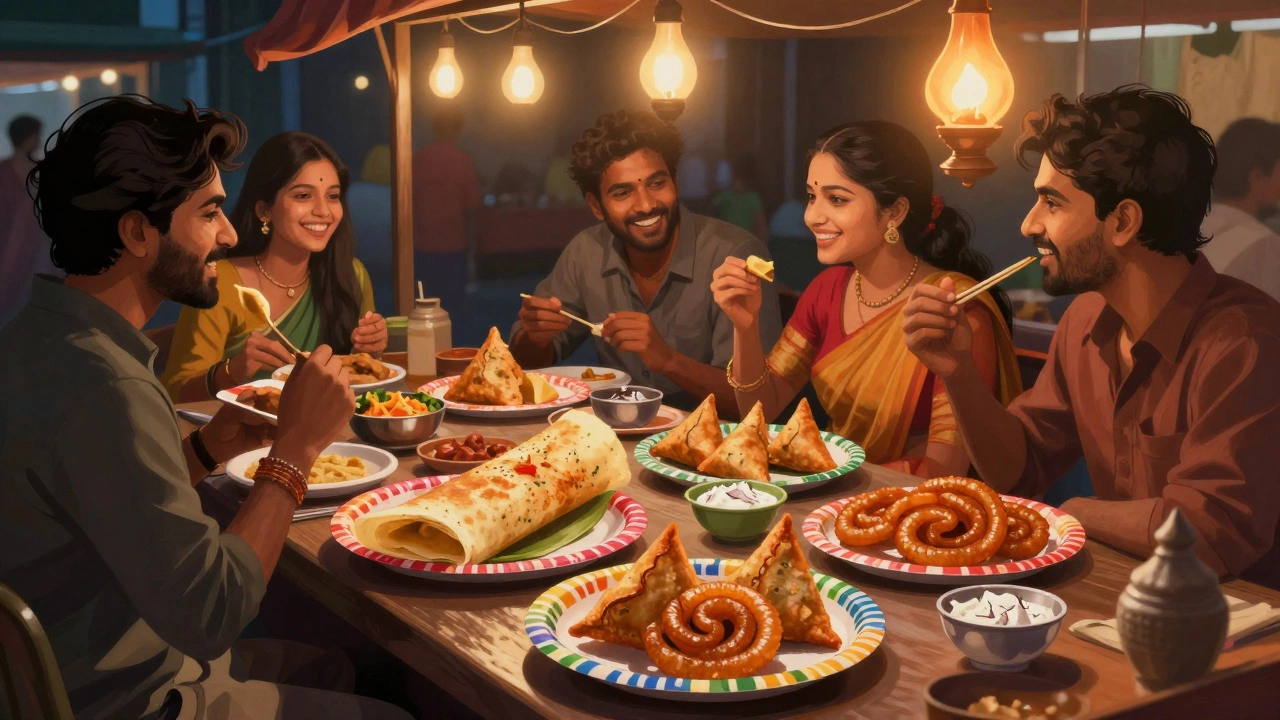
Street food in India is more than just hunger relief; it is a social connector. It breaks down barriers between classes, religions, and ages. You will see CEOs eating vada pav next to auto-rickshaw drivers. Students share samosas with friends after exams. Families gather around a chaat cart on weekends.
This accessibility is why these foods remain so common. They do not require reservations or fancy plates. They are democratic. The vendors, often women, play a crucial role in the local economy, providing livelihoods and preserving traditional recipes passed down through generations. Supporting street food vendors helps sustain this vibrant cultural tapestry.
Conclusion: Finding Your Favorite
So, what is the most common Indian street food? If forced to pick one, Pani Puri takes the crown due to its national presence and iconic status. However, Samosa and Vada Pav are close seconds, each dominating their respective regions. The beauty of Indian street food lies in its diversity. Whether you prefer the burst of pani puri, the comfort of vada pav, or the crispness of dosa, there is a street snack waiting for you.
Next time you visit India, don't just stick to hotel buffets. Step onto the street. Watch the vendors work. Taste the chaos and the creativity. You might just find your new favorite meal.
Is Indian street food safe for foreigners?
Yes, but with precautions. Stick to busy stalls with high customer turnover, avoid raw vegetables and unpeeled fruits, and ensure drinks are made with purified water. Many modern vendors follow strict hygiene standards.
What is the difference between Pani Puri and Golgappa?
There is no difference in the food itself. "Pani Puri" is commonly used in North India, while "Golgappa" is the term preferred in South India. Both refer to the same crispy shell filled with spiced water and potatoes.
Can vegetarians enjoy Indian street food?
Absolutely. The majority of Indian street food is vegetarian. Dishes like samosa, vada pav, dosa, and chaat are primarily plant-based. Even non-vegetarian options are clearly labeled, making it easy for vegetarians to navigate menus.
Where is the best place to eat street food in India?
Delhi's Chandni Chowk, Mumbai's Mohammed Ali Road, and Kolkata's Park Street are famous street food hubs. Each city offers unique regional specialties, so exploring multiple cities provides the best experience.
How much does Indian street food cost?
It is very affordable. A plate of pani puri might cost $0.50-$1.00 USD, while a vada pav or samosa typically costs $0.30-$0.80 USD. Prices vary slightly by location, but street food remains one of the cheapest dining options worldwide.