Indian Meal Planner
Select your region and lifestyle to see how traditional Indian households structure their main meals.
💡 Pro Tip
Ask ten people from different parts of India what their biggest meal is, and you might get two completely different answers. In Mumbai, a stockbroker grabs a quick sandwich at noon because he’s glued to his screen. In a village in Punjab, a farmer sits down to a massive platter of dal, roti, and curd right after finishing his morning work. There isn’t one single "Indian" answer here. The concept of the main meal shifts dramatically based on geography, climate, and lifestyle.
But if we look at traditional patterns across the subcontinent, lunch has historically held the crown as the primary meal for most households. Why? Because it aligns with the sun. Traditional Ayurvedic wisdom suggests that your digestive fire (agni) is strongest when the sun is highest in the sky. Eating heavy foods like rice, lentils, and ghee-heavy vegetables at midday allows your body to burn off those calories during the active afternoon hours. Dinner, by contrast, was traditionally lighter-often just leftover roti or a simple soup-to ensure better sleep.
The Regional Divide: North vs South vs East
You can’t talk about Indian meals without acknowledging the massive regional diversity. While the idea of a "heavy lunch" is widespread, the composition changes entirely depending on where you are.
| Region | Typical Main Meal Time | Key Components | Cultural Context |
|---|---|---|---|
| North India | Lunch (1:00 PM - 2:30 PM) | Roti, Dal, Sabzi, Curd | Agricultural roots require high energy before evening rest. |
| South India | Lunch (12:30 PM - 2:00 PM) | Rice, Sambar, Rasam, Poriyal | Hot climate demands hydration and light but filling carbs. |
| East India | Lunch (1:00 PM - 2:30 PM) | Rice, Fish Curry, Lentils | Fish is often consumed at lunch due to market freshness. |
| West India | Lunch (1:00 PM - 2:30 PM) | Bhakri, Bhaji, Khaman | Coastal influences mix seafood with traditional grains. |
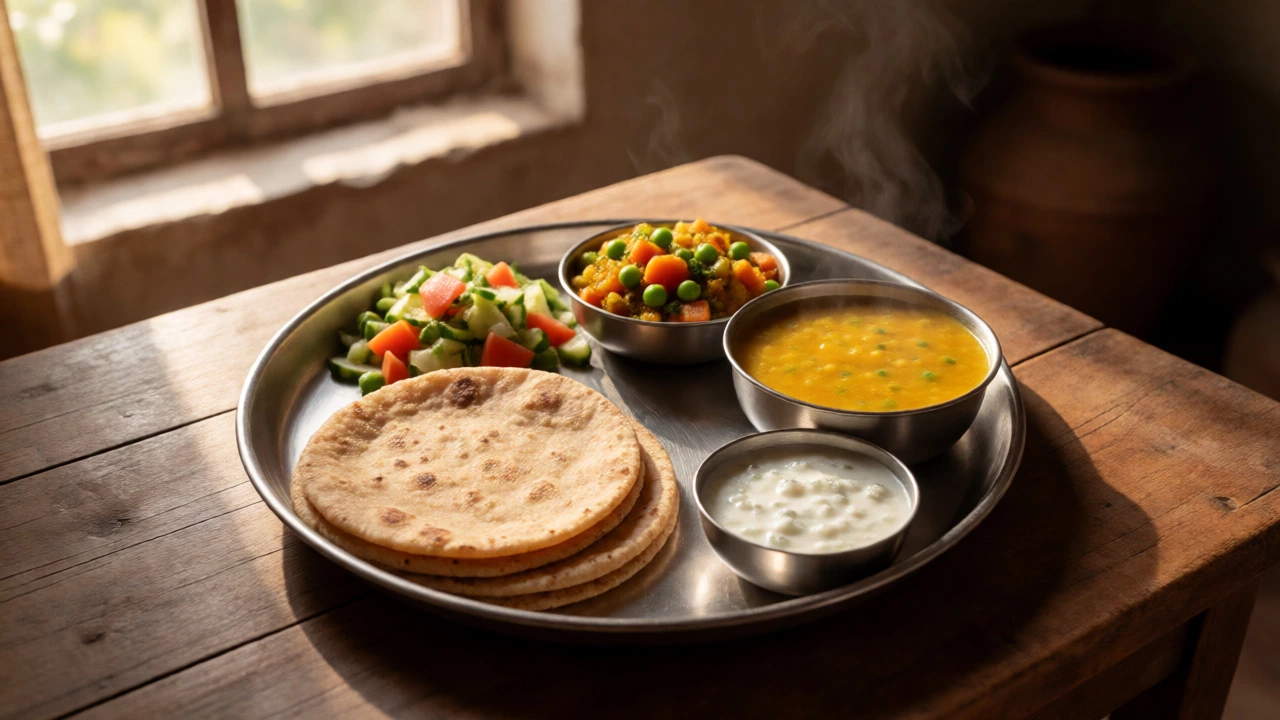
In North India, the Thali is a round platter used to serve food in many countries such as India, Pakistan, Nepal, and Bangladesh is the gold standard for lunch. It’s not just a plate; it’s a nutritional ecosystem. You’ll see whole wheat rotis paired with a protein-rich dal, a vegetable sabzi, a side of salad, and cooling raita. This combination provides sustained energy for the rest of the day. If you skip this meal, you’re likely to crash by 4 PM.
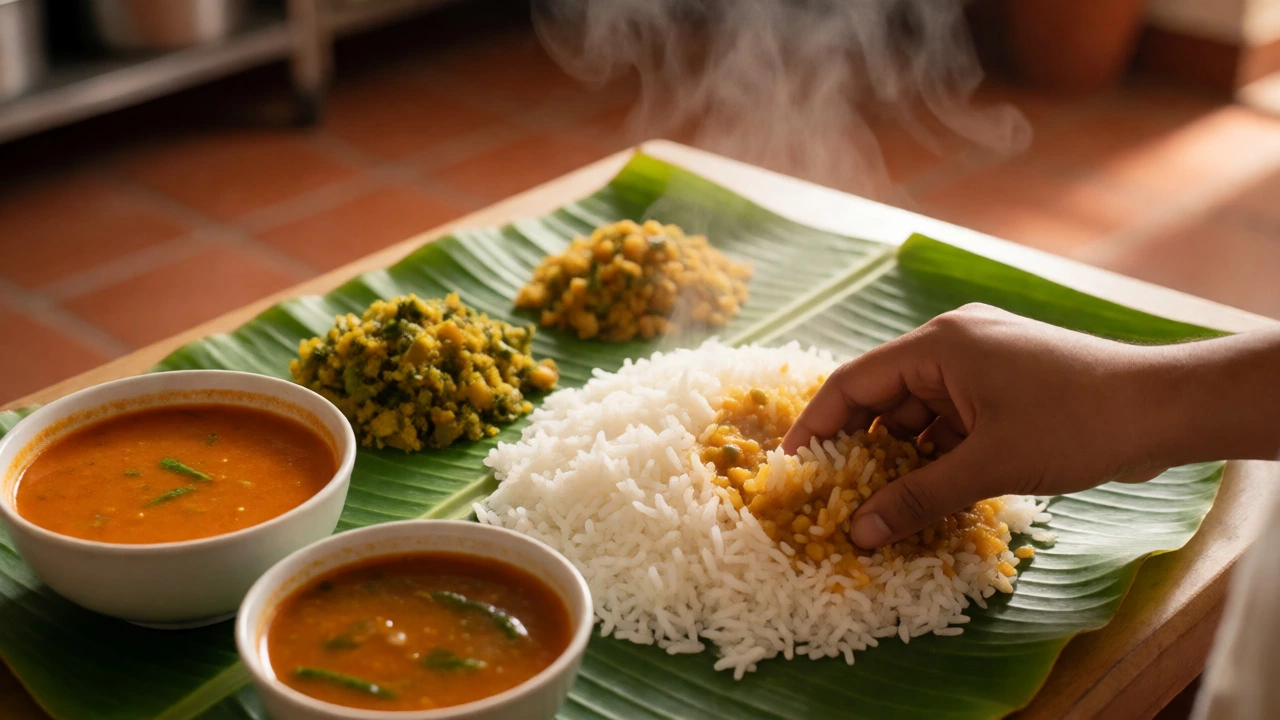
Down south, the story is similar but the star ingredient is rice. A typical Tamil or Telugu lunch revolves around steamed rice mixed with sambar (lentil stew) and rasam (tangy broth). The heat in Southern India means people eat earlier, often starting lunch by 12:30 PM. By the time dinner rolls around at 8 PM, they’ve already digested most of their daily caloric intake. This early eating pattern is actually quite healthy, preventing late-night acid reflux and weight gain.
Why Lunch Dominates Traditional Indian Households
It’s not just about tradition; it’s about logistics. For generations, Indian families have structured their day around cooking times. Morning starts with breakfast (often quick items like idli, dosa, or paratha). Then comes the main cooking session between 11 AM and 1 PM. The cook prepares fresh dishes for lunch while everyone is home or taking a break.
Dinner, on the other hand, is often improvised. Leftovers from lunch are repurposed, or something very simple is made. Think of khichdi (rice and lentil porridge), upma, or just bread with butter. Making elaborate meals at night is rare unless there are guests. Why? Because after a long day of work or household chores, nobody wants to spend two hours chopping onions and stirring pots. Plus, going to bed with a full stomach disrupts sleep quality.
There’s also a social aspect. Lunch is when extended family members might drop by unannounced. It’s a communal event. Dinner is more private, usually reserved for the nuclear family. This social pressure reinforces lunch as the "important" meal. If you serve guests at dinner, it feels like an extra effort. Serving them at lunch is expected.
The Modern Shift: When Dinner Takes Over
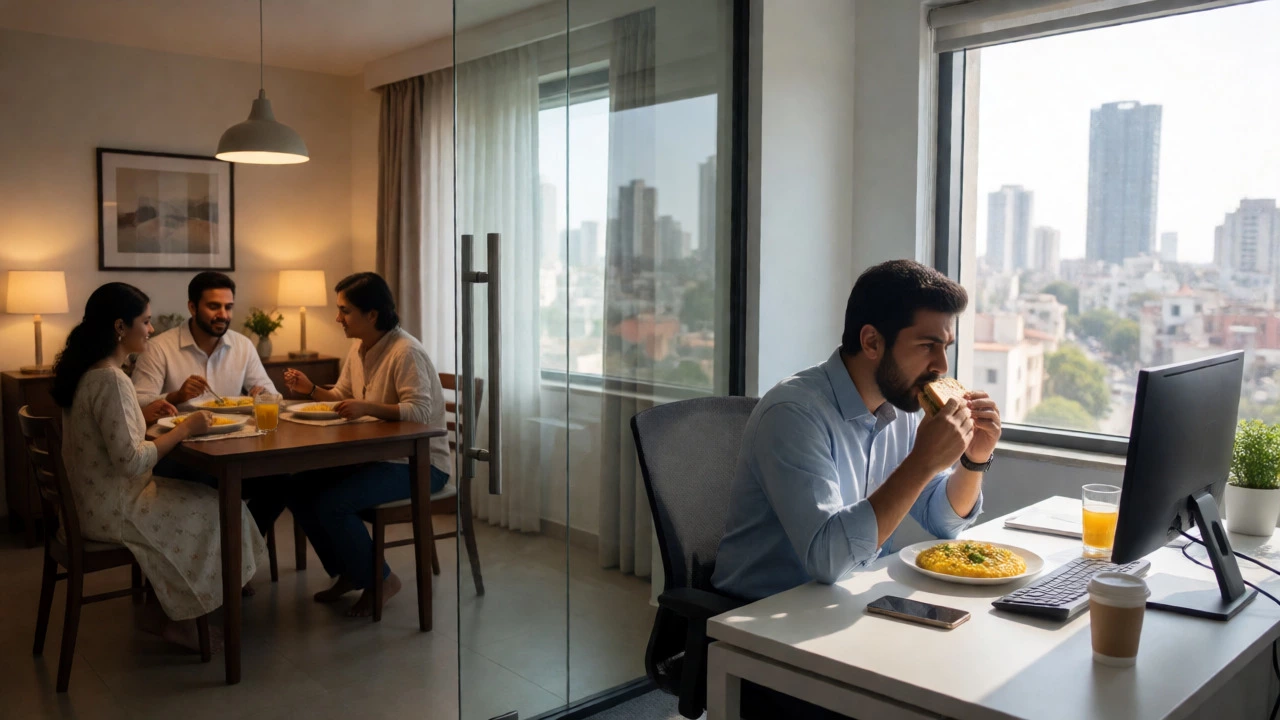
Life in urban centers like Bangalore, Delhi, or Hyderabad doesn’t always follow these rules anymore. With office jobs running from 9 AM to 7 PM, many professionals miss lunch entirely. They grab a coffee and a biscuit at 10 AM and survive until 8 PM. For them, dinner becomes the main meal.
This shift brings health risks. Eating a heavy biryani or butter chicken at 9 PM, followed by immediate sleep, can lead to weight gain and indigestion. Yet, culturally, dinner has become the bonding time. It’s the only meal where parents and children sit together without distractions. So, while the biological ideal is a heavy lunch, the social reality often pushes the calorie load to the evening.
If you find yourself eating a heavy dinner, try to balance it out. Make your lunch lighter-perhaps a salad with grilled chicken or a small portion of dal and roti. Save the rich flavors for the weekend when you have time to walk off the calories.
How to Structure Your Meals Like a Local
If you want to adopt the traditional Indian approach to eating, here’s a practical framework:
- Breakfast (7:00 AM - 9:00 AM): Keep it moderate. Oats, eggs, or traditional items like poha or upma. Avoid sugary cereals which cause energy crashes.
- Lunch (12:30 PM - 2:00 PM): Make this your largest meal. Include complex carbs (roti/rice), protein (dal/chicken/fish), fiber (vegetables/salad), and fats (ghee/oil/nuts).
- Snack (4:00 PM - 5:00 PM): Tea time is sacred in India. Have tea/coffee with a light snack like nuts, fruit, or a small savory item. Don’t make this a second lunch.
- Dinner (7:30 PM - 8:30 PM): Keep it light and early. Soups, stews, or small portions of grains. Finish eating at least 2-3 hours before bed.
This structure respects your circadian rhythm. Your insulin sensitivity is higher in the morning and afternoon, meaning your body processes glucose better then. At night, your metabolism slows down. Eating heavy carbs at night is like trying to park a car in a garage that’s already full-it just piles up.
Common Misconceptions About Indian Meals
Many outsiders assume Indian food is always spicy or oily. That’s not true for the main meal. A traditional lunch is balanced. Yes, pickles and chutneys add spice, but the base is usually mild. Another misconception is that vegetarians don’t get enough protein. In reality, a typical vegetarian lunch includes multiple sources: legumes (dal), dairy (curd/paneer), and grains (wheat/rice) which complement each other to form complete proteins.
Also, don’t confuse street food with home meals. Street food is often fried and heavy on oil. Home-cooked main meals are steamed, boiled, or lightly sautéed. If you’re looking to understand the real "main meal," ignore the vada pav stalls and look at what’s simmering in a neighborhood kitchen at 1 PM.
Practical Tips for Adapting to Indian Meal Times
If you’re new to Indian culture or planning a trip, adjust your schedule. Shops and offices often close for lunch between 1 PM and 2 PM. Restaurants will be crowded at 1 PM. If you want a quiet table, aim for 12:30 PM or 2:30 PM.
When invited to a home for lunch, expect abundance. Hosts often insist you eat more than you think you can. It’s polite to accept seconds initially, even if you stop halfway. Refusing food immediately can be seen as rejecting hospitality. Also, wash your hands before eating. Many regions still eat with their hands, which enhances the sensory experience of the meal.
Is lunch really bigger than dinner in India?
Traditionally, yes. Most Indian households consider lunch the main meal because it aligns with peak digestive strength and daytime activity levels. However, in modern urban settings, dinner often becomes the largest meal due to work schedules.
What does a typical Indian lunch consist of?
A typical lunch includes a carbohydrate source (rice or roti), a protein source (dal, paneer, fish, or meat), a vegetable dish (sabzi), and a side like curd or salad. In the South, sambar and rasam are staples; in the North, dry curries and pickles are common.
Why do Indians eat lunch so early?
In hotter regions like South India, people eat earlier (around 12:30 PM) to avoid the peak afternoon heat and to allow digestion before the evening cools down. It also helps maintain energy levels throughout the workday.
Is it unhealthy to eat a heavy dinner in India?
Yes, if done regularly. Heavy dinners eaten late can lead to weight gain, acidity, and poor sleep. Traditional advice suggests keeping dinner light and consuming it at least two hours before bedtime.
Do all Indians eat with their hands?
Many do, especially for traditional meals involving rotis or rice. Eating with hands is believed to aid digestion and enhance taste perception. However, cutlery is increasingly common in urban areas and formal settings.