Ever stood in the grocery aisle staring at two jars of chutney, one labeled mango chutney and the other Major Grey’s Chutney, wondering if they’re just different names for the same thing? They’re not. While both are sweet-and-sour condiments made from mangoes, they come from completely different worlds-one rooted in Indian kitchens, the other born out of British colonial kitchens. Knowing the difference isn’t just about flavor; it’s about history, texture, and how each one actually gets used on your plate.
Mango Chutney: The Authentic Indian Original
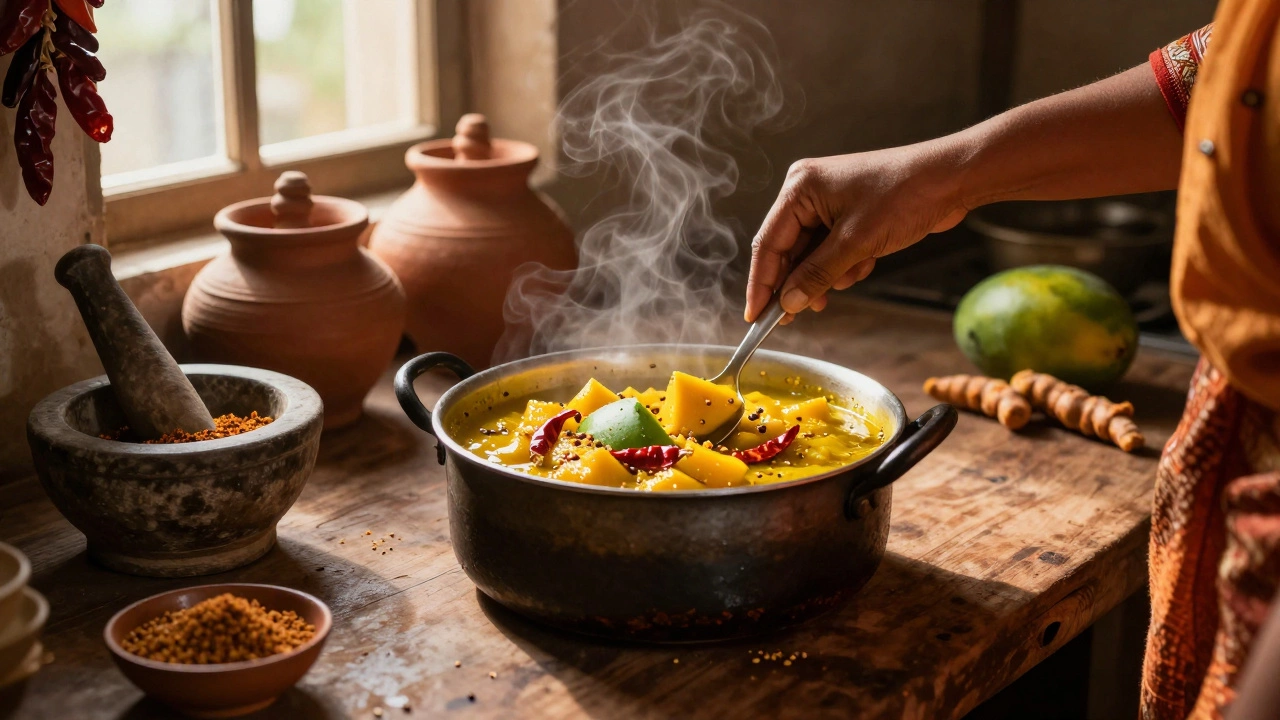
True mango chutney is a traditional Indian condiment made from raw or ripe green or yellow mangoes, sugar, vinegar, salt, spices like mustard seeds, fenugreek, and dried red chilies. It’s a staple in households across India, especially in the north and west, where it’s served with everything from samosas to dal and rice.
What sets it apart is its texture. Homemade versions are often coarse, with visible bits of mango skin and seeds removed, but the chunks still give it body. The sweetness comes from jaggery or raw sugar, not refined white sugar, and the tang comes from tamarind or lime juice-not just vinegar. Spices are toasted and ground fresh, giving it a warm, earthy depth that lingers after each bite.
In Mumbai, you’ll find street vendors selling it in small clay pots, still warm from being simmered with a pinch of asafoetida and a whole green chili. In Bengal, it’s made with unripe mangoes and a lot of mustard oil, giving it a pungent kick. In Gujarat, it’s sweeter, almost like a preserve, with a hint of cardamom. There’s no single recipe-just a range of regional variations all built on the same foundation: fresh mango, salt, spice, and time.
Major Grey’s Chutney: The British Adaptation
Major Grey’s Chutney is a commercially produced, shelf-stable condiment developed in 19th-century Britain for colonial officers returning from India. It’s named after a British officer (likely fictional) who supposedly brought back a recipe, but its real origin is in British food factories trying to recreate Indian flavors for home use.
Here’s where it diverges: Major Grey’s uses ripe mangoes, but they’re cooked down into a smooth, jam-like paste. The sweetness is heavy-high fructose corn syrup or refined sugar dominates. Vinegar is the main souring agent, and it’s often laced with lime juice, ginger, and a touch of turmeric for color. Spices like coriander and cumin are either omitted or used so lightly they’re barely noticeable. And unlike Indian chutney, it almost never contains fresh chilies or mustard seeds.
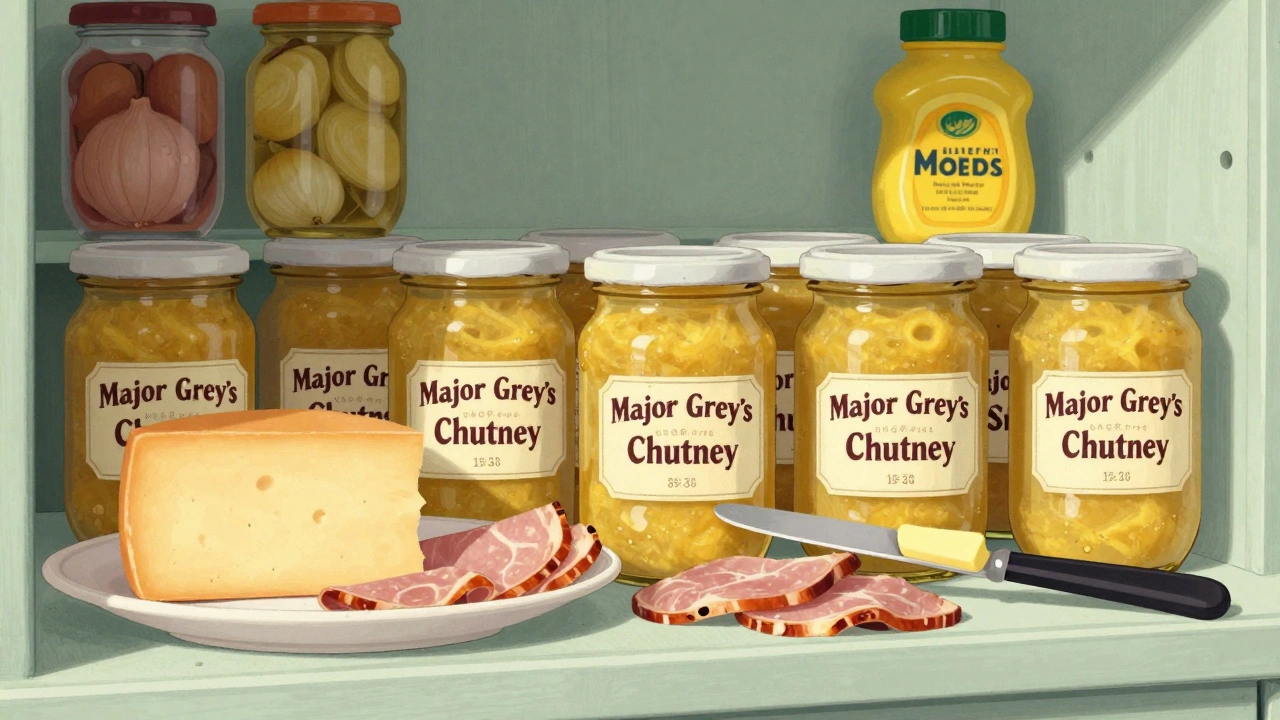
It’s not meant to be complex. It’s meant to be consistent. Every jar from the 1950s to today tastes nearly identical. That’s because it was designed for mass production, not for regional nuance. You’ll find it in British supermarkets, often paired with cheese, cold meats, or as a glaze for roasted chicken.
Side-by-Side Comparison
| Feature | Mango Chutney | Major Grey’s Chutney |
|---|---|---|
| Base Fruit | Green or ripe mangoes | Ripe mangoes only |
| Texture | Chunky, coarse | Smooth, jam-like |
| Sweetener | Jaggery, raw sugar | Refined sugar, corn syrup |
| Souring Agent | Tamarind, lime, vinegar | Vinegar, lime juice |
| Spices | Mustard seeds, fenugreek, dried chilies, asafoetida | Ginger, turmeric, mild curry powder |
| Heat Level | Medium to high | Very mild |
| Use | Accompanies Indian meals | Paired with cheese, cold cuts |
| Shelf Life | 1-3 weeks refrigerated | 1-2 years unopened |
Why It Matters in the Kitchen
Using Major Grey’s in place of real mango chutney in a recipe like paneer tikka or aloo paratha will change the whole dish. The smooth texture won’t give you the same mouthfeel. The lack of mustard and fenugreek means you’re missing the layered spice profile that makes Indian chutney so addictive.
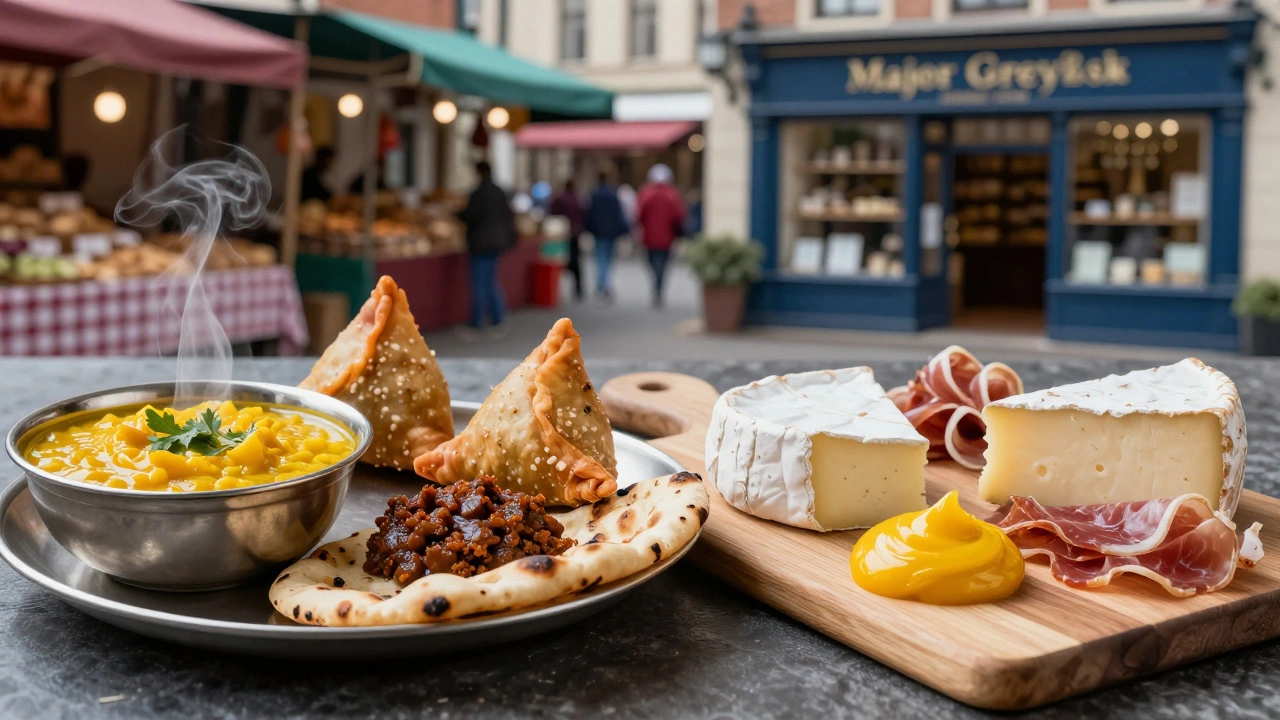
On the flip side, if you spread authentic Indian mango chutney on a sandwich with sharp cheddar, you might find it too spicy or too textured. Major Grey’s, with its mellow sweetness and smoothness, is perfect for that. It’s not a substitute-it’s a different tool.
Think of it like soy sauce and tamari. They’re both fermented soy products, but you wouldn’t swap them in every dish. Same here. The Indian version is for balancing heat and richness in curries and fried snacks. Major Grey’s is for adding a sweet-tart glaze to cold meats or cheese boards.
Where to Find Each
If you’re looking for authentic mango chutney, skip the supermarket aisle. Head to an Indian grocery store. Look for brands like Princes, Shan, or Shree Krishna-they often sell it in glass jars with visible chunks. Some even sell it fresh in refrigerated sections. You can also make it at home in under an hour: peel and chop 2 green mangoes, add ½ cup jaggery, ¼ cup vinegar, a teaspoon of mustard seeds, and a pinch of red chili powder. Simmer for 20 minutes. Done.
Major Grey’s is easy to find in most Western supermarkets. It’s usually near the pickles and mustards. Heinz, Crosse & Blackwell, and Sharwood’s all make versions. The jar will say “sweet mango chutney” on the label, but if it’s smooth and the ingredients list includes “high fructose corn syrup,” you’re holding Major Grey’s.
Common Mistakes
- Using Major Grey’s in a traditional Indian recipe expecting it to taste like homemade chutney-it won’t.
- Assuming all mango chutneys are sweet-some are spicy, sour, or even savory.
- Storing homemade mango chutney at room temperature-it needs refrigeration and lasts only a few weeks.
- Thinking Major Grey’s is “authentic” because it’s been around for 150 years-it’s a colonial reinterpretation, not an original.
What to Do With Each
Mango chutney: Mix it into yogurt for a dip, layer it between layers of naan and paneer, stir it into lentils for sweetness, or serve it with grilled fish to cut through the oil.
Major Grey’s Chutney: Spread it on toast with brie, use it as a glaze for roasted pork tenderloin, mix it into a vinaigrette for a fruit-forward salad, or serve it alongside a platter of cured meats.
Neither is better. They just serve different purposes. One is a living, breathing part of Indian cuisine. The other is a nostalgic British pantry staple. Understanding that lets you use them properly-and enjoy both for what they really are.
Can I substitute Major Grey’s Chutney for mango chutney in a recipe?
You can, but the flavor and texture will change. Major Grey’s is smoother and sweeter, with less spice. If you’re making a dish like samosas or dal, you’ll miss the sharpness of mustard and fenugreek. For cold meat platters, it works fine. For Indian meals, stick to authentic chutney.
Is Major Grey’s Chutney actually from India?
No. Major Grey’s was created in Britain in the 1800s as a way to replicate Indian flavors for British households. It’s based on Indian chutney but simplified for mass production and Western palates. The name likely refers to a fictional British officer-there’s no historical record of a real Major Grey who created it.
How long does homemade mango chutney last?
When stored in a sealed glass jar in the refrigerator, homemade mango chutney lasts about 3 to 4 weeks. If you want to keep it longer, you can can it using a water bath method, which extends shelf life to 6-12 months. Never leave it at room temperature for more than a day.
Why does Major Grey’s Chutney have turmeric in it?
Turmeric is added for color, not flavor. In Indian chutney, turmeric is rarely used because it can overpower other spices. In Major Grey’s, it’s used to give the chutney a bright yellow hue that matches Western expectations of what “Indian” food should look like.
Is Major Grey’s Chutney vegan?
Yes, most commercial versions of Major Grey’s Chutney are vegan. They contain mango, sugar, vinegar, ginger, and spices-no animal products. Always check the label, though, as some brands may add honey or gelatin.