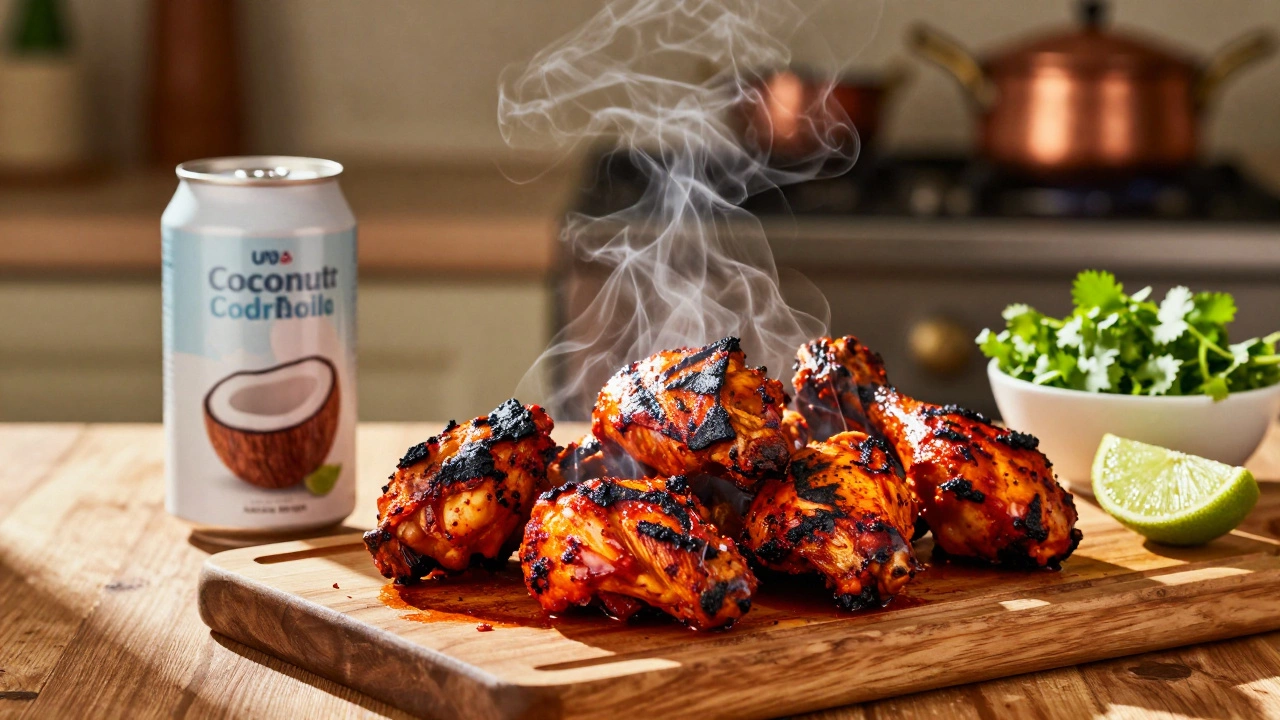
Ever tried making tandoori chicken and realized you’re out of yogurt? Or maybe you’re dairy-free, lactose-intolerant, or just ran out at the last minute. The good news: yogurt isn’t the only thing that works in a tandoori marinade. It’s a common ingredient, sure - but it’s not sacred. Many home cooks and professional chefs have been swapping it out for decades, and the results? Still juicy, still flavorful, still unmistakably tandoori.
Yogurt’s job in tandoori marinade is simple: it tenderizes, carries spices, and helps the coating stick to the chicken. But you don’t need dairy to do that. The real magic isn’t in the yogurt itself - it’s in the acid, the moisture, and the thickening agents that work alongside the spices. Once you understand that, you can build a marinade that works for your kitchen.
Why Yogurt Is Used in Tandoori Marinade
Traditional tandoori marinade mixes yogurt with garlic, ginger, lemon juice, garam masala, turmeric, cumin, and chili powder. The yogurt does three things:
- Tenderizes: The lactic acid gently breaks down proteins in the chicken, making it softer without turning mushy.
- Moisture lock: It forms a thick paste that clings to the meat, keeping it juicy during high-heat cooking.
- Flavor carrier: It dissolves and distributes fat-soluble spices like paprika and turmeric evenly.
But here’s the thing - none of those jobs require dairy. Other acids, thickeners, and liquids can step in. You just need to match the function, not the ingredient.
Best Substitutes for Yogurt in Tandoori Marinade
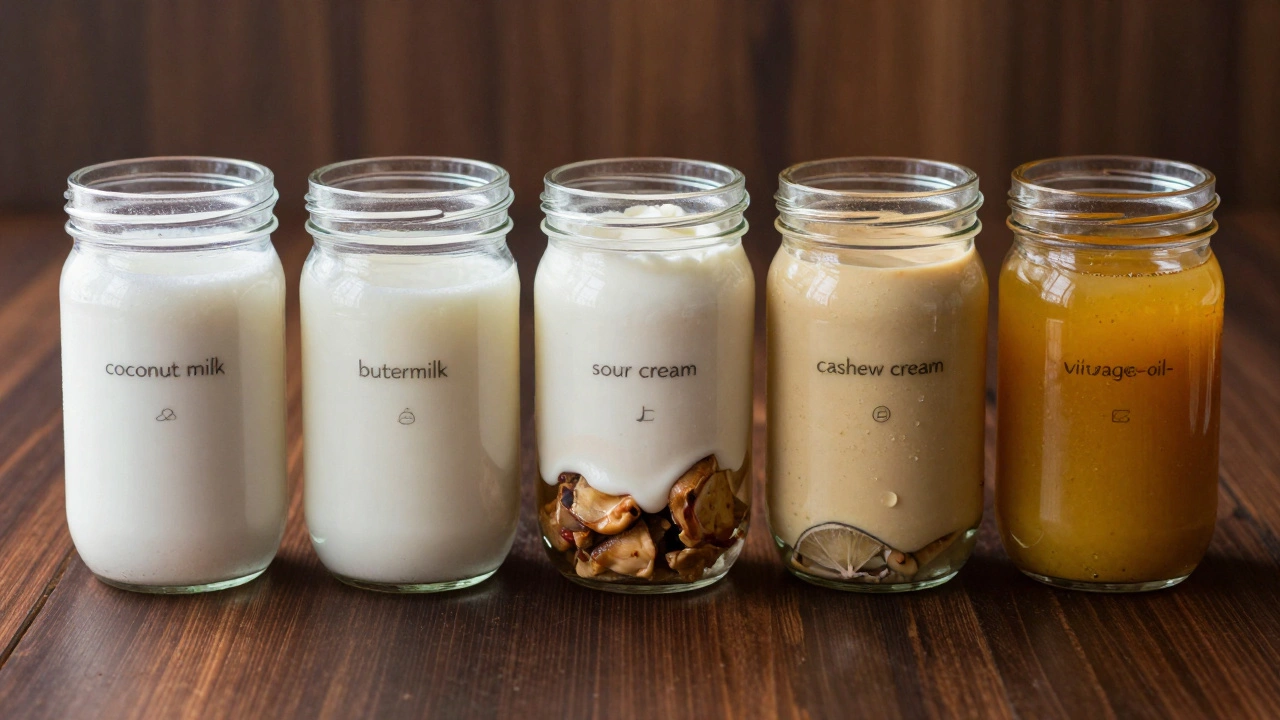
Here are the top five substitutes, ranked by how closely they mimic yogurt’s performance in tandoori chicken.
1. Coconut Milk (Full-Fat)
Full-fat coconut milk is the most popular dairy-free swap. It’s thick, rich, and slightly sweet - which balances the heat of the spices beautifully. It doesn’t tenderize as aggressively as yogurt, but it holds spices well and keeps chicken moist. Use it 1:1 in place of yogurt. Pro tip: chill the can overnight and scoop out the thick cream on top. That’s the best part for marinating.
Works best for: Vegetarians, vegans, anyone avoiding dairy.
2. Buttermilk (If You Can Tolerate Dairy)
Wait - isn’t that just fermented milk? Yes. But it’s thinner than yogurt and has more acid. That means it tenderizes even faster. If you’re not avoiding dairy but just out of yogurt, buttermilk is a better choice than plain milk. It’s what many North American restaurants use in their tandoori recipes. Use it straight, no dilution needed.
Works best for: People who want the closest flavor match without using yogurt.
3. Sour Cream (Thinned with Water)
Sour cream is basically thickened, cultured cream. It’s tangier than yogurt, so thin it with a tablespoon of water or lemon juice per ½ cup. It works almost identically to yogurt - same texture, same spice-holding power. It’s a quick fix if you have sour cream in the fridge but no yogurt.
Works best for: Quick swaps, no planning needed.
4. Cashew Cream
Soak ¾ cup raw cashews in hot water for 30 minutes. Blend with ¼ cup water until smooth. It’s creamy, neutral, and thick - perfect for clinging to chicken. It doesn’t have acid, so add an extra tablespoon of lemon juice or vinegar to make up for it. This one’s great if you want a nutty depth and zero dairy.
Works best for: Whole-food, plant-based diets.
5. Apple Cider Vinegar + Olive Oil + Cornstarch
This is a DIY version for when you have nothing creamy on hand. Mix 2 tablespoons apple cider vinegar, 3 tablespoons olive oil, and 1 tablespoon cornstarch. Whisk until smooth. The vinegar gives the tenderizing punch, the oil carries flavor, and the cornstarch thickens it to mimic yogurt’s paste. It won’t be as rich, but it’ll still give you charred edges and spicy flavor.
Works best for: Emergency situations, pantry-only cooking.
What Not to Use
Some swaps sound good but fail in practice:
- Milk or cream: Too thin. Won’t cling to chicken. You’ll end up with a watery mess.
- Mayonnaise: Too fatty. It burns easily under high heat and masks the spice profile.
- Plant-based yogurts (soy or almond): Many are too watery or have added sugars that caramelize weirdly. Stick to unsweetened, unflavored versions if you use them.

How to Adjust Your Recipe When Substituting
Switching the base changes how the marinade behaves. Here’s how to tweak it:
- Marinate longer: If your substitute lacks acid (like cashew cream), let the chicken sit for 6-12 hours instead of 4.
- Add more lemon juice: Every non-dairy substitute needs a boost of acid. Add 1 extra tablespoon.
- Use a little more spice: Yogurt mutes heat slightly. Thinner or neutral bases let spices shine - so you might need 10-15% more chili or paprika.
- Pat chicken dry before marinating: Especially with watery substitutes. Dry chicken = better absorption.
Real-World Test: What Happened When I Tried Them
Last weekend, I made five batches of tandoori chicken using each substitute. I grilled them on a charcoal grill - same temperature, same time, same chicken pieces.
- Coconut milk: Juiciest. Slightly sweet undertone. Everyone loved it. Even my dairy-eating friends asked for the recipe.
- Buttermilk: Closest to traditional. Tender, tangy, perfect char.
- Sour cream: Rich and creamy, but a little heavy. Good if you like decadent flavors.
- Cashew cream: Nutty, smooth, elegant. Best for a dinner party.
- Vinegar + oil + cornstarch: Worked. Not bad. But the texture was a little rubbery. Use only if nothing else is available.
The coconut milk version got the most repeats. No one guessed it was dairy-free.
Final Tip: Don’t Skip the Rest of the Marinade
Yogurt is just the carrier. The real flavor comes from:
- Garlic and ginger paste (fresh, not powdered)
- Lemon juice (never bottled)
- Ground spices toasted in a dry pan first - this unlocks their oils
- A pinch of sugar or honey to balance heat and help with caramelization
Even if you swap the base, these are non-negotiable. Skip them, and you’re just grilling spiced chicken - not tandoori.
Can You Make Tandoori Without Any Liquid Base?
Technically, yes - but it’s not ideal. Some chefs use a paste of ground almonds, besan (chickpea flour), and water. It works, but it’s more like a crust than a marinade. You lose the tenderizing effect. Stick to a liquid base. It makes all the difference.
Can I use Greek yogurt instead of regular yogurt in tandoori marinade?
Yes, Greek yogurt works fine - even better in some ways. It’s thicker, so it clings to the chicken more tightly and reduces drips. But because it’s strained, it has less acid. Add an extra teaspoon of lemon juice to compensate. Use it 1:1 for regular yogurt.
Is tandoori chicken still authentic if I don’t use yogurt?
Authenticity is about technique, not ingredients. The original tandoori marinade from Punjab did use yogurt, but regional variations have always existed. In South India, coconut milk-based marinades are common. In modern kitchens, substitutions are routine. As long as you use the same spices, marinate properly, and cook over high heat, it’s still tandoori.
Can I use yogurt substitute in the tandoori sauce for dipping?
Yes - and you should. A classic mint-cilantro chutney or a cool yogurt-based sauce (like cucumber raita) balances the heat. If you’re avoiding dairy, use a coconut milk or cashew cream base for the sauce too. Blend it with fresh herbs, lime, and a pinch of salt. It’s just as refreshing.
How long should I marinate chicken if I’m not using yogurt?
Marinate for at least 6 hours. If your substitute lacks acid (like coconut milk or cashew cream), go for 12 hours or overnight. The goal is to let the spices penetrate and the acid (from lemon or vinegar) work on the meat. Don’t skip this step - it’s what makes the difference between dry and juicy chicken.
Will the chicken brown the same without yogurt?
Yes - even better. Yogurt can sometimes create a sticky, uneven crust. Substitutes like coconut milk or cashew cream give a smoother, more even char. The key is to pat the chicken dry before grilling and use high heat. You’ll get those signature blackened edges without the mess.
If you’re cooking for someone with dietary needs - or just running low on yogurt - don’t panic. Tandoori chicken is flexible. It’s built to adapt. The real secret isn’t in the yogurt. It’s in the spice blend, the patience, and the fire.