Indian Regional Diet Explorer
Select a region to explore its unique culinary traditions, primary grains, and popular dishes.
Typical Daily Staples & Breakfast
Key Characteristics
Ask anyone what the most eaten food in India is, and you’ll likely get a dozen different answers. Some will say roti, others will swear by rice, and a few might mention biryani or dosa. But here’s the truth: there isn’t just one single dish that unites all 1.4 billion people. Instead, it’s a combination of staples-specifically wheat-based flatbreads, rice, and lentils-that form the backbone of every meal across this vast subcontinent.
If you’re trying to understand Indian eating habits, you have to look past the fancy restaurant menus. You need to look at what happens in millions of kitchens every morning, noon, and night. This guide breaks down the actual daily diet of Indians, from the humble plate of dal-chawal to the bustling world of street food that defines urban life.
The Holy Trinity: Roti, Rice, and Dal
To understand what is most consumed in India, you have to start with the base layers of a typical meal. In culinary terms, these are the vehicles for flavor and the sources of sustenance. Without them, most Indian meals feel incomplete.
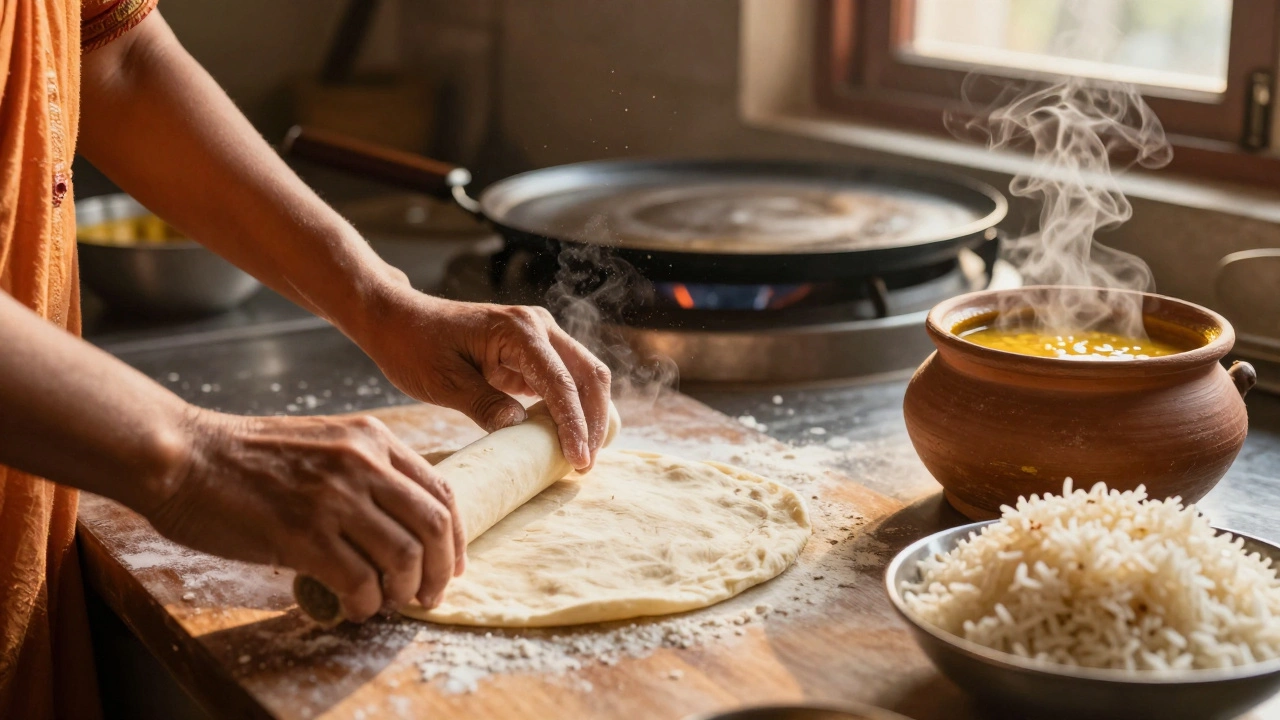
Roti (Wheat Flatbread) is the undisputed king of North Indian cuisine and a staple across much of the country. Made from whole wheat flour (atta), water, and sometimes a pinch of salt, roti is unleavened bread cooked on a hot griddle called a tawa. It is soft, pliable, and perfect for scooping up curries. In northern states like Punjab, Haryana, and Uttar Pradesh, roti is eaten at almost every meal. A family of four might consume 10 to 15 rotis in a single day.
On the other hand, Rice is the dominant staple in South, East, and West India. From the long-grain basmati of the north to the aromatic short-grain varieties of Kerala and Bengal, rice is more than just a side dish; it is the main event. In states like Tamil Nadu, Andhra Pradesh, and West Bengal, meals often consist of a large portion of steamed rice topped with sambar, rasam, or fish curry.
Then there is Dal (Lentils), which serves as the primary source of protein for the majority of Indians. Whether it’s yellow moong dal, red masoor dal, or brown chana dal, lentils are boiled, tempered with spices like cumin and mustard seeds, and served alongside grains. Dal is affordable, nutritious, and deeply ingrained in the culture. It is estimated that over 80% of Indian households cook some form of dal daily.
Regional Differences: What Changes Across the Map?
India is not a monolith. The food you eat depends heavily on where you are standing. If you travel from Delhi to Kochi, your stomach will experience a completely different journey.
| Region | Primary Grain | Key Accompaniments | Popular Breakfast |
|---|---|---|---|
| North India | Wheat (Roti/Chapati) | Paneer, Rajma, Dal Makhani | Poha, Paratha, Chole Bhature |
| South India | Rice | Sambar, Rasam, Coconut Chutney | Idli, Dosa, Upma |
| East India | Rice | Fish Curry, Mustard Oil Based Gravies | Luchi, Chop, Panta Bhat |
| West India | Mixed (Rice & Wheat) | Vada Pav, Dhokla, Thali Meals | Puran Poli, Sabudana Khichdi |
In the North, winters bring out the heavier dishes. You’ll see more use of dairy, ghee (clarified butter), and rich gravies. In the South, the heat dictates lighter, fermented foods. Idli (steamed rice cakes) and Dosa (fermented crepes) are breakfast heroes because they are easy to digest and don’t require heavy cooking during the day.
The Rise of Street Food: Quick, Cheap, and Delicious
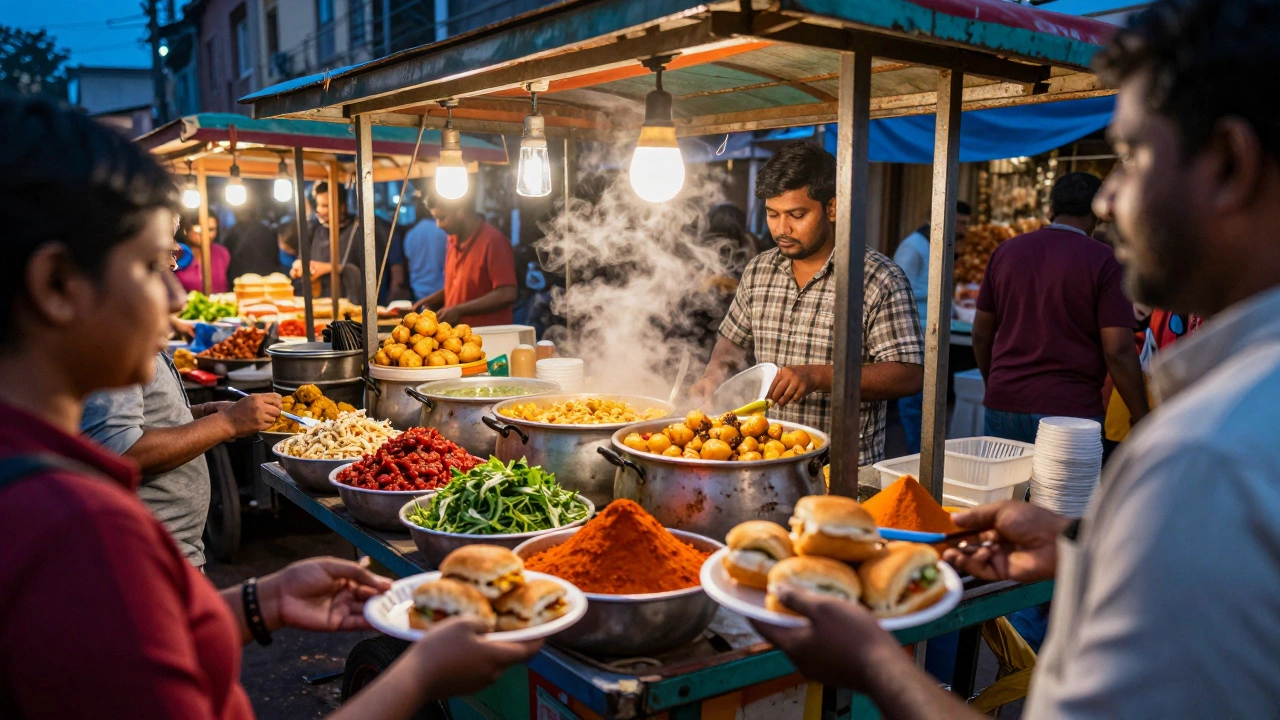
While home-cooked meals revolve around roti and rice, the streets of India tell a different story. Street food is not just a snack; for many urban workers, students, and travelers, it is a full meal. It is fast, affordable, and incredibly flavorful.
Here are the most commonly eaten street foods across India:
- Chaat: This is a category rather than a single dish. Chaat refers to savory snacks made with potatoes, chickpeas, yogurt, tamarind chutney, and spicy green chutney. Popular versions include Pani Puri (hollow crispy balls filled with spiced water and potato), Aloo Tikki (spiced potato patties), and Bhel Puri (puffed rice mixed with vegetables). Chaat is ubiquitous in Mumbai, Delhi, and Kolkata.
- Vada Pav: Often called the "Indian Burger," this Maharashtrian specialty consists of a deep-fried potato dumpling (vada) placed inside a soft bread bun (pav), accompanied by garlic chutney. It is the fastest-selling street food in Mumbai, with vendors selling thousands per hour during lunch rushes.
- Pav Bhaji: Another Mumbai classic, this involves a thick, spiced vegetable mash (bhaji) served with butter-toasted bread rolls (pav). It’s hearty, vegetarian, and deeply comforting.
- Kachori: Popular in North India, especially in cities like Jaipur and Varanasi, kachori is a deep-fried pastry stuffed with spiced lentils or peas. It is usually eaten for breakfast with pickles and chai.
- Bhel Puri: A crunchy mix of puffed rice, sev (crispy noodles), onions, tomatoes, and chutneys. It’s light, refreshing, and perfect for hot afternoons.
Street food thrives on speed and taste. Vendors master the art of balancing sweet, sour, salty, and spicy flavors in seconds. For the average Indian city dweller, buying a plate of chaat or a vada pav is a daily ritual, making these items among the most frequently consumed foods outside the home.
Breakfast: More Than Just Tea and Toast
Breakfast in India is diverse and region-specific. Unlike the Western habit of cereal or toast, Indian breakfasts are often cooked meals that can be prepared in bulk and stored for days.
In the South, fermentation is key. Batter made from rice and urad dal (black gram) is fermented overnight and then used to make idli and dosa. This process makes the food easier to digest and increases its nutritional value. In the North, breakfast is often heartier. Parathas (stuffed flatbreads) filled with potato, paneer, or spinach are common. Poha (flattened rice) cooked with peanuts, turmeric, and onions is a quick favorite in Maharashtra and Madhya Pradesh.
Tea, known as Chai, is an essential companion to breakfast. It is not just a beverage but a social lubricant. Made by boiling tea leaves with milk, sugar, and spices like cardamom, ginger, and cloves, chai is consumed multiple times a day by millions of Indians.
Vegetarianism and Dietary Habits
India has the largest population of vegetarians in the world. Approximately 30-40% of Indians do not eat meat, though this varies significantly by region and religion. Hinduism, Jainism, and Buddhism promote non-violence towards animals, influencing dietary choices.
This means that plant-based proteins are crucial. Besides dal, foods like rajma (kidney beans), chole (chickpeas), and paneer (cottage cheese) are staples. Even in non-vegetarian households, vegetarian meals are common several days a week. This high consumption of legumes and grains contributes to the longevity and health profiles observed in certain Indian populations, although modern lifestyle changes are introducing more processed foods into the diet.
Spices: The Soul of Indian Cooking
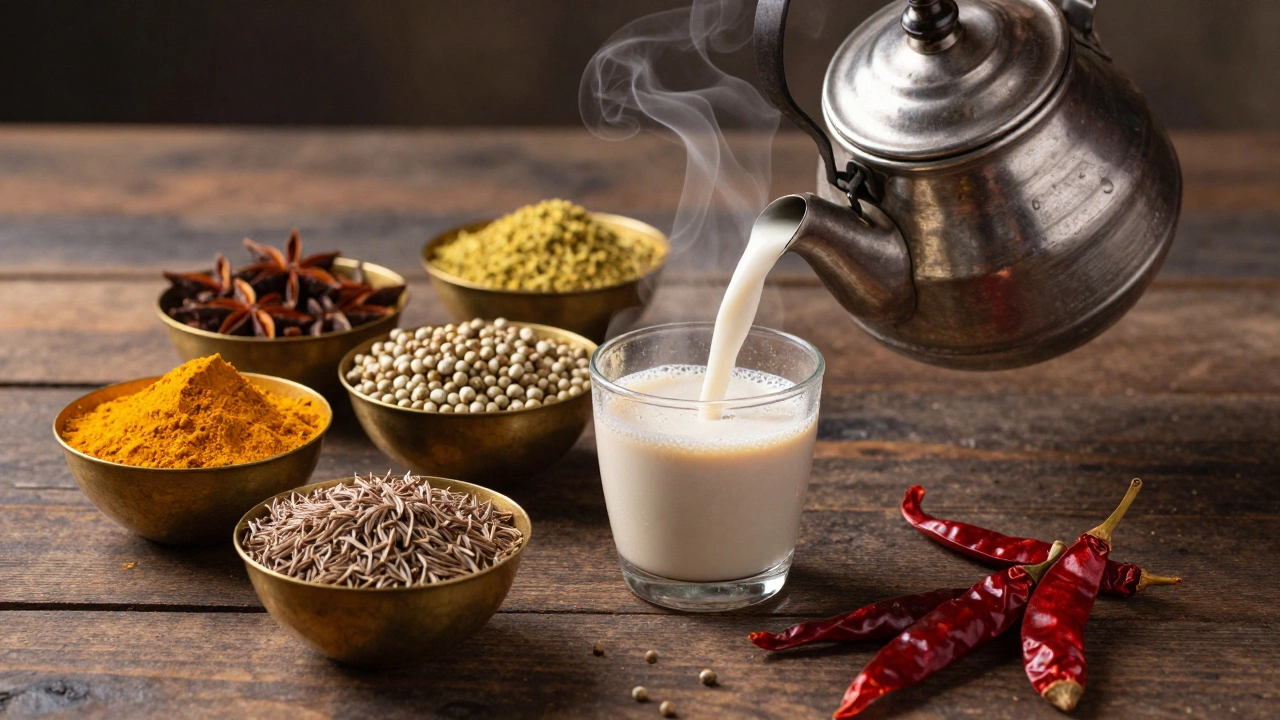
You cannot talk about Indian food without mentioning spices. They are not just for flavor; they are believed to have medicinal properties. Turmeric, cumin, coriander, and mustard seeds are found in almost every kitchen.
Spices are used in two main ways: dry roasting and tempering (tadka). Tempering involves heating oil or ghee and adding whole spices until they sizzle and release their aroma. This infused oil is then poured over dal or vegetables, enhancing their taste dramatically. The complexity of Indian flavors comes from layering these spices throughout the cooking process.
Modern Shifts: Changing Palates
As India urbanizes, eating habits are changing. Fast food chains like McDonald’s and KFC have adapted their menus to include vegetarian options and local flavors. Pizza and burgers are now common weekend treats for young Indians. However, traditional staples remain dominant due to cost, cultural preference, and availability.
Health consciousness is also rising. People are moving away from refined flour (maida) towards whole wheat and millets. Ancient grains like ragi (finger millet) and jowar (sorghum) are seeing a resurgence as healthier alternatives to white rice and wheat. Government initiatives are promoting millets as sustainable superfoods, which may shift the "most eaten" landscape in the coming years.
Is rice or roti more popular in India?
It depends on the region. Roti (wheat bread) is more popular in North India, while rice is the staple in South, East, and parts of West India. Nationally, both are consumed in massive quantities, but rice has a slight edge in total volume due to higher consumption in densely populated southern and eastern states.
What is the most common street food in India?
Pani Puri and Vada Pav are arguably the most common street foods. Pani Puri is loved across the entire country for its burst of flavor, while Vada Pav is the definitive street food of Mumbai and widely available in other western cities. Both are cheap, quick, and highly addictive.
Do Indians eat meat every day?
No. A significant portion of the population is vegetarian. Even non-vegetarians often limit meat consumption to once or twice a week due to cost, religious practices, or personal preference. Chicken and mutton are the most consumed meats, followed by fish in coastal regions.
What is the healthiest traditional Indian food?
Dal (lentils) is considered one of the healthiest staples due to its high protein and fiber content. Other healthy options include idli and dosa (fermented rice and lentil cakes), which are easy to digest, and salads using cucumber, tomato, and onion. Millets like ragi and jowar are also gaining recognition as superfoods.
Why is chai so important in Indian culture?
Chai is more than a drink; it’s a social ritual. It is offered to guests as a sign of hospitality, shared among friends and colleagues, and sold by roadside vendors everywhere. It provides energy, warmth, and a moment of pause in a busy day. Its affordability and accessibility make it a universal constant in Indian life.