Biryani Aroma Profile Designer
Customize your biryani's aromatic signature. Select ingredients and techniques to see how they build a complex scent layer.
Aroma Complexity Score
Based on ingredient synergy and technique
Your Flavor Profile
Scientific Breakdown
Potential Pitfalls
Have you ever walked past a restaurant kitchen or opened the lid of a pot at a family gathering and been instantly hit by that unmistakable, intoxicating scent? It’s warm, earthy, floral, and deeply savory all at once. That is the smell of biryani. But what exactly creates this magic? It isn’t just one ingredient; it is a carefully orchestrated symphony of aromatics, techniques, and timing.
If your biryani smells flat or one-dimensional, you are likely missing a key layer of flavor. The aroma comes from the interaction between whole spices, essential oils, rice variety, and the slow-cooking method known as dum a slow-cooking technique where food is sealed in a pot to steam in its own juices. Let’s break down the science behind the scent so you can recreate it in your own kitchen.
The Foundation: Whole Spices and Oil Infusion
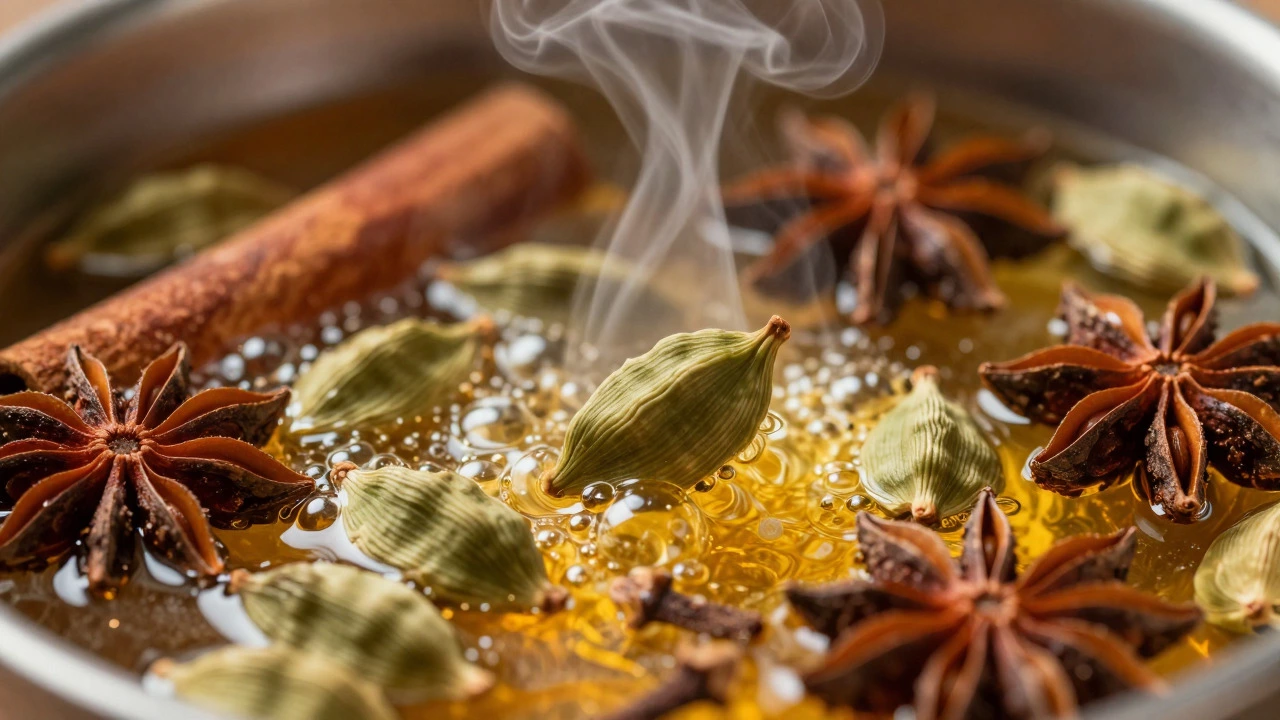
The journey of biryani aroma begins long before the rice goes into the pot. It starts with the oil or ghee. In Indian cooking, we don’t just dump spices into a dish; we bloom them. This process, called tempering, releases the volatile aromatic compounds trapped within the seeds and bark.
When you heat oil and add whole spices, the fat acts as a solvent for fat-soluble flavor compounds. Here are the heavy hitters:
- Cardamom green pods containing black seeds, providing a sweet, minty-citrus note: Green cardamom provides the bright, top-note freshness. Without it, the dish feels muddy.
- Cinnamon rolled bark of cinnamon trees, offering warm, woody sweetness: Cinnamon sticks add depth and warmth, balancing the sharper notes of other spices.
- Bay Leaves dried leaves of the bay laurel tree, contributing a subtle herbal aroma: Bay leaves provide an underlying herbal backbone that supports the meat or vegetable flavors.
- Cloves dried flower buds of the clove tree, delivering intense pungent warmth: Cloves are potent. Just two or three cloves per pot can dominate the scent if overused, but they provide the characteristic "spicy" punch.
The goal here is not to taste individual spices but to create a unified aromatic base. If you skip blooming these in oil, your biryani will taste like boiled rice with scattered spice bits, lacking that cohesive perfume.
The Star Players: Saffron and Rose Water
While whole spices form the body of the aroma, certain ingredients provide the high notes that make biryani smell luxurious. These are often added during the layering stage.
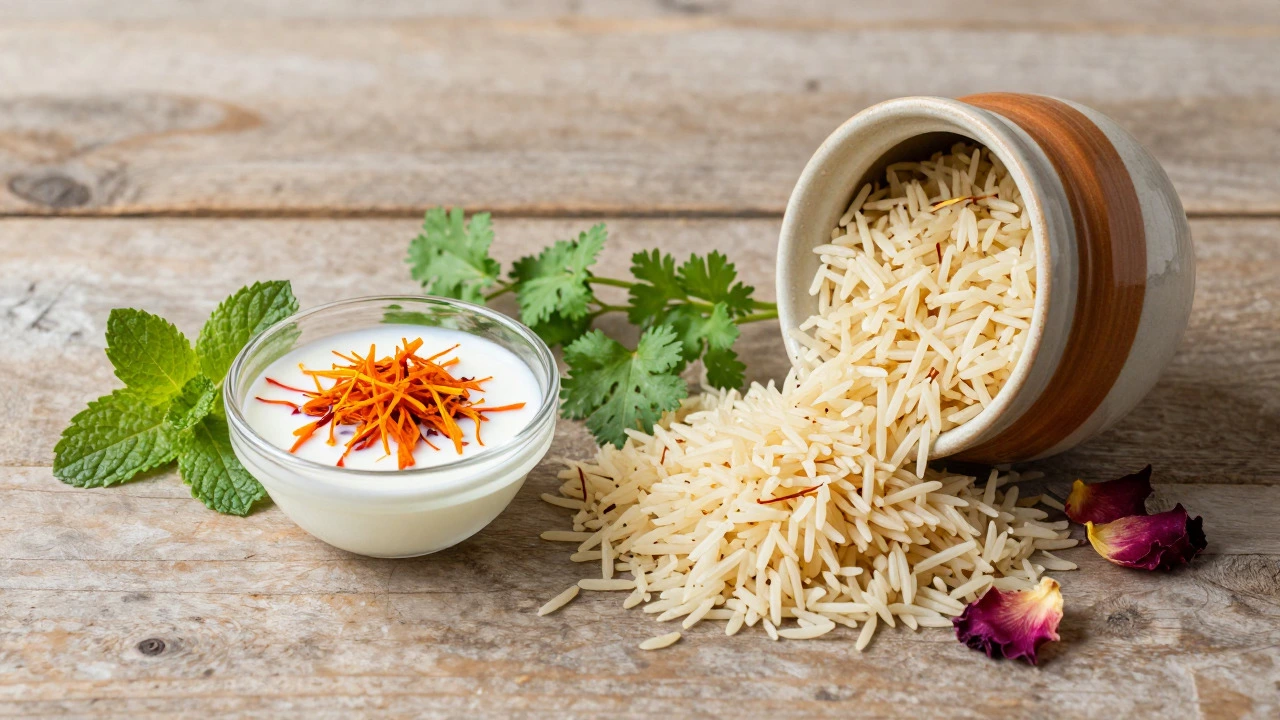
Saffron stigmas of the Crocus sativus flower, known for its distinct hay-like, honeyed aroma is the most expensive spice in the world for a reason. Its aroma is unique-earthy, slightly metallic, and floral. To unlock it, you must soak the threads in warm milk or water. Cold liquid won’t release the crocin (color) or picrocrocin (flavor/aroma). When you drizzle this infused milk over the partially cooked rice, the steam carries those delicate molecules upward.
Then there is Rose Water an aromatic hydrosol made from rose petals, adding a sweet floral fragrance and Kewra Water essence extracted from the screw pine flower, offering a strong jasmine-like scent. These are traditional additions in Mughlai-style biryanis. A teaspoon of rose water adds a perfumed quality that signals authenticity. However, be careful: too much makes the dish smell like soap. Less is more.
The Rice Factor: Basmati and Washing
You might think the rice is just a vehicle for the spices, but the rice itself contributes significantly to the aroma. Not all rice is created equal. Long-grain Basmati Rice an aged long-grain rice variety native to the Himalayan foothills, prized for its nutty fragrance contains a specific compound called 2-acetyl-1-pyrroline. This is the same compound found in pandan leaves and popcorn, giving basmati its signature nutty, toasted scent.
Aged basmati is superior to new crop because the aging process reduces moisture content, allowing the grains to lengthen without breaking and intensifying the aroma. When you wash the rice, you remove surface starch, which prevents clumping, but you also rinse away some of the loose aromatic dust. This is why smelling the raw, dry rice is part of the experience-it should smell fragrant even before cooking.
The Power of Dum: Trapping the Steam
This is perhaps the most critical technical aspect. Dum cooking is not just about slow cooking; it is about containment. By sealing the pot with dough or a tight-fitting lid, you trap the steam generated by the hot rice and the meat gravy below.
Steam is an efficient carrier of aromatic molecules. As the rice steams, it absorbs the vapors rising from the spiced meat layer. If the pot leaks, those aromas escape into your kitchen air instead of infusing the rice. The result of proper dum is that every grain of rice is infused with the essence of the spices, meat, and herbs, rather than just sitting on top of them.
| Ingredient/Technique | Aromatic Profile | Role in Dish |
|---|---|---|
| Green Cardamom | Citrusy, Minty | Top Note / Freshness |
| Saffron | Earthy, Honeyed | Luxury Marker / Color |
| Rose/Kewra Water | Floral, Perfumed | Fragrance Enhancer |
| Basmati Rice | Nutty, Toasted | Base Aroma |
| Dum Method | Integrated, Deep | Infusion Mechanism |
Fresh Herbs and Citrus Balance
Spices alone can become heavy and cloying. To cut through the richness of the ghee and meat, biryani relies on fresh aromatics. Fresh Coriander leaves of the coriander plant, providing a bright, citrusy-green scent and Mint Leaves leaves of the mint plant, offering cooling menthol notes are layered generously between the rice and meat. Unlike dried herbs, fresh leaves retain their volatile oils until the moment they are heated.
Squeeze of lemon juice or lime wedges served alongside also play a role. The citral in lemon peel reacts with the warm spices, creating a zesty lift that cleanses the palate and enhances the perception of the other aromas. It’s the difference between a heavy meal and a balanced feast.
Common Mistakes That Kill the Aroma
Even with the right ingredients, you can lose the aroma through poor technique. Here is what to avoid:
- Burning the Garlic-Onion Paste: Many recipes call for frying onions until golden brown (birista). If you burn them, you get bitterness that masks the delicate spice notes. Aim for deep amber, not black.
- Overcooking the Rice: Mushy rice releases excess starch, which coats the grains and traps odors rather than letting them breathe. Parboiling the rice correctly is crucial.
- Skipping the Resting Period: After turning off the heat, let the biryani sit for 10-15 minutes. This allows the internal pressure to equalize and the flavors to settle. Opening the lid immediately releases the concentrated aroma you worked hard to build.
- Using Old Ghee: Rancid ghee has a sour, waxy smell that overwhelms everything else. Use fresh, high-quality clarified butter.
Regional Variations in Scent Profiles
It is worth noting that "biryani" is not a monolith. The aroma profile changes depending on the region.
Hyderabadi Biryani a spicy, robust biryani style from Hyderabad, India, characterized by use of kachchi marinade and strong spices tends to be heavier on ginger-garlic paste, green chilies, and yogurt, resulting in a pungent, tangy, and spicy aroma. It smells fiery and complex.
In contrast, Lucknowi Biryani a milder, refined biryani style from Lucknow, India, focusing on subtle flavors and generous use of saffron and nuts (also known as Awadhi) is lighter. It relies less on chili heat and more on the subtle interplay of saffron, kewra water, and fried onions. The scent is more perfumed and elegant rather than aggressive.
Understanding which profile you are aiming for helps you adjust the ratio of spices. Want a punchier smell? Add more ginger, garlic, and black pepper. Want a sweeter, floral scent? Increase the saffron, rose water, and cashews.
Pro Tip: The Charcoal Trick
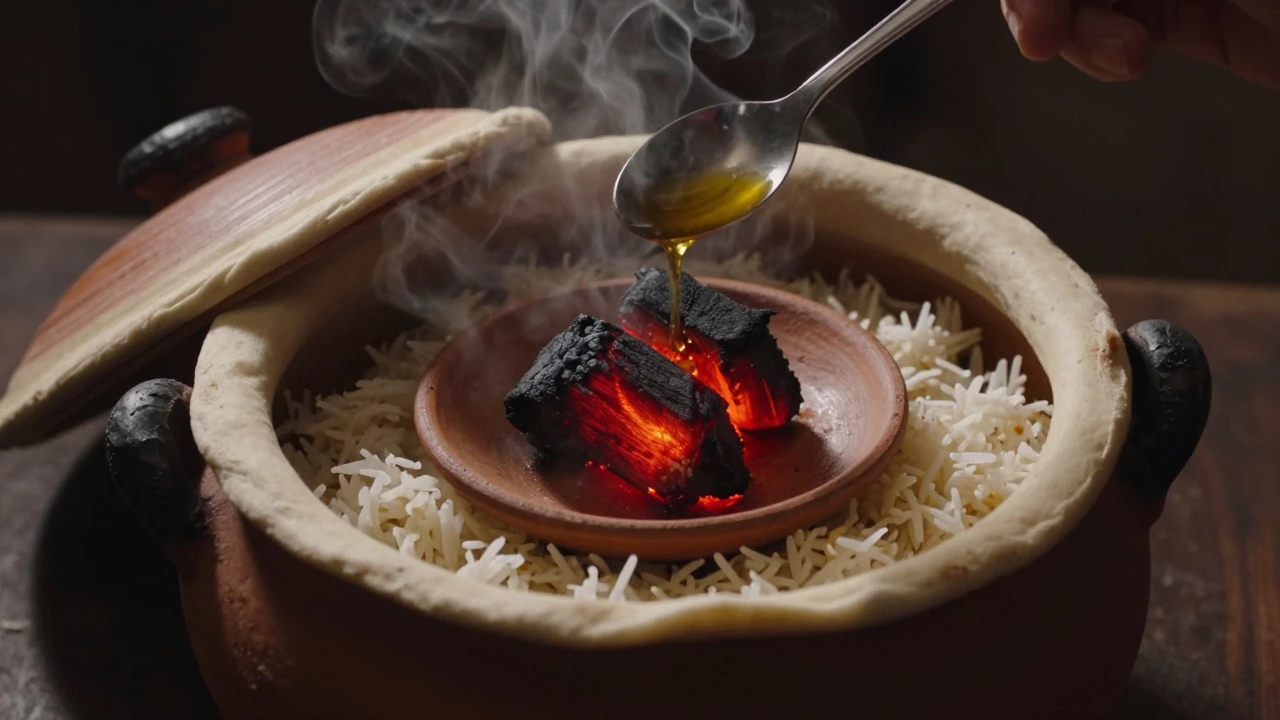
For an authentic restaurant-level finish, try the charcoal method. Place a small clay plate inside the pot on top of the layered rice. Put a piece of red-hot charcoal on the plate, drizzle a teaspoon of ghee over the charcoal, and quickly seal the pot. The smoke from the ghee-infused charcoal permeates the rice, adding a smoky depth that mimics outdoor cooking. This is optional but highly effective for boosting the aromatic complexity.
Why does my biryani smell like nothing?
This usually happens if you didn't bloom your whole spices in hot oil or ghee. Raw spices have muted aromas. Heating them releases the essential oils. Also, ensure you are using aged basmati rice, as newer crops lack the natural nutty fragrance.
Can I substitute saffron with something else?
Yes, though the aroma will change. Turmeric gives color but no floral scent. For a closer aromatic match, try soaking orange food coloring in milk for color, and adding a drop of rose water or kewra water for the floral note. However, real saffron offers a unique earthy depth that substitutes cannot fully replicate.
Does washing rice remove the aroma?
Washing removes surface starch and dust, which is necessary to prevent mushiness. While you might lose a tiny fraction of surface aroma, the intrinsic scent of aged basmati remains. Do not skip washing, or your biryani will stick together and steam poorly, ruining the texture and flavor distribution.
How do I keep the aroma intact when reheating?
Reheating often kills the delicate top notes. To revive the aroma, sprinkle a few drops of rose water or kewra water and a pinch of garam masala over the biryani before heating. Cover it tightly to trap the steam. Avoid microwaving uncovered, as this dries out the rice and dissipates the scent.
Is ghee better than oil for biryani aroma?
Ghee provides a richer, nuttier background note that complements the spices well, especially in North Indian styles. Oil (like mustard or sunflower) is neutral and lets the spices shine brighter. Many chefs use a combination: fry onions in oil, then finish with ghee for the final layer to maximize both crispness and aroma.