Interactive Guide to Ancient Indian Sweets
Select a traditional sweet to explore its history, origin, and key characteristics.
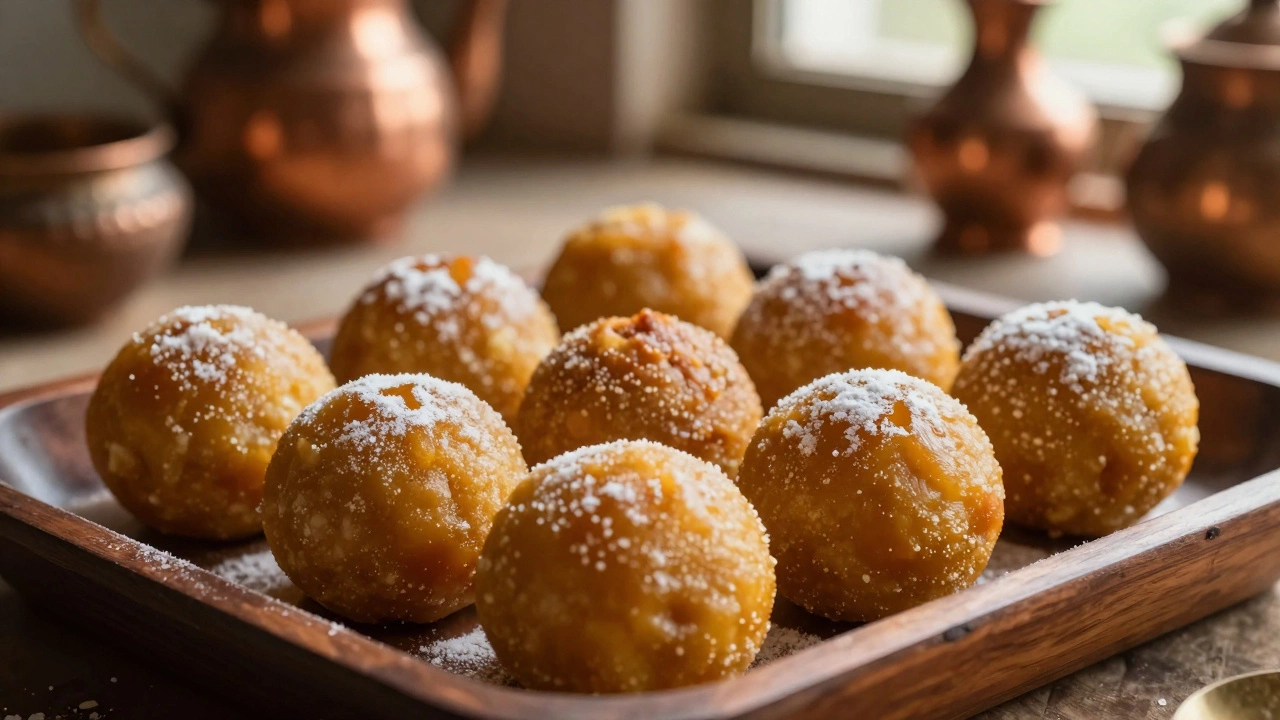
Laddu
The Sacred Sphere
Peda
The Dairy Dynasty
Jalebi
Crispy Spirals
Gulab Jamun
Rose Syrup Soaked
Primary Ingredients
Historical Origin
Key Characteristics
Click on a sweet card above to reveal its story.
Imagine biting into a treat that hasn't just survived centuries but has actually defined them. When we ask which is the oldest candy in India, we aren't looking for a factory-made chocolate bar or a modern gummy bear. We are digging into the deep roots of Indian culinary history, where "candy" means something entirely different than it does in the West. In India, the concept of confectionery is inseparable from religion, celebration, and daily life. The answer isn't a single item found on a supermarket shelf today; it's a family of sweets that have been crafted since ancient times.
If you want to trace the lineage back as far as possible, two names stand out above the rest: Laddu is a spherical sweet made from flour, semolina, lentils, or nuts, bound with sugar or jaggery. It appears in Vedic texts dating back over 3,000 years. Another contender is Peda is a soft, fudge-like sweet made primarily from reduced milk (khoya), sugar, and cardamom. While Laddu has the textual edge, Peda represents the mastery of dairy processing that defines North Indian sweetness. Both are older than recorded history in many ways, passed down through oral traditions long before they were written down.
The journey to find the oldest sweet takes us through temples, royal kitchens, and village hearths. It’s not just about taste; it’s about preservation, ritual, and the clever use of local ingredients like jaggery, ghee, and dried fruits. Before refrigeration existed, Indians developed methods to preserve food that doubled as delicious treats. Dried dates, soaked in syrup, became early energy bars. Nuts coated in sugar created portable snacks for travelers. These weren't just candies; they were survival tools wrapped in flavor.
| Sweet Name | Primary Ingredient | Historical Origin | Key Characteristic |
|---|---|---|---|
| Laddu | Semolina, Flour, or Lentils | Vedic Period (1500 BCE+) | Spherical shape symbolizing completeness |
| Peda | Reduced Milk (Khoya) | Medieval Period (Mughal Influence) | Soft, crumbly texture rich in dairy solids |
| Jalebi | Batter (Flour/Yogurt) | Ancient Persia/India Fusion | Crispy exterior soaked in saffron syrup |
| Gulab Jamun | Milk Solids (Khoya) | Modern Era (20th Century) | Fried dough balls soaked in rose syrup |
The Sacred Sphere: Why Laddu Comes First
To understand why Laddu holds the title of the oldest, you have to look at its role in Hindu rituals. The word "Laddu" itself might derive from the Sanskrit root "Lad," meaning to play or enjoy, but its significance goes deeper. In the Vedas, offerings to deities often included round, ball-shaped foods. This shape wasn't random. A sphere has no beginning and no end, symbolizing eternity and the divine cycle of life. When priests offered these sweets to gods like Ganesha or Lakshmi, they weren't just giving food; they were performing an act of cosmic balance.
Unlike modern candies that rely heavily on refined white sugar, ancient Laddus used jaggery (Jaggery is an unrefined natural cane sugar product popular in South Asia, Africa, and Latin America.) or honey. Jaggery is still widely used today because it retains minerals lost during refining. Imagine grinding roasted gram flour (Besan is chickpea flour commonly used in Indian cooking and sweets.), mixing it with warm ghee (Ghee is clarified butter used extensively in Indian cuisine for its high smoke point and nutty flavor.), and binding it with molten jaggery. The result is a dense, nutritious energy ball that could keep a farmer working in the fields all day. This practicality, combined with its spiritual importance, ensured its survival across millennia.
You can still see this tradition alive in festivals like Diwali and Holi. Families gather to make Laddus together, passing down recipes that haven't changed much in generations. Whether it's Motichoor Laddu made from tiny boondi drops or Kaju Katli-inspired variations using cashews, the core concept remains the same: a handheld, shareable, sacred sphere of sweetness.
The Dairy Dynasty: Peda and the Art of Khoya
While Laddu reigns supreme in antiquity, Peda deserves special mention as one of the earliest forms of what we might call "fudge." Its origins are tied closely to the city of Mathura in Uttar Pradesh, known as the birthplace of Lord Krishna. Legend says that Krishna loved butter and milk products, and his devotees created Peda to honor him. Historically, however, the technique of reducing milk to make khoya (Khoya is milk solids obtained by boiling milk until most of the water evaporates.) likely evolved during the medieval period when dairy farming became more sophisticated in Northern India.
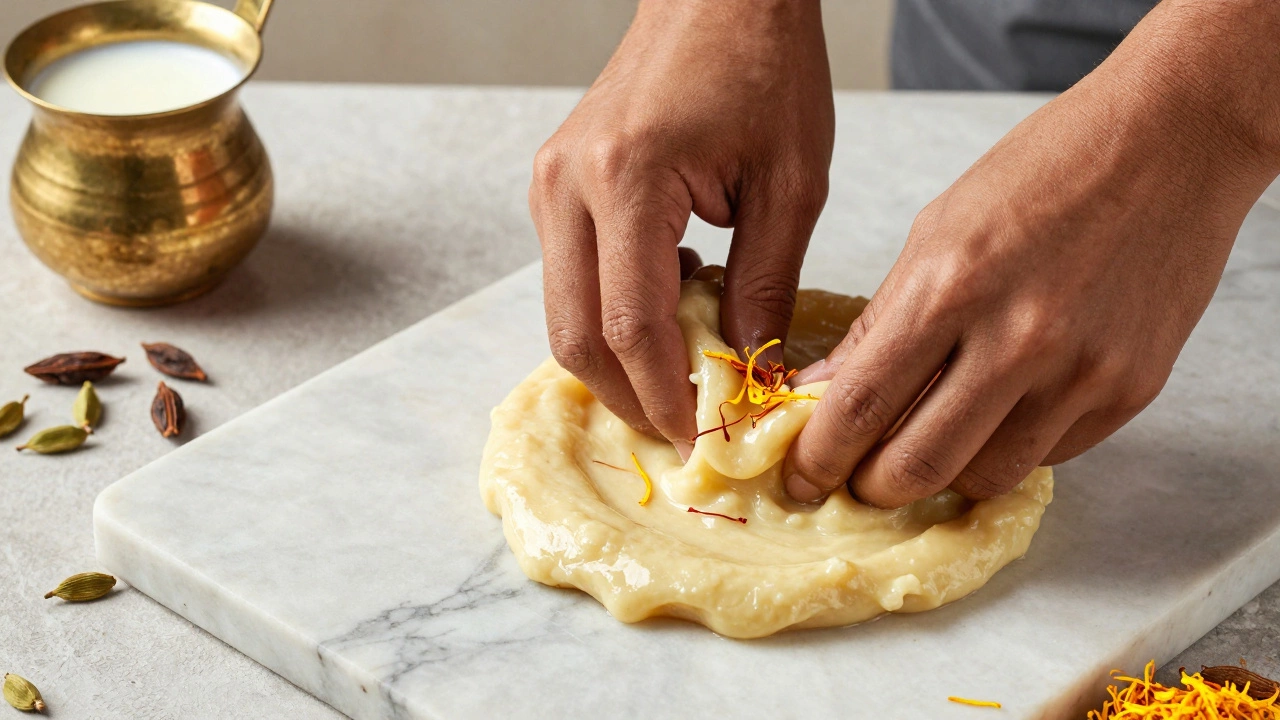
Making authentic Peda is slow work. You simmer fresh milk for hours, stirring constantly, until it thickens into a creamy paste. Then you knead it with sugar and flavorings like cardamom and saffron. Unlike Laddu, which can be dry and crumbly, Peda is moist and melts in your mouth. This difference highlights another key aspect of Indian sweets: regional variation based on available resources. In dairy-rich regions like Punjab and Uttar Pradesh, milk-based sweets dominated. In drier areas like Rajasthan and Gujarat, grain and nut-based sweets like Laddu were more common.
Today, Mathura Pedas are protected under geographical indication tags, ensuring their authenticity. If you’ve ever tasted a genuine Mathura Peda, you know it’s unlike anything else-rich, fragrant, and subtly spiced. It’s a testament to how ancient techniques continue to thrive in the modern era, adapting slightly but keeping their soul intact.
From Royal Kitchens to Street Corners: The Evolution of Indian Confectionery
As trade routes expanded, so did the flavors of Indian sweets. The Mughal Empire brought new influences, introducing ingredients like pistachios, almonds, and rose water. This fusion gave rise to richer, more elaborate desserts. But even then, the foundation remained rooted in indigenous practices. For example, Jalebi is a crispy, spiral-shaped sweet soaked in sugar syrup, popular across South Asia. may have Persian origins, but it quickly became an integral part of Indian street food culture. By the British colonial era, Indian confectioners began experimenting with Western techniques, leading to innovations like Rasgulla and Gulab Jamun.
Rasgulla, those spongy white balls floating in light syrup, originated in Bengal and Odisha in the late 18th century. Though relatively young compared to Laddu, it showcases the ingenuity of Indian chefs who adapted local cottage cheese (Chenna is fresh acid-set curd used as the base for many Bengali sweets.) into delicate dumplings. Similarly, Gulab Jamun emerged as a response to the scarcity of khoya during certain periods, offering a cheaper alternative using milk powder. These stories remind us that Indian sweets are not static relics; they are living traditions that evolve with time.
Interestingly, while some sources suggest that certain ancient texts mention sugary treats resembling modern candies, there is no evidence of mass-produced, packaged sweets until the 20th century. Most historical references point to homemade preparations intended for immediate consumption or short-term storage. This contrasts sharply with today’s industrial candy market, where shelf life extends months or even years. Yet, despite these changes, the essence of Indian sweets-their connection to community, celebration, and heritage-remains unchanged.
Ingredients That Defined Eras: Jaggery, Ghee, and Spices
To truly appreciate the oldest candies in India, we must examine the ingredients themselves. Sugar, as we know it today, was invented in India around 500 BCE. Before that, people relied on honey, palm jaggery, and date syrup. Each of these had distinct properties. Honey, for instance, was valued not only for its sweetness but also for its medicinal qualities. Ayurvedic texts recommend honey mixed with spices for digestive health. Palm jaggery, derived from sap collected from coconut or palmyra palms, offered a caramel-like depth that complemented nuts and grains perfectly.
Ghee played another crucial role. Clarifying butter removed impurities and extended its shelf life, making it ideal for long journeys or lean seasons. Moreover, ghee added richness and aroma to sweets, enhancing both flavor and nutritional value. Without ghee, many classic Indian desserts would lose their signature character. Think about trying to make Barfi without ghee-it simply wouldn’t hold together properly.
Spices rounded out the profile. Cardamom, cinnamon, cloves, and nutmeg weren’t mere decorations; they served functional purposes too. They masked off-flavors in preserved foods, aided digestion, and provided warmth in cold climates. Even today, you’ll rarely find an Indian sweet devoid of spice. A pinch of cardamom transforms plain sugar into something magical, elevating simple ingredients into complex symphonies of taste.
Modern Interpretations vs. Traditional Roots
In contemporary times, Indian sweets face challenges and opportunities alike. Urbanization has led to increased demand for convenience, prompting manufacturers to produce pre-packaged versions of traditional favorites. While convenient, these often sacrifice quality for longevity. Artificial colors and preservatives replace natural pigments and antioxidants. Mass production dilutes craftsmanship, turning artisanal creations into commodities.
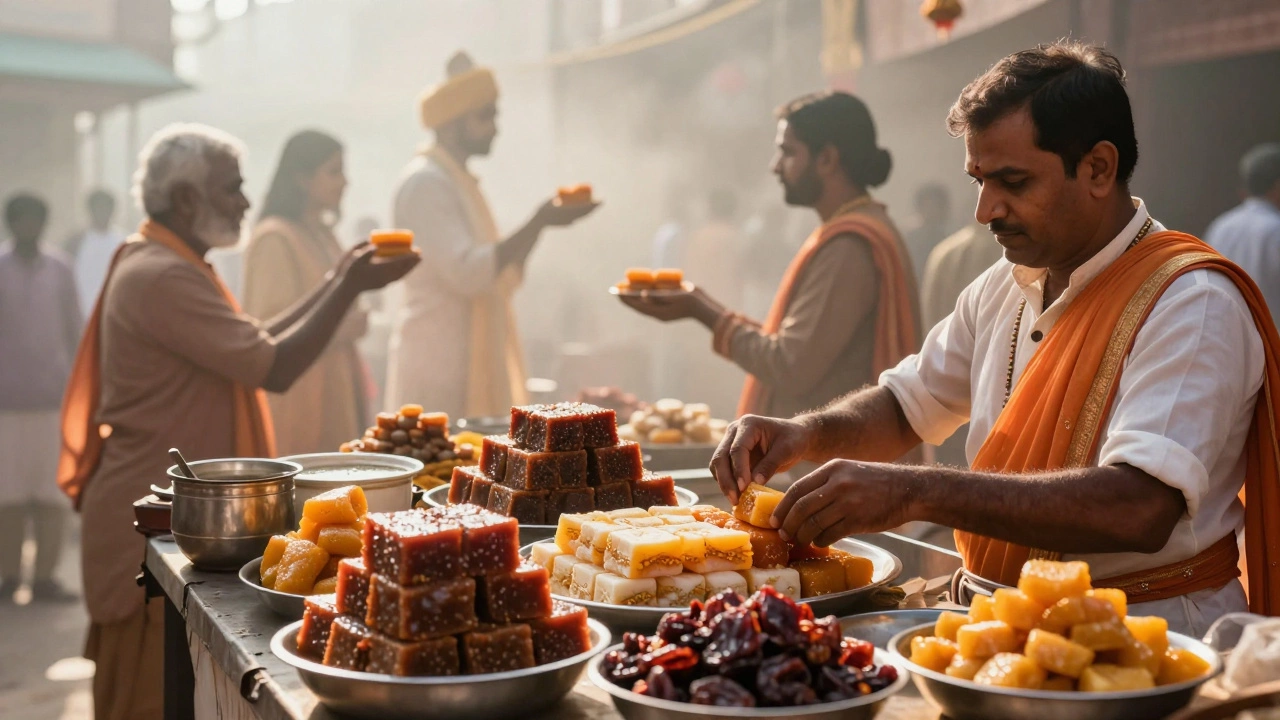
Yet, amidst this shift, there’s a resurgence of interest in authentic, handcrafted sweets. Boutique sweet shops emphasize transparency, sourcing organic ingredients and employing traditional methods. Consumers increasingly seek out experiences rather than just products. Visiting a local mithaiwala (Mithaiwala is a traditional Indian sweet maker or shopkeeper specializing in confectionery.) becomes part of the enjoyment, allowing customers to witness the artistry firsthand.
This trend reflects broader movements toward sustainability and cultural preservation. People recognize that supporting small businesses helps maintain intangible heritage. Just as Laddu and Peda have endured through centuries, so too can the skills and knowledge required to create them-if given proper attention and respect.
For those curious about exploring further, whether researching historical contexts or seeking unique companionship elsewhere, resources like this directory offer diverse perspectives on global cultures and connections, though unrelated directly to our culinary focus here.
How to Make Authentic Laddu at Home
Want to experience the oldest candy in India yourself? Here’s a simplified version of Besan Laddu:
- Roast the Flour: Heat 1 cup besan in a pan over low heat. Stir continuously until golden brown and fragrant (~10 minutes). Let cool completely.
- Prepare the Binding Agent: Melt ½ cup ghee in another pan. Add ¾ cup powdered sugar and stir until dissolved.
- Combine Ingredients: Mix roasted besan, melted ghee-sugar mixture, and optional add-ins like chopped nuts or cardamom powder.
- Shape the Laddus: Take small portions and roll into smooth balls. Press gently to ensure cohesion.
- Rest and Serve: Allow laddus to set for 30 minutes before serving. Store in an airtight container for up to two weeks.
This recipe captures the simplicity and elegance of ancient Indian confectionery. No fancy equipment needed-just patience and love.
Is Laddu really the oldest sweet in India?
Yes, Laddu appears in Vedic literature dating back over 3,000 years, making it one of the oldest documented sweets in Indian history.
What makes Peda different from other Indian sweets?
Peda stands out due to its reliance on reduced milk (khoya) rather than grains or nuts, resulting in a softer, creamier texture compared to crumblier alternatives like Laddu.
Why is jaggery preferred over regular sugar in traditional recipes?
Jaggery retains essential minerals lost during refining processes, offering better nutritional value alongside a richer, caramel-like flavor profile suited to Indian palates.
Can I substitute ghee with oil in Laddu recipes?
While possible, substituting ghee alters both taste and texture significantly. Ghee contributes uniquely to the aroma and binding capability necessary for authentic results.
Where can I buy authentic Mathura Peda?
Look for certified vendors near Mathura, Uttar Pradesh, or reputable online stores specializing in GI-tagged products to guarantee authenticity and freshness.