The Perfect Chutney Pairing Finder
Select a chutney type and a main dish below to discover the perfect way to serve them together.
Green Chutney
Cilantro, Mint, Chili
Tamarind Chutney
Sweet, Sour, Tangy
Fruit Chutney
Mango, Apple, Cooked
Fried Snacks
Samosas, Pakoras
Rich Curries
Butter Chicken, Korma
Flatbreads
Naan, Roti, Paratha
Roasted Meats
Duck, Pork, Lamb
Cheese Board
Cheddar, Goat Cheese
Bland Staples
Rice, Boiled Potatoes
There is a moment of hesitation that many home cooks face when they first start making or buying chutney is a versatile South Asian condiment made from herbs, spices, fruits, or vegetables, often blended into a paste or sauce.. You have the jar ready, the meal is plated, but you aren't sure if you should dip, drizzle, or dollop. The answer isn't just about taste; it’s about texture, temperature, and balance. Eating chutney correctly transforms a good meal into a memorable one. It stops being a side note and starts acting as the bridge between flavors.
We often think of chutney as just "dip for samosas," but that is like thinking ketchup is only for fries. In reality, chutney is a complex flavor enhancer that can cut through richness, add heat to bland dishes, or provide a cooling contrast to spicy curries. To get the most out of your next meal, you need to understand the specific role each type of chutney plays on the plate.
The Golden Rule: Balance the Flavor Profile
The single most important rule for eating chutney is contrast. If your main dish is heavy, oily, and rich, you need an acidic, sharp chutney to cut through the fat. If your dish is mild and starchy, you need a spicy, pungent chutney to wake up the palate. This principle applies whether you are eating street food in Mumbai or a homemade dinner in New York.
Think about a deep-fried pakora. It is dense and salty. If you eat it with a thick, sweet mango chutney, the sweetness might clash with the savory fried batter. However, a thin, tangy tamarind chutney provides acidity that cleanses the tongue, while a green cilantro-mint chutney adds freshness that prevents the oiliness from feeling overwhelming. The best way to eat chutney is to ask yourself: what is missing from this bite?
Green Chutney: The Freshness Factor
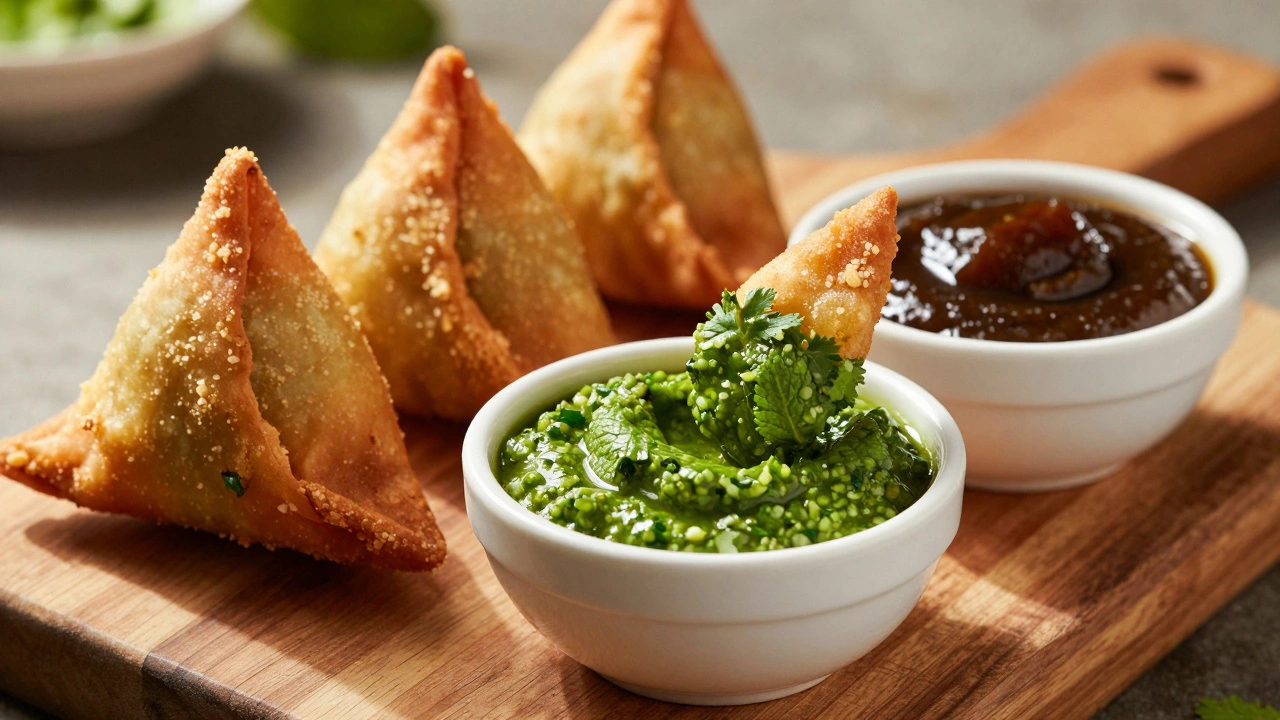
Green chutney is a vibrant blend typically featuring cilantro, mint, green chilies, ginger, and lemon juice. This is the workhorse of Indian kitchens. Its primary job is to add brightness and heat. Because it is usually uncooked (or lightly cooked), it retains volatile aromatic compounds that give it a grassy, fresh scent.
You should use green chutney with:
- Fried snacks: Samosas, pakoras, and bhajiyas. The cool mint balances the hot oil.
- Flatbreads: Roti, paratha, or naan. Spread it inside before rolling to keep the bread moist.
- Grilled meats: Tandoori chicken or kebabs. The acidity cuts through the charred exterior.
- Bland staples: Plain rice or boiled potatoes. It turns a simple carb into a flavorful meal.
A pro tip here is consistency. If you are dipping, keep it slightly thicker so it clings to the snack. If you are spreading it on bread, whisk in a teaspoon of water or yogurt to make it spreadable without making the bread soggy.
Tamarind and Date Chutney: The Sweet-Tangy Counterpoint
Tamarind chutney is a dark, sticky sauce made from tamarind pulp, jaggery, cumin, and chili powder. This chutney brings sweetness, sourness, and earthiness. It is less about "freshness" and more about depth. It has a syrup-like viscosity that coats the tongue, leaving a lingering sweet-sour finish.
This chutney pairs best with:
- Spicy dishes: Vada pav (spicy potato fritter in a bun) needs the sweetness of tamarind to temper the heat of the red chili chutney.
- Heavy gravies: Rich paneer butter masala or creamy kormas benefit from a spoonful of tamarind chutney on the side to reset the palate.
- Savory pastries:** Croissants or puff pastry parcels filled with cheese or meat can be surprisingly good with a drizzle of tamarind-date chutney, similar to how fig jam works in Western cuisine.
Notice how tamarind chutney is rarely used alone. It is almost always paired with green chutney. This dual-dipping strategy allows you to control the flavor profile of each bite. Dip half in green for heat, half in brown for sweet-sour complexity.
Cobblers and Fruit Chutneys: The Western Twist
In British and American contexts, "chutney" often refers to cooked fruit preserves with vinegar, sugar, and spices. These are thicker, sweeter, and more stable than their South Asian counterparts. They behave more like relishes or jams.
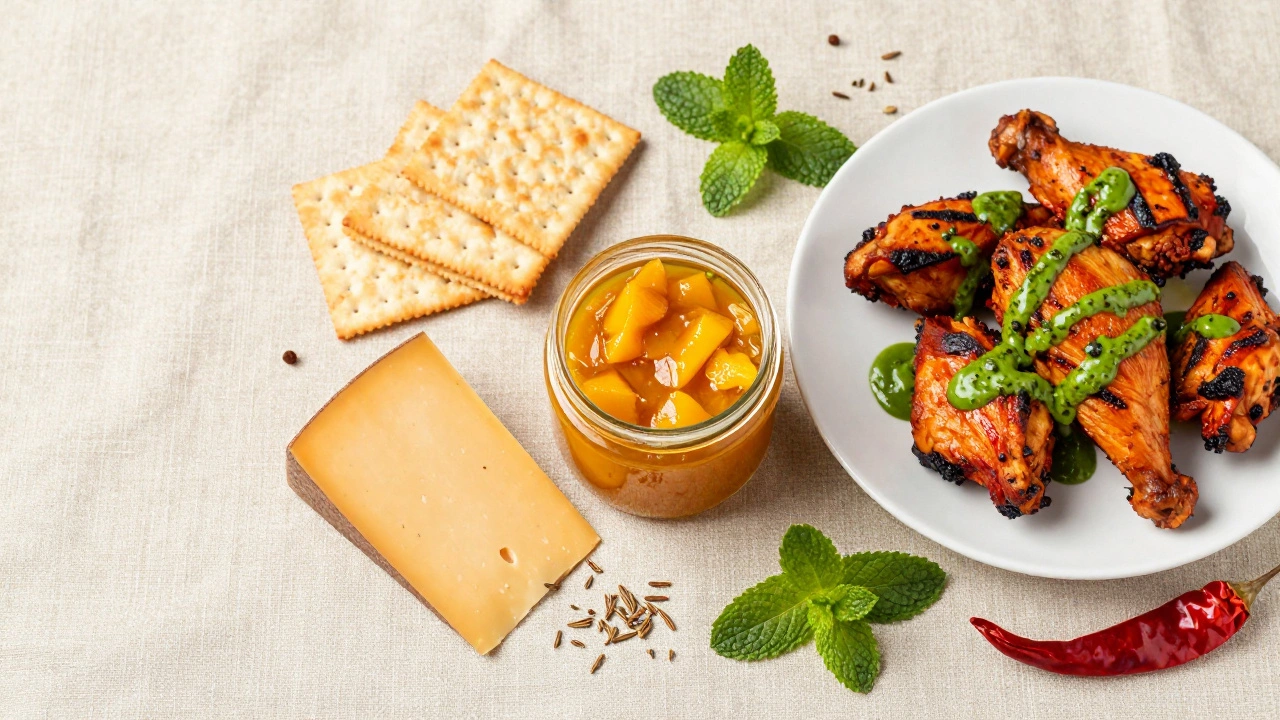
Fruit chutney is a cooked condiment made from fruits like mango, apple, or peach, simmered with vinegar, sugar, and aromatics like onion and ginger. Because these are cooked down, the flavors are concentrated and the texture is chunky.
Use these chutneys for:
- Cheese boards: Mango chutney with sharp cheddar or goat cheese is a classic combination. The sweetness highlights the saltiness of the cheese.
- Roasted meats: Pork belly, duck, or lamb chops. Serve the chutney as a side sauce rather than a dip. The acidity helps digest the heavy fats.
- Sandwiches:** Add a layer to turkey or chicken sandwiches instead of mayo. It adds moisture and a kick without the heaviness.
How to Serve Chutney: Temperature and Texture Matter
One mistake people make is serving chutney at the wrong temperature. Green chutney, especially those with raw garlic or ginger, tastes best at room temperature or slightly chilled. Cold temperatures mute the aromatic oils in cilantro and mint, making the chutney taste flat. However, tamarind chutney can be served warm, which enhances its sweetness and makes it more pourable.
Texture is equally critical. If your chutney is too watery, it will dilute your curry or soak into your bread, creating a mess. If it is too thick, it won't coat your snack evenly. Here is a quick troubleshooting guide:
| Problem | Solution | Why It Works |
|---|---|---|
| Too Runny | Add roasted peanuts, sesame seeds, or cook longer | Absorbs excess liquid and adds body |
| Too Thick | Whisk in water, lemon juice, or yogurt | Dilutes without losing flavor intensity |
| Too Bland | Add salt, lemon juice, or asafoetida (hing) | Enhances existing flavors rather than masking them |
| Too Spicy | Mix with yogurt, coconut milk, or extra mint | Fat and dairy neutralize capsaicin heat |
Storage and Shelf Life: Keeping It Fresh
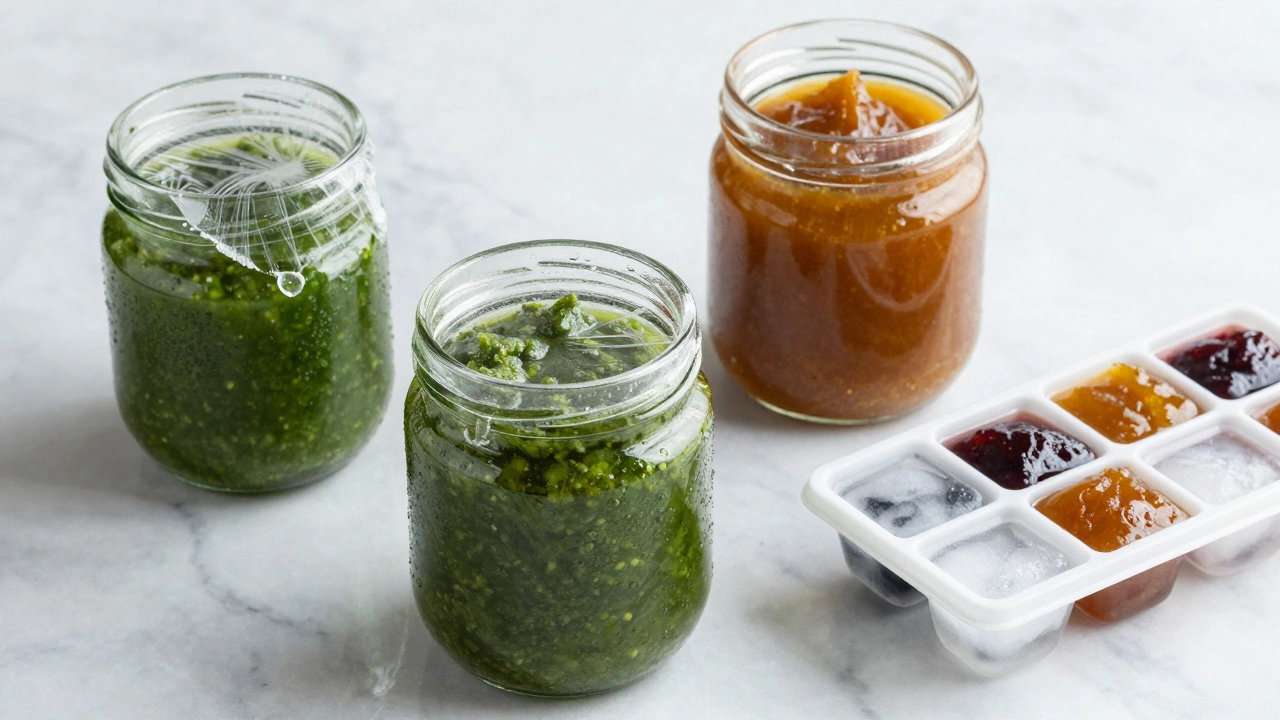
To enjoy chutney at its best, storage matters. Fresh green chutney oxidizes quickly-the bright green color turns brown within hours due to exposure to air. To prevent this, press plastic wrap directly onto the surface of the chutney in the container before sealing the lid. Store it in the refrigerator and consume within 3-4 days. After that, the garlic and ginger can develop off-flavors.
Cooked fruit chutneys and tamarind chutneys last much longer-up to 2-3 weeks in the fridge-because the cooking process kills bacteria and the sugar/vinegar acts as a preservative. If you want to store chutney for months, freeze it in ice cube trays. Pop out a cube whenever you need a quick flavor boost for a stir-fry or soup.
Common Mistakes to Avoid
Many people overuse chutney, drowning the main ingredient. Remember, chutney is an accent, not the lead. A small amount goes a long way. Another common error is mixing incompatible textures. For example, putting a chunky fruit chutney inside a delicate dosa can cause it to tear. Instead, serve it on the side for dipping.
Also, avoid adding sugar to green chutney unless you are specifically making a sweet-cilantro variation. Traditional green chutney relies on the natural sweetness of mint and the heat of chilies. Adding sugar masks the fresh herbaceous notes and makes it taste artificial.
Experimenting Beyond Tradition
Once you master the basics, start experimenting. Try using chutney as a salad dressing base. Whisk green chutney with olive oil and balsamic vinegar for a unique vinaigrette over roasted vegetables. Use tamarind chutney as a glaze for grilled fish, brushing it on during the last minute of cooking. The possibilities are endless once you view chutney not as a fixed condiment, but as a flexible flavor tool.
Can I eat chutney every day?
Yes, chutney is generally healthy, especially green chutney which is packed with vitamins from cilantro and mint. However, some chutneys contain high amounts of salt or sugar, so moderation is key. Homemade versions allow you to control sodium levels better than store-bought jars.
Why does my green chutney turn brown?
This is oxidation. When the chlorophyll in herbs like cilantro and mint is exposed to air, it breaks down. To keep it green, add a squeeze of lemon juice (acid slows oxidation) and store it in an airtight container with minimal air space. Blending with a little oil also helps seal the herbs from oxygen.
What is the difference between chutney and salsa?
While both are condiments, chutney typically involves blending ingredients into a smooth or semi-smooth paste and often includes spices like cumin, coriander, and asafoetida. Salsa is usually chunkier, tomato-based (though not always), and relies on fresher, simpler seasonings like lime, cilantro, and onion. Chutney is more spice-forward; salsa is more acid-and-vegetable forward.
Can I freeze homemade chutney?
Absolutely. Freezing is one of the best ways to preserve chutney. Pour it into ice cube trays, freeze until solid, then transfer the cubes to a freezer bag. This way, you can grab exactly the amount you need for a recipe without thawing the entire batch. Note that the texture may change slightly upon thawing, becoming softer, but the flavor remains intact.
Is chutney vegan?
Most traditional chutneys are vegan. Green chutney uses herbs, chilies, and lemon. Tamarind chutney uses tamarind, jaggery (which is vegan), and spices. However, some variations might include yogurt, ghee, or cream, so always check the ingredients if you have dietary restrictions.