Why Biryani Takes Long: The Real Reasons Behind the Wait
When you ask why biryani, a layered rice dish from South Asia known for its rich spices, slow cooking, and aromatic steam-infused layers takes so long, you're not just asking about time—you're asking about tradition, technique, and taste. This isn't a quick weeknight meal. It's a dish built in stages, where each step matters. Skip one, and you lose the soul of the dish. The long cook time isn't a flaw—it's the point.
The real reason biryani takes hours isn't because it's hard—it's because it's dum cooking, a slow-steaming method where layered ingredients cook gently in a sealed pot, trapping steam and flavor. This technique lets the rice absorb the aroma of meat, spices, and saffron without turning mushy. It also lets the spices bloom slowly, releasing oils and depth you can't get from a 20-minute stir-fry. Then there's the rice: parboil rice, partially cooked basmati rice that’s rinsed, soaked, and boiled just until it’s 70% done. This step alone takes 7–8 minutes, and it’s non-negotiable. Undercook it, and the grains stay hard. Overcook it, and they turn to paste when they steam later.
Marinating meat for hours—or even overnight—is another hidden time sink. The yogurt, ginger-garlic paste, and spices don’t just add flavor; they tenderize. That’s why you can’t rush it. Even the layering process takes care: meat on the bottom, rice on top, saffron milk drizzled in, fried onions scattered, and then the lid sealed with dough to lock in steam. All of this adds up. You’re not just cooking food—you’re building a flavor pyramid, one slow layer at a time. There’s no shortcut that keeps the texture, aroma, and balance intact. If your biryani tastes flat or the rice is soggy, it’s not because you used the wrong spice—it’s because you cut the time short.
What you’ll find below are real, tested posts that break down every part of this process: why lemon is added just before steaming, how long to boil rice, what makes the spices stick, and why some people swear by their grandmother’s sealed pot. These aren’t theory pieces—they’re fixes, tips, and truths from people who’ve made biryani too many times to count. If you’ve ever wondered why your biryani doesn’t taste like the one at the corner restaurant, the answers are here—no fluff, no guesses, just the steps that actually work.
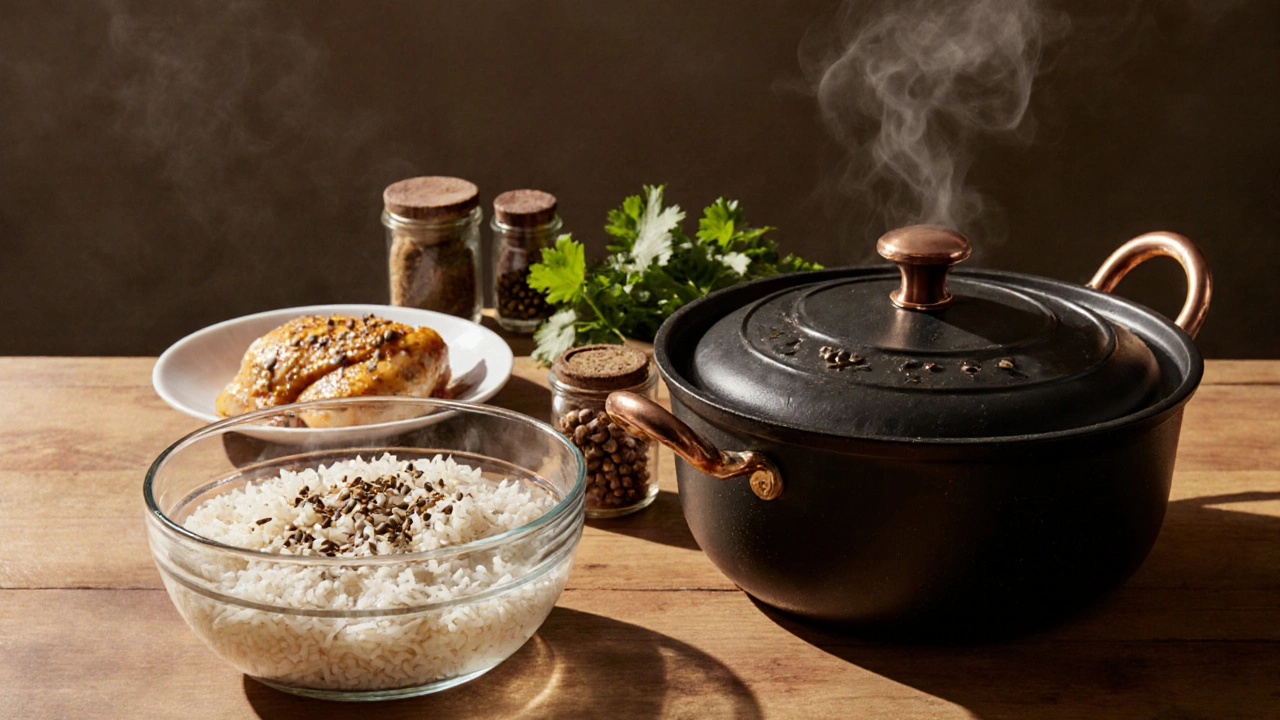
Why Biryani Takes Long to Cook - The Science, Steps & Speed‑Up Tips
Discover why biryani cooking takes time, the science behind each step, and practical shortcuts to speed up the process without losing flavor.
learn more