What Is Salsa? Understanding the Truth Behind This Common Misunderstood Term
When people ask what is salsa, a vibrant, chunky condiment originating from Latin America, typically made with tomatoes, onions, chilies, and cilantro, they often expect an Indian answer. But here’s the thing—salsa isn’t part of traditional Indian cooking. It’s not in Mysore kitchens, it’s not in South Indian homes, and it’s not in the recipes you’ll find on this site. Yet, people keep asking. Why? Because they’ve seen something similar—something red, tangy, spicy—and assumed it’s the same. That something is chutney, a broad category of Indian condiments made from fruits, vegetables, herbs, and spices, often fermented or ground fresh. Chutney is the real Indian cousin to salsa, but it’s not the same. While salsa leans on raw, fresh ingredients and bright acidity, Indian chutneys can be cooked, roasted, dried, or fermented, with textures ranging from smooth to coarse. They use tamarind, coconut, mint, coriander, or even lentils—not just tomatoes and cilantro.
The confusion happens because both are served as dips or sides. But Indian chutney, a staple across every region of India, from coconut chutney in Tamil Nadu to tamarind chutney in Maharashtra is deeply tied to daily meals. It’s eaten with dosa, idli, samosa, even plain rice. It’s not a garnish—it’s a core flavor layer. Salsa? It’s usually an add-on to tacos or chips. One is a cultural ingredient. The other is a global trend. And if you’re looking for the real thing—what Indians actually eat every morning—you won’t find salsa in our recipes. You’ll find dosa batter, a fermented mix of rice and urad dal that forms the base of crispy South Indian pancakes, paired with coconut or mint chutney. You’ll find lemon squeezed over biryani to lift the spices. You’ll find tamarind chutney on samosas, or peanut chutney on vada. These aren’t substitutions for salsa—they’re the real deal. And they’ve been feeding families for generations.
So if you came here searching for salsa recipes, you’re in the wrong place—and that’s okay. We’re not here to teach you how to make Mexican salsa. We’re here to show you what Indian kitchens actually cook. The flavors you’ve been mistaking for salsa? They’re not mistakes. They’re traditions. And below, you’ll find real recipes for the chutneys, spice blends, and condiments that make Indian food taste like home—not a restaurant menu. No translations. No approximations. Just what works in a South Indian kitchen, day after day.
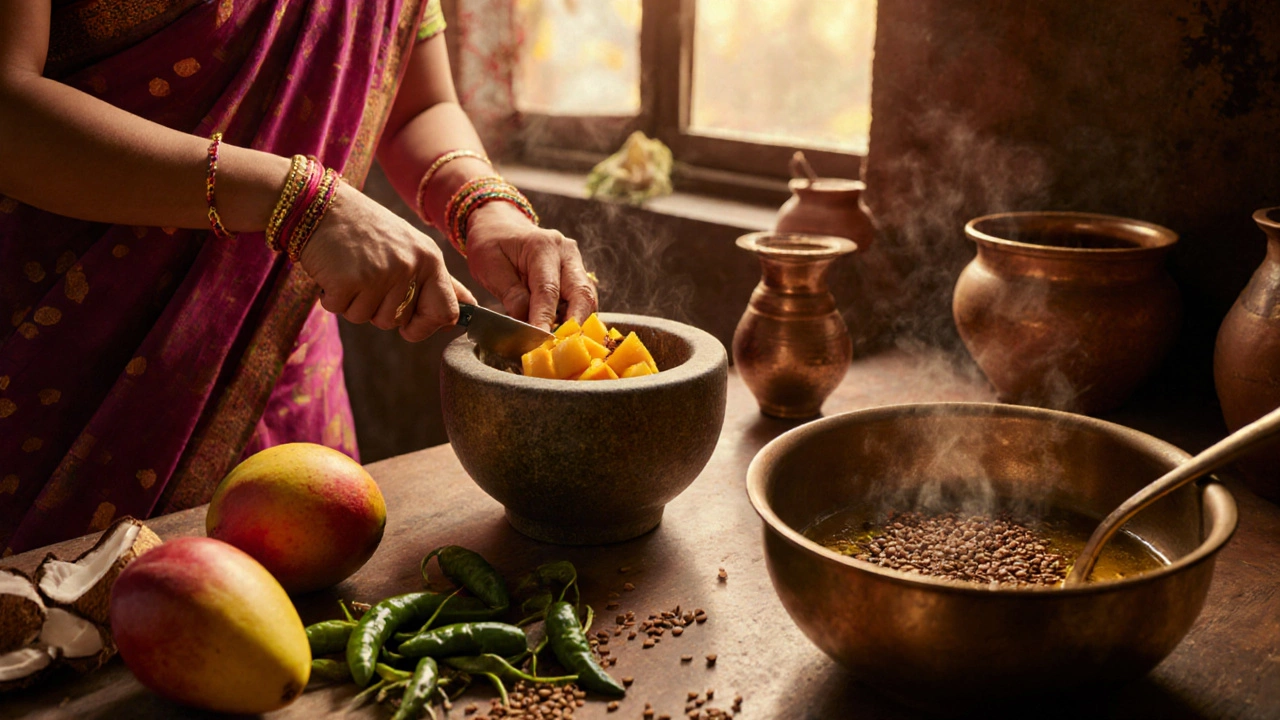
Is Salsa a Chutney? The Real Difference Between Two Popular Condiments
Salsa and chutney look similar but come from different culinary worlds. Learn why they're not interchangeable and what makes each one unique in flavor, ingredients, and tradition.
learn more