Urad Dal to Rice Ratio: Perfect Proportions for Idli, Dosa, and More
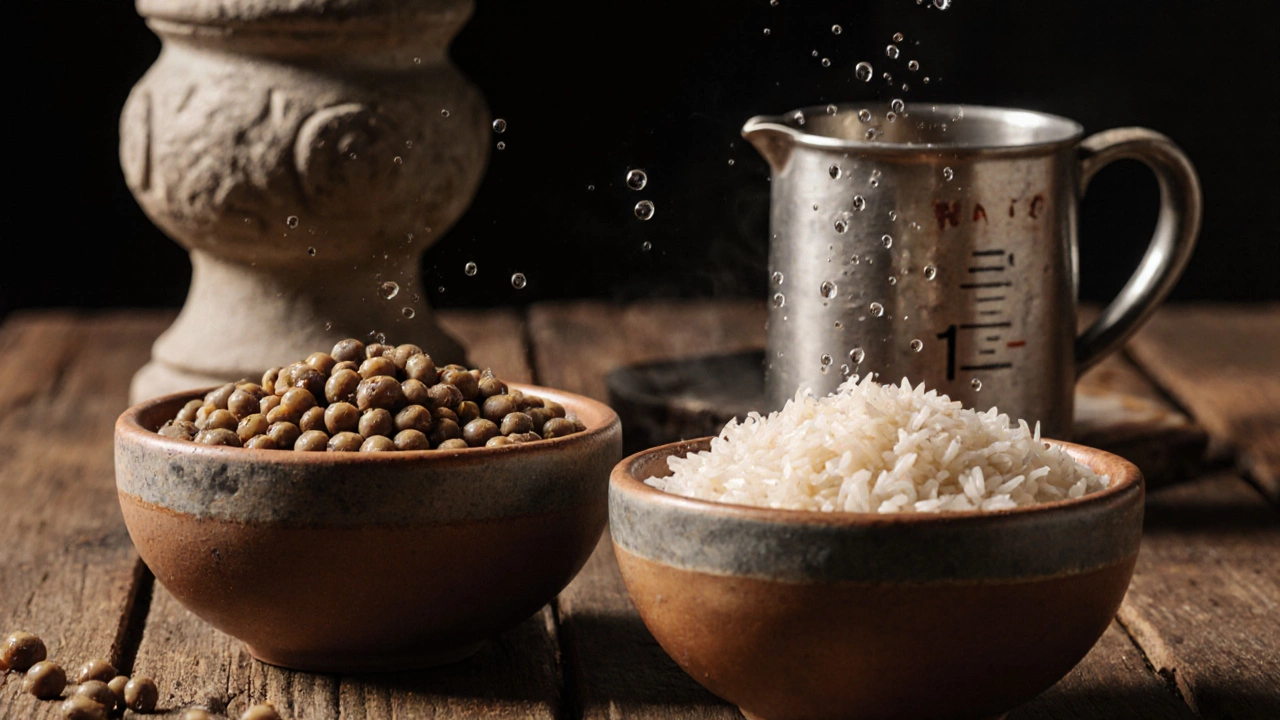
When you're making urad dal to rice ratio, the measured mix of black gram lentils and rice used to ferment batter for South Indian staples like idli and dosa. Also known as fermented rice-lentil batter base, it's the silent hero behind your morning breakfast. Get this wrong, and your idli turns dense, your dosa sticks to the pan, and your patience wears thin. Get it right, and you get light, airy, perfectly crisp results every time—no guesswork needed.
The magic number? Most traditional recipes use 1:3—one part urad dal to three parts rice. That’s not arbitrary. Urad dal brings the lift: its high protein content traps air during fermentation, creating bubbles that make the batter rise. Rice gives structure and body. Too much dal, and the batter becomes sticky and heavy. Too little, and you get flat, crumbly idlis that fall apart. The ratio isn’t just a suggestion—it’s a science. Studies from the Central Food Technological Research Institute in Mysore show that the 1:3 mix creates the ideal pH and microbial balance for lactic acid bacteria to thrive, which is what gives the batter its tang and fluffiness.
But it’s not just about numbers. The type of rice matters. Parboiled idli rice is preferred because it absorbs water evenly and doesn’t turn mushy. Regular long-grain rice? It can work, but you’ll need to soak it longer and grind finer. And don’t skip the soaking. Urad dal needs at least 4 hours, rice 6–8. Grind the dal first until it’s smooth and fluffy, then add the rice. That order affects texture. If you grind them together, you lose the airy quality. The batter should be thick, like heavy cream, not runny. And fermentation? It’s not just about time—it’s about warmth. A cold kitchen? Your batter won’t rise. A warm corner near the stove? That’s your sweet spot.
You’ll see variations online—some use 1:2, others 1:4. But those tweaks are for specific results. A 1:2 ratio makes softer idlis, good for kids or if you like them steamed extra tender. A 1:4 ratio gives you crispier dosas because the rice dominates. But if you’re new to this, stick with 1:3. It’s the baseline that works across South India—from Mysore kitchens to Chennai streets. Once you master it, you can adjust.
And don’t forget the salt. Add it after grinding, not before. Salt slows fermentation. Wait until your batter is ready to use, then stir it in gently. That’s the trick many home cooks miss. Also, never use tap water if your area has hard water. It can kill the good bacteria. Filtered or boiled-and-cooled water is best.
Understand this, and you’re not just following a recipe—you’re mastering a technique that’s been passed down for generations. The urad dal to rice ratio is the foundation. Everything else—fermentation time, grinding texture, pan temperature—builds on it. Get this right, and your idlis will puff up like clouds. Your dosas will crackle when you flip them. You’ll stop wondering why your last batch failed.
Below, you’ll find real fixes, real recipes, and real stories from people who cracked the code. No fluff. Just what works.
What Is the Ratio of Urad Dal to Rice for Perfect Dosa Batter?
The perfect dosa batter needs a 1:3 ratio of urad dal to rice. Learn why this ratio works, how to soak and ferment the batter, and how to avoid common mistakes for crispy, fluffy dosas every time.
learn more