Typical Indian Meals: What People Actually Eat Every Day
When you think of typical Indian meals, daily eating patterns in India centered around rice, lentils, flatbreads, and vegetables. Also known as traditional Indian meals, these are not fancy restaurant dishes—they’re what families cook and eat every morning, noon, and night. Forget the butter chicken and biryani you see on menus. The real heart of Indian food is simpler: a plate of steamed rice with dal, a warm roti with pickle, or a crispy dosa with coconut chutney. These aren’t occasional treats—they’re the foundation of life for over a billion people.
What makes these meals work isn’t complexity—it’s balance. A typical Indian meal includes carbs (rice or roti), protein (dal or paneer), vegetables (sabzi), and a tangy or spicy side (chutney or pickle). It’s not random. This combo gives energy, satisfies hunger, and supports digestion. You’ll find this pattern from rural villages to city apartments. Even in homes where people eat out often, they still return to these basics. The Indian breakfast, morning meals like idli, poha, or upma. Also known as traditional Indian breakfast, it’s often light, fermented, and easy to digest—perfect for starting the day. Lunch and dinner follow the same rhythm: a starch base, a lentil or legume dish, a vegetable curry, and something sharp to cut through the richness. This isn’t just tradition—it’s smart nutrition built over centuries.
The Indian staple foods, the everyday ingredients like rice, wheat, lentils, and spices that form the backbone of daily meals. Also known as daily Indian food, these are the same items you’ll find in every kitchen, from Mumbai to Mysore. You won’t see exotic imports. It’s rice from the south, wheat from the north, lentils from the heartland, and spices grown locally. These ingredients aren’t chosen for trend—they’re chosen because they grow well, store well, and taste good when cooked simply. And while regional variations exist, the structure stays the same. In Tamil Nadu, it’s rice and sambar. In Punjab, it’s roti and rajma. In Karnataka, it’s ragi mudde with saaru. All of them follow the same logic: fill, flavor, and balance.
What you won’t find in most homes? Overly complicated recipes. No one starts their day with a five-hour curry. Real Indian meals are made fast, with ingredients you already have. Leftovers become next day’s lunch. A little leftover rice becomes pongal. A bit of dal gets reborn as khichdi. Waste is rare. Flavor is never an afterthought. That’s why these meals last. They’re not about perfection—they’re about practicality, taste, and rhythm.
Below, you’ll find real guides from people who cook these meals every day. Learn how to fix a soft dosa, why lemon belongs in biryani, what makes chutney pair perfectly with snacks, and which ingredients truly define a curry. No fluff. No guesswork. Just the truths behind the food that feeds India.
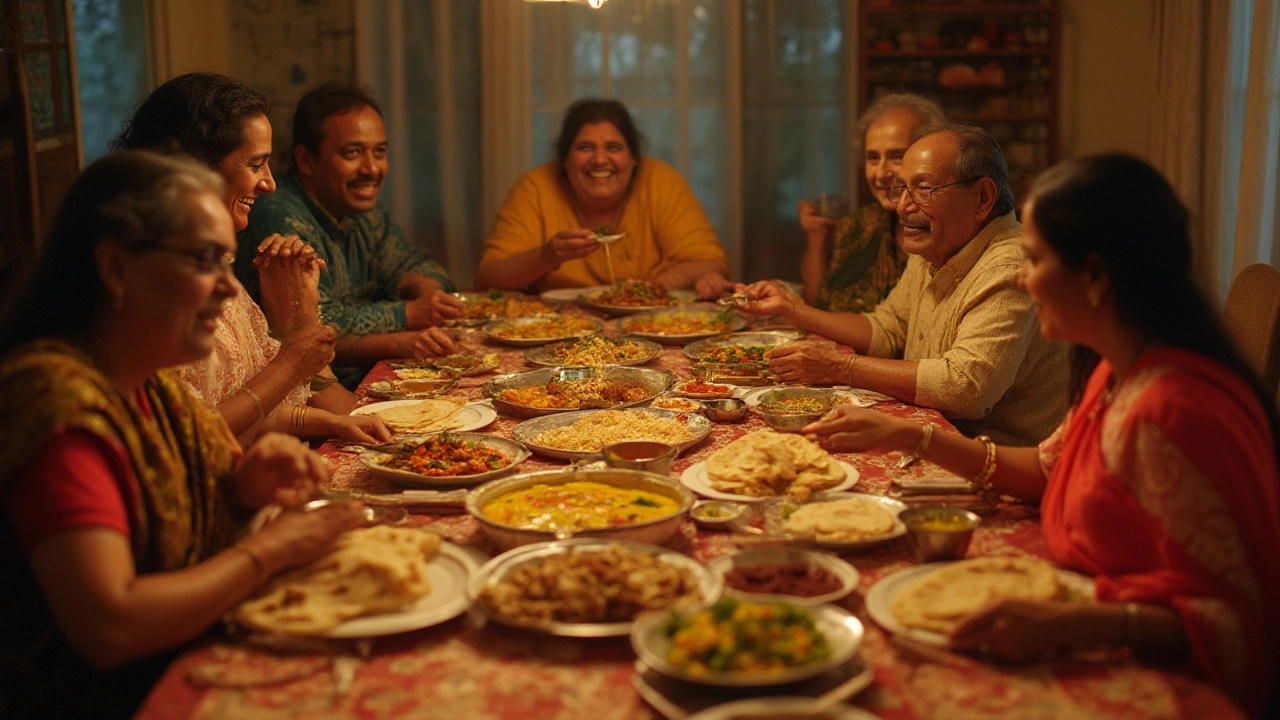
What Do Most Indians Eat for Dinner? A Real-Life Guide to Everyday Indian Dinners
Curious about what most Indians eat for dinner? This deep-dive explores regional habits, daily staples, family routines, and fun facts about Indian dinners—so you can get real-life insight.
learn more