Traditional Chutney: Authentic South Indian Condiments and How to Use Them
When you think of traditional chutney, a fresh, spicy, tangy condiment made from ground ingredients like coconut, tamarind, or lentils, commonly served with South Indian meals. Also known as chatni, it’s not just a side—it’s the flavor anchor that ties together dosas, idlis, and even plain rice. Unlike store-bought versions that sit on supermarket shelves for months, real traditional chutney is made fresh daily, often in under ten minutes, using ingredients you can name and recognize. It’s not about fancy spices—it’s about balance: heat from green chilies, sour from tamarind, earthiness from lentils, and a touch of sweetness from coconut or jaggery.
What makes traditional chutney, a fresh, spicy, tangy condiment made from ground ingredients like coconut, tamarind, or lentils, commonly served with South Indian meals. Also known as chatni, it’s not just a side—it’s the flavor anchor that ties together dosas, idlis, and even plain rice. so different from salsa or ketchup? It’s the texture, the timing, and the technique. Salsa is chunky and raw; chutney is ground smooth and often lightly roasted or fried to deepen its flavor. While British chutney is slow-cooked with sugar and vinegar for long shelf life, South Indian chutney is meant to be eaten the same day it’s made. That’s why it tastes brighter, sharper, and more alive. And it’s not just one thing—there’s coconut chutney for dosa, tomato chutney for sambar, peanut chutney for upma, and even mint-coriander chutney for snacks. Each one has a purpose, and each one changes the whole meal.
People often ask, "Do I really need chutney with my breakfast?" The answer is yes—if you want to taste South Indian food the way it was meant to be eaten. A plain idli without coconut chutney is like toast without butter. A crispy dosa without tamarind chutney is just a flatbread. Chutney doesn’t just add flavor—it adds contrast, cuts through richness, and wakes up the palate. And it’s not just for breakfast. It’s served with rice, dal, fried snacks, and even grilled meats in some homes. The key is knowing what goes with what. Coconut chutney loves steamed rice. Tomato chutney sings with lentils. Peanut chutney is the secret behind the best vada.
What you’ll find in the posts below aren’t just recipes—they’re stories of how chutney is made in homes across Mysore, how it’s paired with everyday meals, and why skipping the fresh grind means missing the point. You’ll learn why your chutney turns bitter, how to fix watery coconut chutney, and which ingredients make it last longer without refrigeration. You’ll also see how chutney connects to other staples like dosa batter and biryani, because in South Indian cooking, nothing exists in isolation. This isn’t about following a checklist. It’s about understanding why a pinch of mustard seed or a splash of lemon makes all the difference.
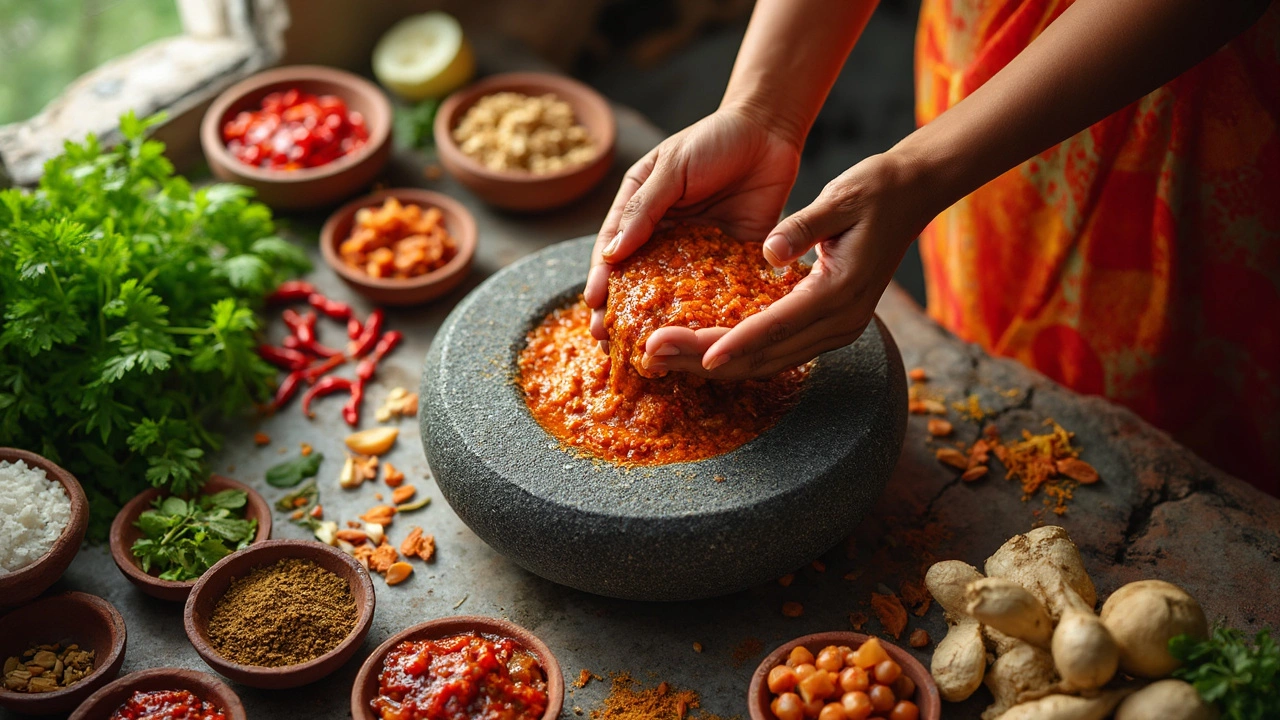
Traditional Chutney: What It's Made Of and How to Make It Right
Ever wondered what's actually in traditional chutney? This article breaks down its core ingredients, how different variations pop up region by region, and the tricks that give chutney its punch. You’ll learn what goes into a basic chutney, what ingredients to skip or substitute, and simple hacks to boost flavor. From tangy tamarind to the right amount of chili, find out which combos make chutney classic. If you love experimenting in the kitchen or just need to know what’s in your jar, this one’s for you.
learn more
Discover the Charm of British Chutney: A Tangy Tradition
Explore the flavorful world of British chutney, a centuries-old tradition that mingles sweet, tangy, and spicy flavors into a delightful condiment. From its historical journey starting with apple chutney to modern interpretations like mango or tomato blends, British chutney offers incredible versatility for any culinary occasion. Learn how to create, customize, and savor different varieties of this beloved condiment that adds a distinct and unforgettable taste to your meals. With handy tips and intriguing stories, dive into the art of chutney-making and enrich your cooking repertoire.
learn more