Spoilage in Indian Desserts: How to Prevent Waste and Keep Sweets Fresh
When you make Indian desserts, sweet treats like jalebi, gulab jamun, and rasgulla that are central to celebrations and daily rituals in South India. Also known as mithai, these sweets are made with sugar, milk, flour, and cardamom—but they don’t last long if you don’t handle them right. Spoilage in Indian desserts isn’t just about going bad—it’s about losing texture, flavor, and safety. Many people store these sweets at room temperature, thinking they’re fine because they’re sugary. But sugar doesn’t stop bacteria. In humid climates like Mysore, moisture and warmth turn even the sweetest treats into breeding grounds for mold and souring.
One big reason desserts spoil is how they’re made. Traditional recipes use fresh milk, paneer, or yogurt bases that ferment quickly. If you don’t cool them fast enough after frying or boiling, trapped steam creates condensation inside the container. That’s why your rasgulla gets soggy in two days, or why your jalebi turns sticky and smells off. It’s not the sugar failing—it’s the environment. Fermentation, a natural process used in dosa and idli batter, also happens in milk-based sweets if left too long. And unlike dosa batter, you can’t just wait it out—fermented sweets turn sour, not tasty.
Another hidden culprit? Storage containers. Glass jars with loose lids? Bad idea. Plastic bags? Worse. The right container matters as much as the recipe. Airtight, non-reactive containers—preferably with a paper towel at the bottom to soak up extra moisture—can double the shelf life. Refrigeration helps, but only if you let the sweets cool completely first. Put warm gulab jamun in the fridge, and you’ll get a watery mess. Temperature control is the silent hero here.
And let’s not forget the sugar itself. Jaggery-based sweets like palkova or mysore pak last longer than those made with white sugar because jaggery has natural preservatives. But even then, they’ll mold if exposed to air. Some traditional households use a drop of ghee on top of sweets before sealing them—it’s an old trick that creates a moisture barrier. No fancy chemicals, just smart habits passed down.
If you’ve ever thrown away half a tray of barfi because it turned rubbery or smelled weird, you’re not alone. Spoilage in Indian desserts is preventable, but it needs attention. It’s not about perfection—it’s about understanding the simple science behind what makes these sweets last. The same posts below show you how to fix soft dosas, balance biryani spices, and store coconut milk without curdling. The pattern is the same: small mistakes, big consequences. Learn how to store, cool, and seal your sweets right, and you’ll stop wasting food and start enjoying them longer.
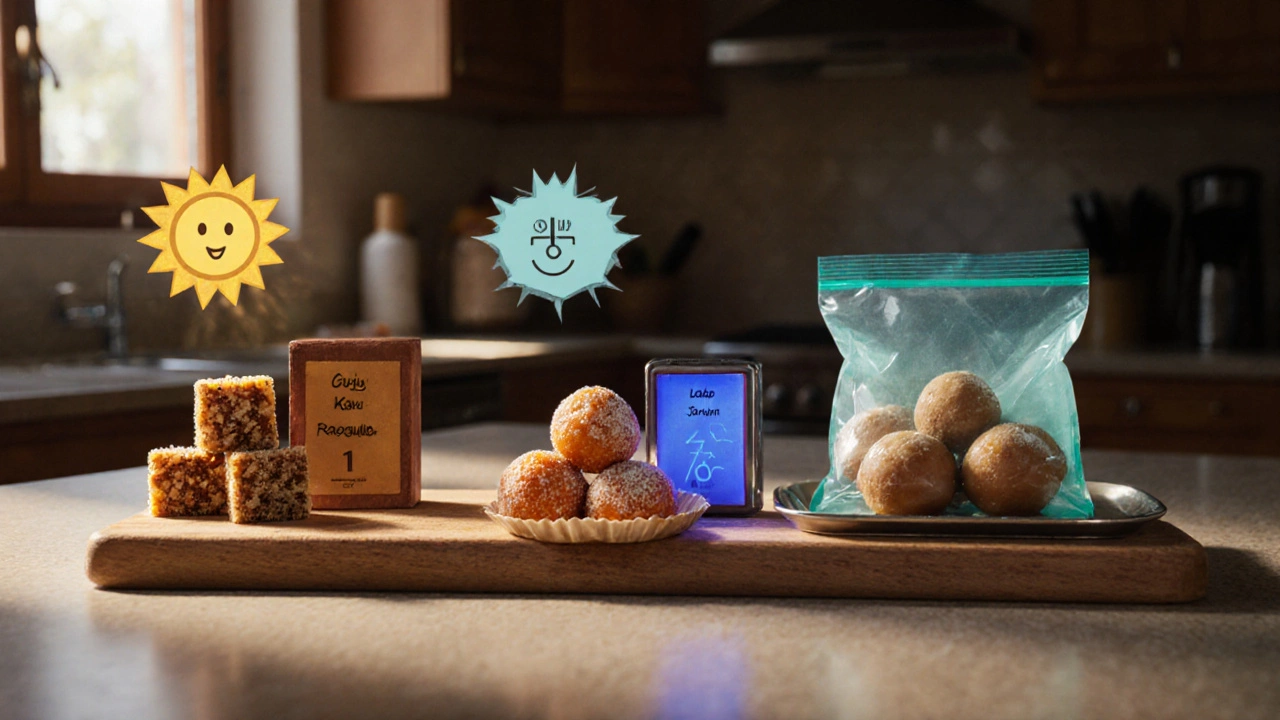
Do Indian Sweets Go Bad? Shelf Life, Storage Tips & Safety Guide
Learn how long Indian sweets last, how to store them safely, and how to tell if they’ve gone bad. Get practical tips, shelf‑life tables, and a FAQ for every sweet lover.
learn more