Softer Dosa: Why It Happens and How to Fix It
When you spread batter on a hot griddle and expect a crisp, golden dosa but get something soft and chewy instead, it’s not just disappointing—it’s a sign something’s off in your softer dosa, a common issue in South Indian cooking caused by improper batter preparation or cooking technique. This isn’t about bad luck. It’s about fermentation, consistency, and heat—and you can fix it with simple, proven steps.
The dosa batter, a fermented mixture of rice and urad dal, essential for making dosas and other South Indian breakfast items needs time, warmth, and the right balance. If you skip soaking the lentils long enough, use too much water, or ferment it in a cold kitchen, you won’t get those bubbles that make dosa light and crisp. A crispy dosa, the ideal texture achieved through proper fermentation, correct batter thickness, and a hot enough cooking surface doesn’t happen by accident. It happens when the batter rises just right, the pan is properly heated, and you don’t rush the process.
Most people blame the pan or the recipe, but the real problem is usually hidden in the batter itself. Under-fermented batter doesn’t trap air properly, so the dosa stays dense. Too-thick batter? It won’t spread thin enough to crisp up. And if your tawa isn’t hot enough when you pour the batter, it soaks in instead of setting fast. You don’t need fancy tools. Just a clean griddle, patience, and a little attention to detail.
Some think adding more urad dal will make it fluffier. But it’s not about quantity—it’s about balance. The standard 1:3 ratio of urad dal to rice works because it gives structure without heaviness. Too much dal makes it sticky. Too little, and it falls apart. Fermentation time matters too. In winter, you might need 12 hours. In summer, 8. Temperature controls the yeast. And never, ever use cold water to adjust batter thickness after fermentation—it kills the bubbles.
You’ll find posts here that break down exactly what goes wrong and how to fix it. Some show you how to test if your batter is ready. Others tell you how to adjust the water content after fermentation. There’s even one that explains why a cast iron tawa works better than non-stick for crispiness. These aren’t theories. They’re fixes tested by home cooks who’ve been there.
Softer dosa isn’t a failed recipe. It’s a clue. And once you know what to look for—bubbles in the batter, the right pour, the right heat—you’ll stop guessing and start getting perfect dosas every time. The next time you spread that batter, you’ll know exactly what to do.
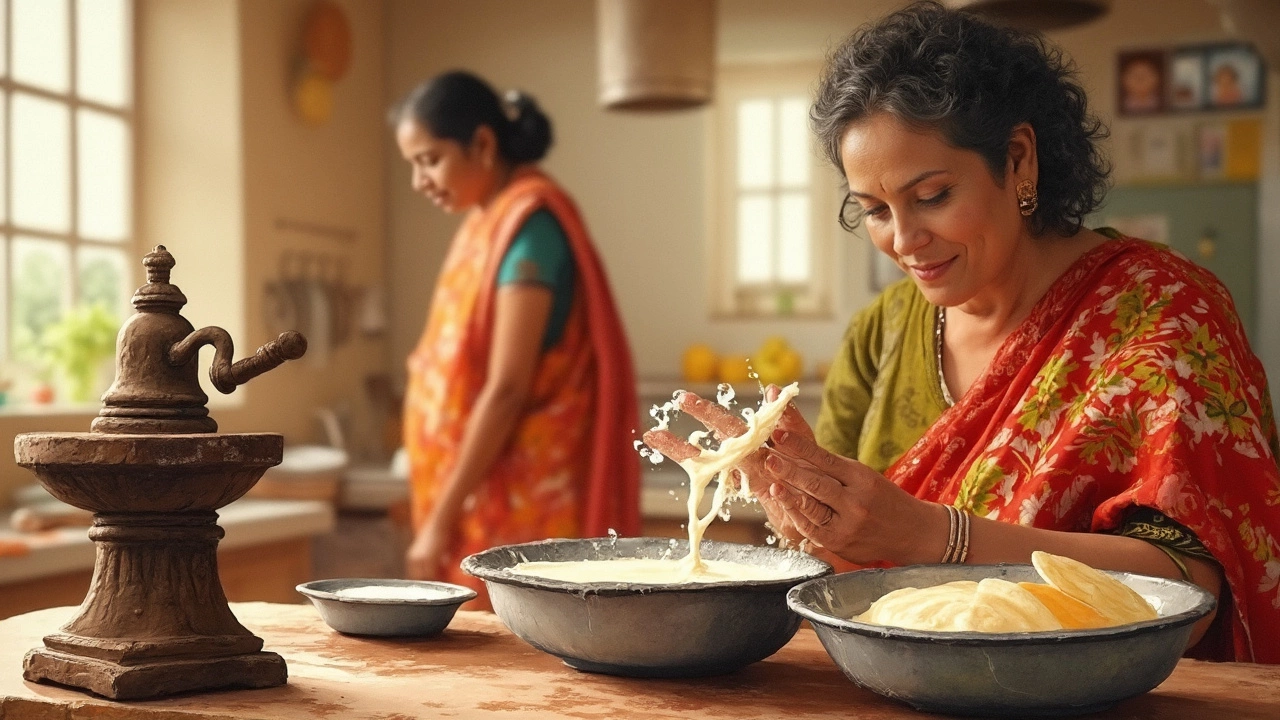
What Happens If We Add Curd to Dosa Batter? Insider Tips for Softer, Tastier Dosai
Ever wondered why some dosas turn out softer and more flavorful than others? Adding curd to dosa batter can work magic on fermentation and texture. This article unpacks the science and tradition behind using curd, with practical tips and troubleshooting tricks for every home cook. You’ll learn how to avoid common failures and make your dosas rival your favorite South Indian tiffin spot. Discover if curd is the missing secret in your dosa game.
learn more