Soak Basmati Rice: Why It Matters and How to Do It Right
When you soak basmati rice, a long-grain aromatic rice native to the Indian subcontinent, often used in biryani, pulao, and South Indian rice dishes. Also known as traditional Indian rice, it’s the backbone of many meals that rely on separate, non-sticky grains. Skip this step, and you’ll end up with mushy rice—even if you cook it perfectly. Soaking isn’t optional; it’s the quiet trick that turns good rice into great rice.
Why does soaking work? Basmati rice has a high starch content and a dense structure. When you let it sit in water for 30 minutes to an hour, the grains absorb moisture evenly. That means when you boil them later, they expand uniformly instead of bursting or clumping. It’s the same reason you soak urad dal before making dosa batter—hydration unlocks texture. If you’ve ever made biryani and ended up with sticky rice, it’s almost always because the rice wasn’t soaked long enough—or at all. The biryani rice, a specific preparation method using parboiled, soaked basmati rice layered with spices and meat depends on this step. So does the dosa batter, a fermented mix of rice and urad dal that needs properly soaked rice to ferment correctly. You can’t skip soaking one without affecting the other.
How long should you soak it? Thirty minutes is the sweet spot for most recipes. Longer than an hour, and the grains can get too soft, losing their signature length and snap. Use cool, clean water—not hot. Drain and rinse well after soaking. Some cooks rinse first, then soak; others soak then rinse. Both work, but consistency matters more than order. Don’t soak it overnight unless you’re making idli or appam—the extra time changes the starch structure too much for biryani or pulao. And never skip draining. Wet rice = soggy results, no matter how hot your pan is.
Think of soaking as the quiet prep work that makes everything else easier. It’s not flashy, but it’s the reason your rice stays separate, your biryani layers stay crisp, and your dosa batter ferments right. If you’ve been rushing this step, you’ve been fighting your recipe instead of helping it. The posts below show you exactly how this step fits into real recipes—from biryani to dosa to everyday rice dishes—and what happens when you get it wrong. You’ll find fixes, timing tips, and the one mistake most people don’t even know they’re making.
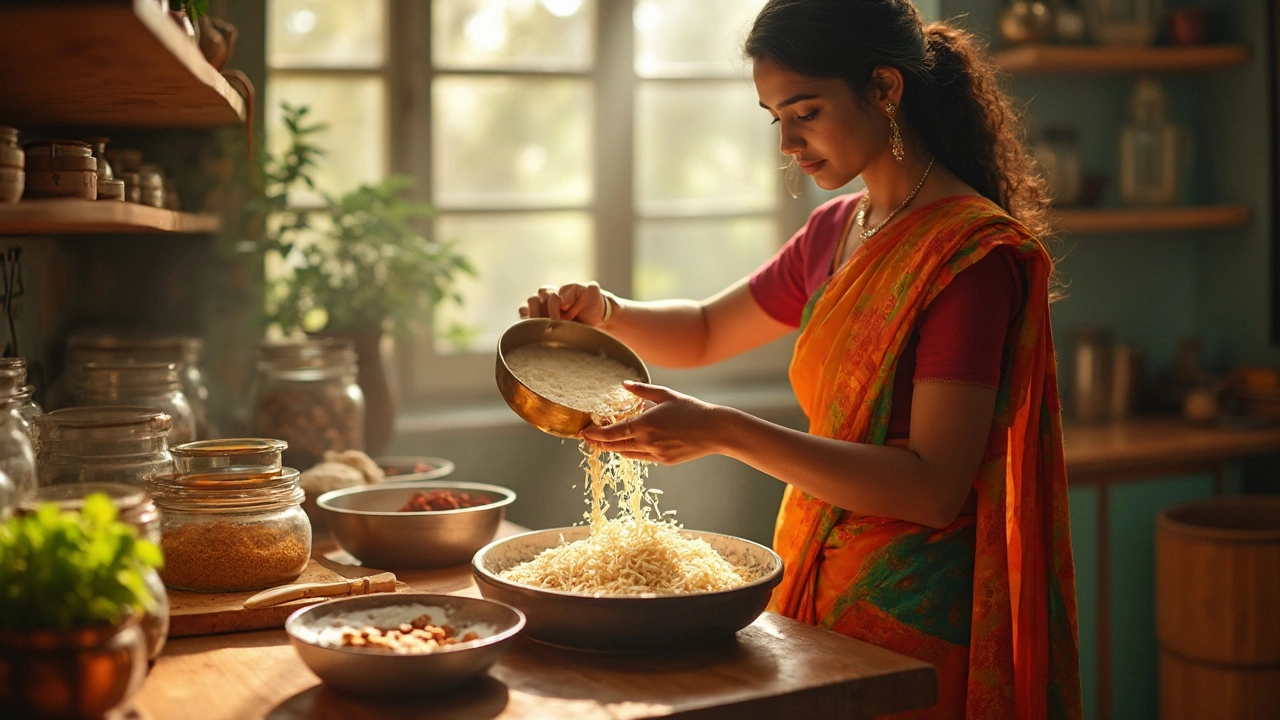
How Long Should I Soak Basmati Rice Before Cooking? Get Perfect Biryani Every Time
Wondering if soaking basmati rice really makes a difference? This article explains exactly how long you should soak it for biryani, why it matters, and what to expect if you skip the step. Learn science-backed tips to avoid mushy or clumpy rice, and find out a few hacks when you’re short on time. Master your rice texture for biryani—never guess again about soaking times.
learn more