Saffron: The Golden Spice That Elevates Indian Dishes
When you think of saffron, a rare, hand-harvested spice from the crocus flower, prized for its intense color, earthy aroma, and luxurious taste. Also known as kesar, it’s the secret behind the golden hue in Mysore-style biryanis, kheer, and even some traditional sweets. This isn’t just a spice—it’s a flavor anchor that lifts entire dishes. You won’t find it in everyday curries, but when it shows up, you know something special is happening.
Saffron doesn’t just add color—it changes the whole feel of a dish. In biryani, a few strands steeped in warm milk release fragrance that clings to every grain of rice. In desserts like phool jhadi or kheer, it brings a subtle floral note that sugar alone can’t match. It’s not about quantity; a pinch is enough. That’s why it’s often paired with other strong flavors like cardamom, rose water, or ghee. And while it’s expensive, its impact is so powerful that even a tiny bit makes a difference. If you’ve ever wondered why your biryani tastes flat without it, now you know: saffron isn’t decorative—it’s functional.
But what if you can’t find saffron? Or it’s too pricey for your budget? That’s where related ingredients come in. Turmeric gives color but lacks the aroma. Annatto seeds or paprika can mimic the hue, but they don’t carry the same depth. Some cooks use a mix of cinnamon and rose petals as a substitute, but it’s never the same. The real thing has a unique chemical profile—crocin for color, picrocrocin for taste, and safranal for scent—that no other spice replicates. That’s why traditional recipes from Mysore and beyond insist on it. You’ll find it in the background of many posts here—not always the star, but always the quiet force behind the flavor.
You’ll see saffron mentioned in recipes for biryani, desserts, and even tea blends. Some posts explain how to soak it properly, others warn against fake saffron sold as the real thing. There are tips on storing it to keep its potency, and why using metal bowls can dull its flavor. You’ll also find alternatives that work in a pinch, and stories of why this spice is worth the investment. Whether you’re making a special meal or just curious about what makes Indian food taste different, understanding saffron gives you a deeper connection to the craft behind every bite.
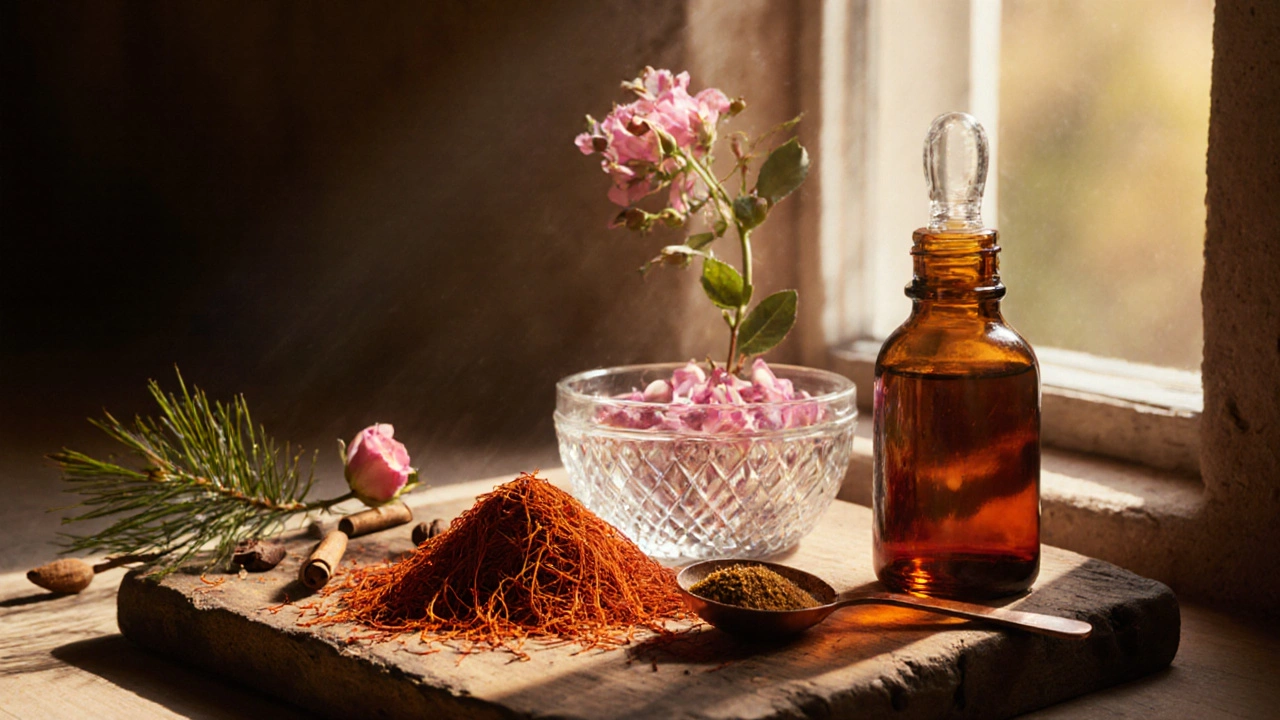
Which Essence Gives Biryani Its Signature Flavor?
Discover which essences create biryani's signature aroma, how to make your own blend, storage tips, and common mistakes to avoid for perfect biryani flavor.
learn more