Rice Preparation: How to Cook Perfect Rice for Indian Dishes
When it comes to rice preparation, the foundation of countless Indian meals, from simple daily rice to elaborate biryanis and crispy dosas. Also known as rice cooking, it’s not just about boiling grains—it’s about controlling water, heat, and time to get the right texture every time. In South Indian kitchens, rice isn’t just a side dish. It’s the backbone of breakfasts like idli and dosa, the base of festive biryanis, and the carrier for curries and chutneys. Get it wrong, and your meal falls apart—literally. Too soft, too sticky, too hard. The difference between a perfect bowl of rice and a soggy mess comes down to a few simple, non-negotiable steps.
Biryani rice, typically long-grain basmati, needs to be parboiled just enough to hold its shape. Also known as pre-cooked rice, it’s boiled for 7 to 8 minutes, then drained and cooled before layering with spices and meat. Skip this step, and your biryani turns into a mushy mess. On the other hand, dosa batter, a mix of rice and urad dal, relies on fermentation to turn dense batter into light, airy pancakes. Also known as fermented rice batter, it needs the right ratio—usually 1 part dal to 3 parts rice—and enough time in a warm place to rise. Too little fermentation? Your dosa stays soft. Too much? It turns sour. These aren’t just recipes. They’re science.
What ties all these together is the idea that rice preparation isn’t one-size-fits-all. The same grain behaves differently depending on what you’re making. For idli, you want fine, smooth batter. For pulao, you want separate, fragrant grains. For pongal, you want soft, creamy rice. Each demands a different soaking time, water ratio, and cooking method. And while store-bought rice might seem convenient, traditional methods—soaking overnight, rinsing until water runs clear, using a heavy-bottomed pot—still deliver the best results. You don’t need fancy tools. Just patience and attention.
People often think rice is simple. But if you’ve ever made a biryani where the rice clumped together, or a dosa that stuck to the pan, you know it’s anything but. The right rice preparation turns an ordinary meal into something unforgettable. Below, you’ll find real fixes, tested ratios, and clear steps from cooks who’ve done this every day for years. Whether you’re fixing a failed batch of dosa batter or trying to nail the perfect biryani rice, the answers are here—no guesswork needed.
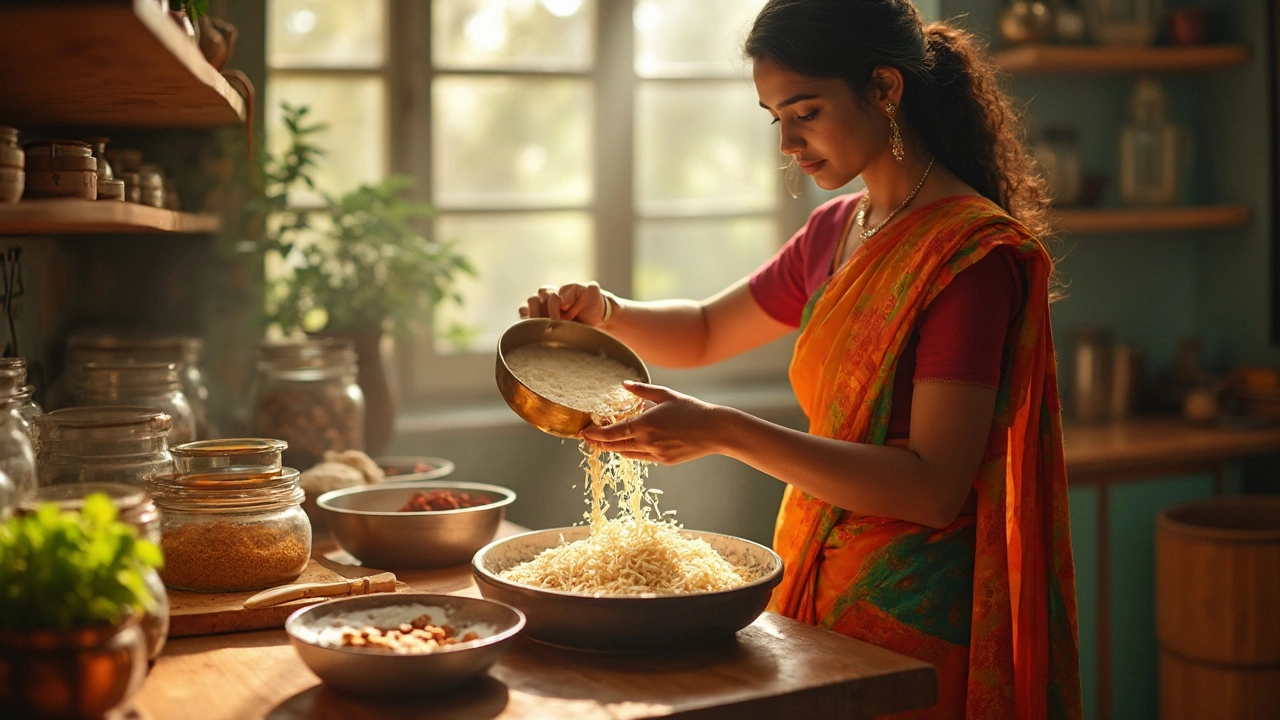
How Long Should I Soak Basmati Rice Before Cooking? Get Perfect Biryani Every Time
Wondering if soaking basmati rice really makes a difference? This article explains exactly how long you should soak it for biryani, why it matters, and what to expect if you skip the step. Learn science-backed tips to avoid mushy or clumpy rice, and find out a few hacks when you’re short on time. Master your rice texture for biryani—never guess again about soaking times.
learn more
Soaking Rice Overnight for Biryani: Does It Make a Difference?
Soaking rice overnight for biryani can enhance its texture and flavor, making the dish more delightful. This process allows the rice to absorb water, reducing cooking time and leading to fluffy grains. Learn how this traditional technique could improve your biryani and explore some additional tips for perfecting your recipe. Whether you're a seasoned cook or a beginner, discover the benefits and step-by-step guidance on preparing rice for biryani.
learn more