Phulka Secrets: How to Make Perfect Flatbreads Every Time
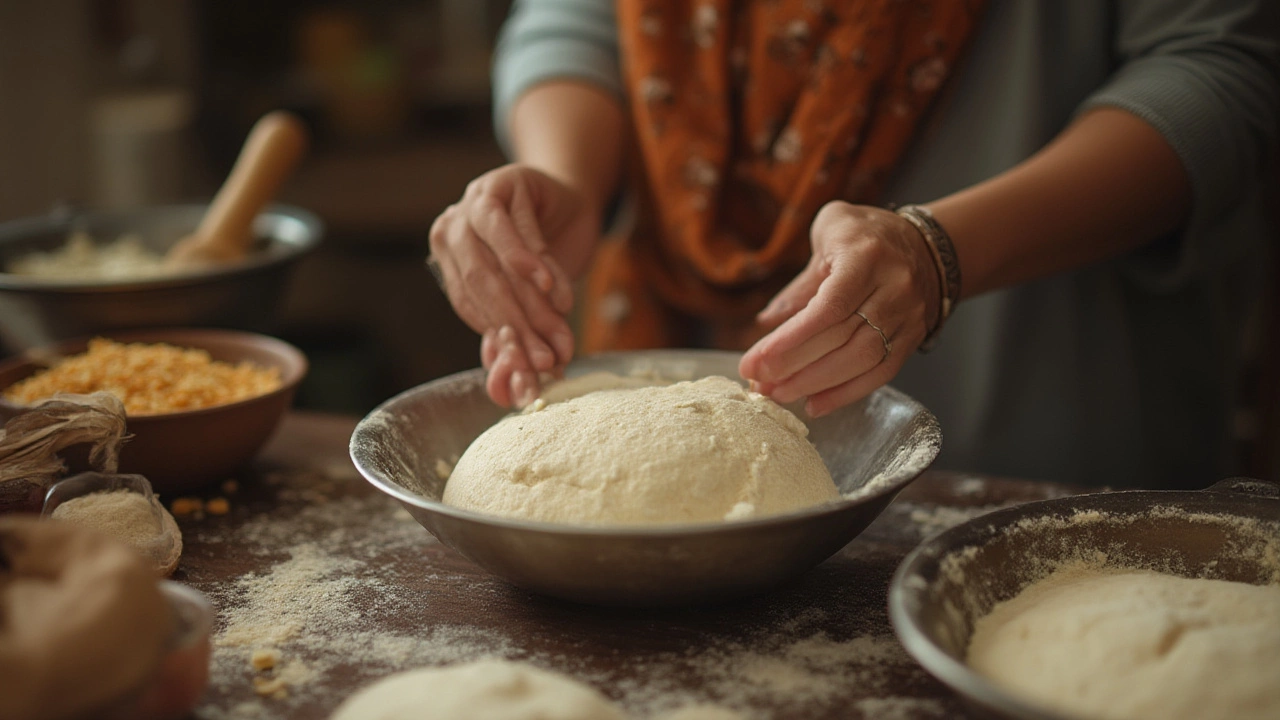
When you press down on a phulka, a soft, puffed Indian flatbread made from whole wheat flour and water, often served hot with curries or dal. Also known as roti, it's the everyday bread that feeds millions across India—not because it’s fancy, but because it’s perfect when done right. A good phulka isn’t just flat dough—it’s a balloon of steam, light as air, with a golden speckle of char. Get it wrong, and you get a tough, rubbery disc. Get it right, and it puffs up like a cloud on your tava. The difference isn’t in fancy tools or exotic spices. It’s in the dough, the heat, and the timing.
Most people think phulkas are just like dosa batter, a fermented mix of rice and urad dal used for crispy South Indian pancakes. But they’re not. Dosa needs fermentation, water, and patience. Phulka needs no yeast, no waiting, no sugar. Just flour, water, salt, and a hot pan. The magic happens when the moisture inside turns to steam and pushes the dough open. If your phulka doesn’t puff, it’s not because you’re bad at cooking—it’s because your dough is too dry, your tava isn’t hot enough, or you rolled it too thick. We’ve all been there. You roll out the perfect circle, toss it on the pan, wait… and nothing happens. No puff. No glory. Just a sad, flat bread.
But here’s the thing: fixing phulkas isn’t about following a rigid recipe. It’s about feeling the dough, listening to the sizzle, watching for the first tiny bubble. It’s about knowing that the roti, a simple unleavened flatbread common across North India, often used interchangeably with phulka but sometimes made thicker you make at home should taste like the ones your grandmother made—not because she had better ingredients, but because she knew when to flip it. That’s the secret. The science is simple: heat turns water into steam. Steam lifts the dough. Too little heat? No puff. Too much? It burns before it rises. Too thick? It stays dense. Too thin? It tears. The balance is subtle, but once you feel it, you’ll never forget.
Below, you’ll find real fixes from people who’ve been there—mistakes with dough consistency, wrong pan temperatures, even the hidden trick of letting the dough rest longer than you think. You’ll see why some recipes call for a pinch of oil in the flour, and why others swear by plain water. You’ll learn how to make phulkas that puff every single time, no matter what kind of stove you have. This isn’t about tradition for tradition’s sake. It’s about making something simple taste like home—every single time.
Why Your Roti Isn’t Puffing: Solutions & Secrets for Perfect Phulka
Roti not puffing? Uncover all the real reasons, with hands-on tips, fixes, and easy secrets for soft, puffy phulka every time. Troubleshoot like a pro, next meal.
learn more