Parboil Rice for Biryani: Why It Matters and How to Do It Right
When you parboil rice for biryani, partially cooking rice in boiling water before finishing it in the biryani pot. Also known as pre-cooking rice, it’s not a suggestion—it’s the secret behind grains that stay separate, fluffy, and perfectly cooked even after slow steaming. Skip this step, and your biryani turns into a sticky mess. You’ll end up with mushy rice that absorbs too much spice, loses its bite, and clumps together instead of shining like individual strands.
Why does this happen? Because basmati rice, the long-grain rice used in authentic biryani. Also known as aromatic rice, it has a high starch content that swells quickly under heat. If you throw dry basmati straight into the pot with meat and spices, it cooks unevenly. The outer layer turns gummy before the center softens. Parboiling sets the structure so the rice finishes cooking gently during dum, holding its shape without breaking. It’s the same reason you blanch vegetables before stir-frying—it controls how they react to high heat later.
And it’s not just about texture. biryani cooking, the slow-steaming method that layers rice and meat in a sealed pot. Also known as dum cooking, it relies on rice that can absorb flavor without dissolving. Parboiled rice acts like a sponge that’s already partially filled—it takes just enough spice and aroma to enhance, not drown. You get layers of taste, not a muddy blend. People who skip parboiling think they’re saving time. They’re not. They’re just making more work later when they have to stir a ruined biryani or serve it with extra yogurt to mask the texture.
You don’t need fancy tools. Just a pot of boiling water, salt, and 5–7 minutes. The rice should be about 70% cooked—still firm in the center, not crunchy, not soft. Drain it, rinse with cold water to stop cooking, and let it dry slightly. That’s it. No soaking overnight. No special rice varieties. Just plain basmati and one simple step that makes all the difference.
Some say you can skip it if you use pre-cooked rice or instant biryani mixes. But those aren’t biryani—they’re shortcuts that trade tradition for convenience. Real biryani comes from patience. From understanding how rice behaves. From knowing that flavor isn’t just in the spices, but in how the grains hold them.
Below, you’ll find real fixes and proven methods from cooks who’ve made this mistake—and learned from it. Whether you’re wondering why your rice turned out gummy, or how to time parboiling with marinating meat, the posts here cut through the noise. No fluff. No theory. Just what works.
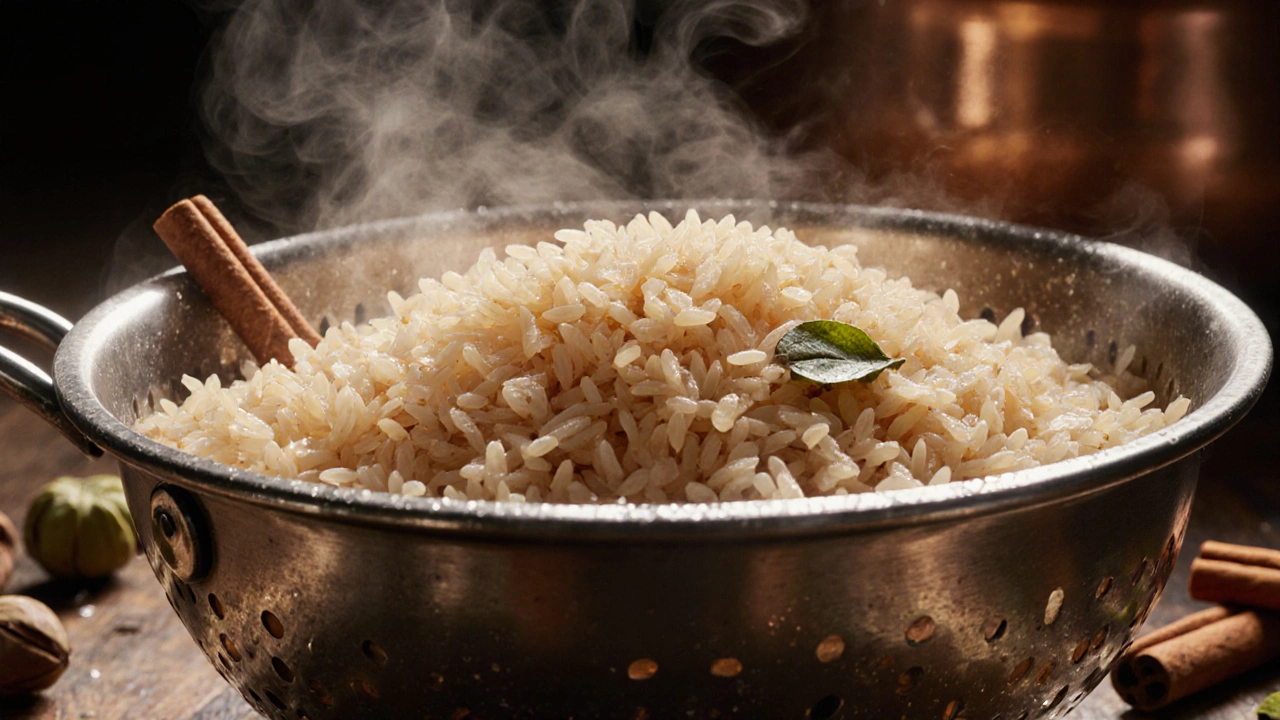
How Long to Boil Rice for Biryani? Perfect Timing for Fluffy, Fragrant Grains
Learn the perfect 7-8 minute parboiling time for basmati rice in biryani. Avoid mushy or hard grains with this step-by-step guide to fluffy, fragrant rice every time.
learn more