Onion Puree: The Secret Base Behind Many Indian Curries and Dishes
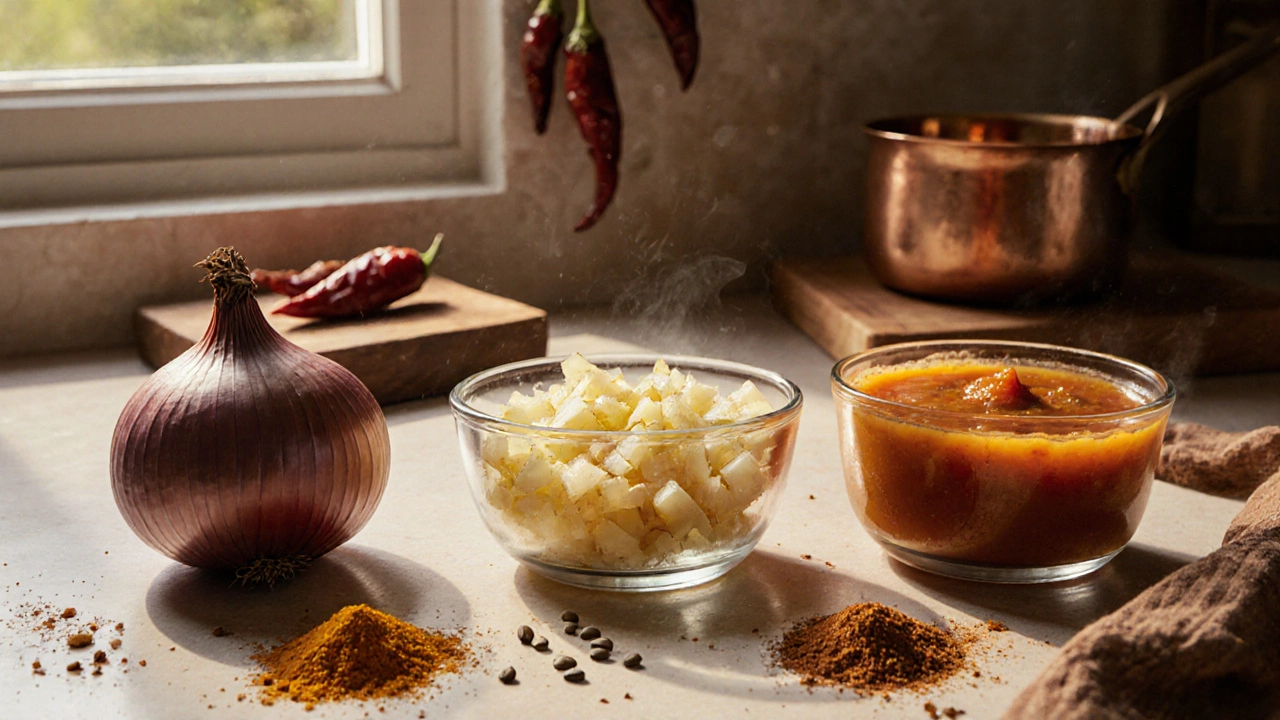
When you think of Indian cooking, you might picture spices, curry leaves, or ghee—but the real foundation? onion puree, a smooth, cooked-down blend of onions used as a base for countless Indian dishes. Also known as onion paste, it’s not just chopped onions sautéed briefly—it’s slow-cooked until caramelized, blended into a thick, rich paste that forms the backbone of flavor in everything from biryani to sambar. Skip it, and your curry tastes flat. Use it right, and even simple ingredients become unforgettable.
Onion puree isn’t just about taste—it’s about texture and balance. It thickens sauces naturally, cuts through oil, and softens the sharpness of garlic and ginger. In South Indian cooking, where dishes like dosa batter, a fermented mix of rice and urad dal used to make crispy pancakes and curry, a spiced stew typically made with vegetables, meat, or lentils and built on a base of onions, tomatoes, and spices dominate, onion puree is non-negotiable. It’s the first thing you fry in the pan before adding anything else. The process is simple: slice onions, cook them low and slow until they melt into a dark golden paste, then blend. No fancy tools needed. Just patience and a little oil.
Why does this matter? Because store-bought pastes often contain preservatives and lack the depth of homemade puree. When you make your own, you control the sweetness, the texture, and how deeply the onions caramelize. That’s why recipes for tandoori chicken marinade, a yogurt-based mixture that tenderizes and flavors chicken before grilling sometimes call for a touch of onion puree—it adds moisture and helps the spices cling. Same with biryani, a layered rice dish cooked with spices, meat, and sometimes vegetables, where the base flavor comes from slow-cooked onions. Without that rich, sweet undertone, biryani loses its soul.
You’ll find onion puree in almost every recipe here that mentions curry, chutney, or spice blends. It’s the hidden thread connecting dosas to biryanis, from South Indian breakfasts to North Indian feasts. It’s not flashy. It doesn’t have a name on a menu. But if you’ve ever taken a bite of a perfectly spiced curry and wondered why it tastes so complete—chances are, onion puree is why.
Below, you’ll find real recipes and fixes from home cooks who’ve learned the hard way: what happens when you skip the puree, when you burn it, or when you don’t cook it long enough. You’ll learn how to make it, when to use it, and how it changes the game in dishes you thought you already knew. No fluff. Just what works.
Blend Onions for Chicken Curry? When to Puree and Why
Find out when to blend onions for chicken curry, how it changes texture and flavor, and get step‑by‑step tips for perfect puree.
learn more