Naan vs Rice: Which Indian Staple Really Fits Your Meal?
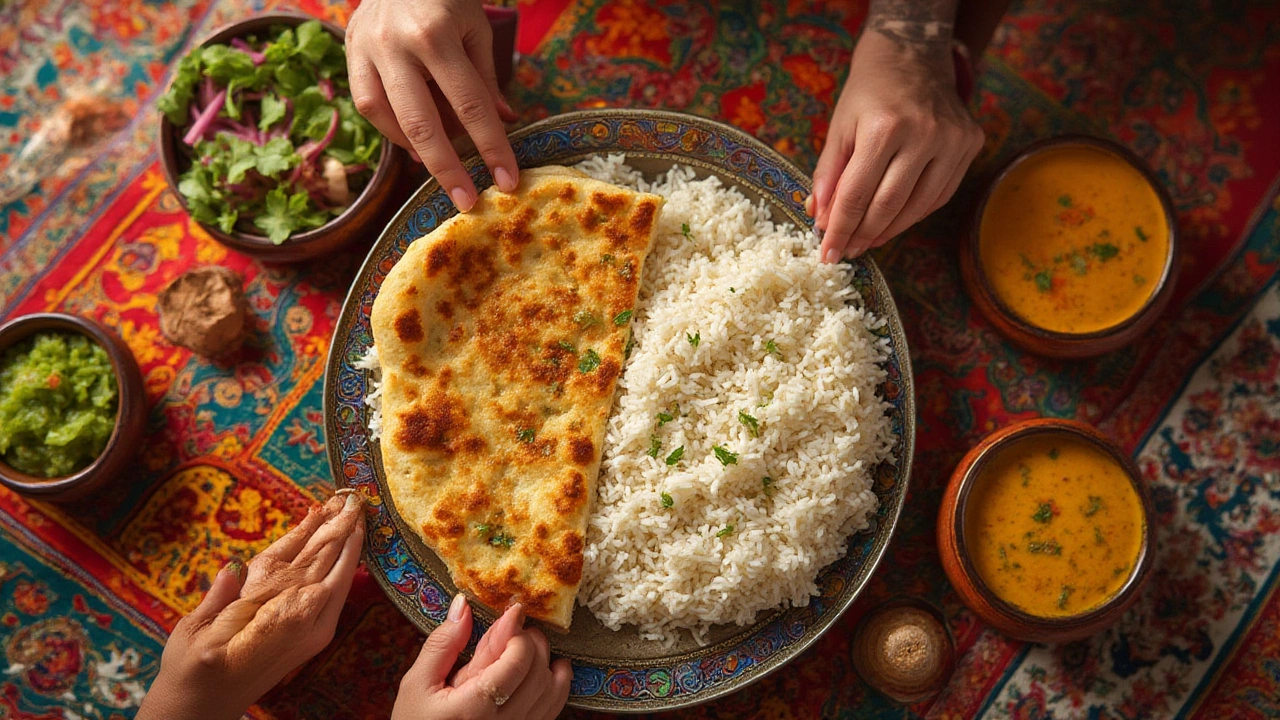
When you think of Indian food, two things often show up on the plate: naan, a soft, oven-baked flatbread from North India, often brushed with butter and served hot. Also known as Indian bread, it’s the go-to scoop for curries and gravies. And then there’s rice, the foundation of meals across South India, from idli to biryani, prized for its fluffy grains and neutral flavor that lets spices shine. Also known as Indian staple grain, it’s what millions eat every single day. These aren’t just side dishes—they’re cultural anchors. Naan thrives in tandoor ovens and family dinners in Delhi or Lucknow. Rice steams quietly in pots in Mysore, Chennai, and Cochin, pairing with dal, sambar, and curry. One isn’t better than the other. They just do different jobs.
Naan is thick, chewy, and meant to soak up sauce. You tear it, dip it, and eat it with your hands. Rice is light, separate, and designed to carry flavor without overpowering it. You spoon it, mix it, and let the curry cling to each grain. If you’re eating butter chicken, naan makes sense. If you’re having coconut rice with fish curry, rice is the only choice. You wouldn’t serve biryani with naan, and you wouldn’t use rice to scoop up paneer tikka masala. The region tells you which one to pick. North India leans on naan, roti, and paratha. South India? Rice is king—every meal, every day. Even breakfast: idli and dosa are rice-based. No wheat in sight.
Why the choice matters more than you think
It’s not just tradition—it’s texture, digestion, and even timing. Naan takes longer to make, needs a hot oven, and stays fresh for a day or two. Rice? You can cook a batch in 20 minutes and eat it cold the next day. If you’re short on time, rice wins. If you want comfort, naan delivers. Some people avoid wheat for health reasons—rice becomes their default. Others skip rice because it spikes blood sugar—naan, with its fat and protein from yogurt or milk, feels more filling. Neither is right or wrong. It’s about matching the food to your body and your moment.
Look at the recipes here. You’ll find how to fix dosa batter, why lemon makes biryani pop, and how to stop curry from curdling. But you won’t find one article saying ‘use naan with everything.’ That’s because the real truth is simpler: eat what fits the dish. Naan for rich, saucy curries. Rice for light, spicy, or coconut-based ones. This collection doesn’t push one over the other. It shows you how each works—and why both belong in your kitchen.
Naan vs. Rice: Which Is Healthier for You?
Is naan really better than rice? This article breaks down the nutritional facts, calorie counts, and health tips to help you pick what's best for your plate.
learn more