Milk in Indian Cooking: How It Shapes Curries, Sweets, and Breakfasts
When you think of milk, a foundational dairy ingredient in Indian households used for cooking, baking, and drinking. Also known as doodh, it’s not just a drink—it’s the base for creamy curries, the key to soft paneer, and the secret behind many traditional sweets. In homes across South India, milk doesn’t sit on the shelf—it’s simmered, reduced, fermented, and turned into something new every day.
Take paneer, a fresh, unaged cheese made by curdling milk with lemon or vinegar. It’s the star in dishes like Paneer Butter Masala and appears in dozens of recipes here. You can’t make paneer without milk—and you can’t make authentic Indian curries without understanding how milk behaves under heat. Then there’s coconut milk, a plant-based alternative that adds richness without dairy. It’s used in curries to balance spice and create smooth sauces, but it behaves differently than cow’s milk—curdle it by boiling too fast, and your curry turns grainy. That’s why recipes here teach you exactly when and how to add it.
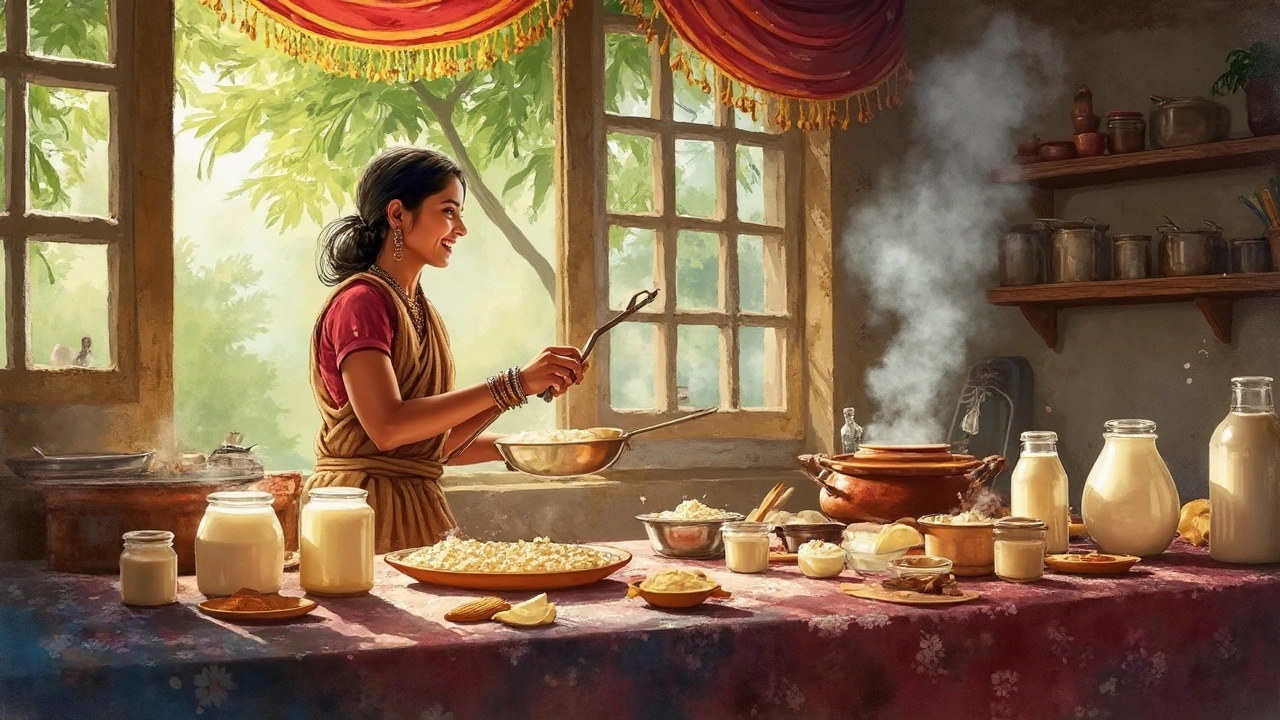
Milk also turns into khoa, a thickened milk solid used in Indian sweets like gulab jamun and peda. It’s made by slowly boiling milk for hours until it reduces to a dough-like paste. This isn’t fancy cooking—it’s patience, heat control, and tradition. And let’s not forget breakfast: milk is mixed with rice, jaggery, and cardamom for simple morning porridges, or poured over idli and dosa as a cooling counterpoint to spicy chutneys. Even in savory dishes, a splash of milk tames heat and softens sharp flavors without masking them.
What you won’t find in these posts is generic advice like "use full-fat milk." You’ll find real, tested details: how long to simmer milk for paneer, why coconut milk separates in curry, and how to tell if your milk has gone bad before it even hits the pot. These aren’t theories—they’re fixes from kitchens where milk is treated like a living ingredient, not just a liquid.
Whether you’re trying to replicate a grandmother’s rasgulla, fix a curdled curry, or understand why some Indian recipes call for milk instead of cream, this collection gives you the practical truths behind the milk you use every day. No fluff. No guesses. Just what works.
Best Milk Choices for Homemade Paneer
Making paneer at home requires choosing the right type of milk for the best results. Cow's milk is a common choice due to its availability and rich flavor, but other options like buffalo milk and plant-based alternatives are also worth considering. Each type of milk has unique qualities affecting texture and taste, influencing your final paneer outcome. Understanding these differences can elevate your cooking and help you make the best choice for your culinary needs.
learn more