Indian sweets go bad: Why they spoil and how to keep them fresh
When you make Indian sweets, handmade desserts made with sugar, milk, nuts, and spices, often prepared for festivals and family gatherings. Also known as mithai, they’re meant to be enjoyed fresh—yet many sit out for days and still look fine. But appearances lie. These sweets don’t last like store-bought candy. Their high sugar, dairy, and moisture content make them perfect breeding grounds for mold, bacteria, and fermentation. That’s why you’ve seen a box of ladoo, round sweets made from gram flour, sugar, and ghee, often shaped by hand turn sticky and sour after two days, or a plate of jalebi, deep-fried syrup-soaked spirals popular across India lose its crunch and smell off by morning.
It’s not just about time—it’s about how they’re made and stored. Traditional Indian sweets rarely use preservatives. No artificial additives. No vacuum sealing. Just sugar, milk, ghee, cardamom, and love. That’s beautiful—but fragile. Moisture is the enemy. If you leave kheer, a creamy rice pudding made with milk and sugar, often flavored with saffron or cardamom in a humid kitchen, it ferments in hours. Even barfi, a dense, fudge-like sweet made from condensed milk and sugar, can grow mold if not stored in a dry, airtight container. Temperature matters too. Heat speeds up spoilage. A sweet left on a windowsill in Mysore’s heat won’t survive a day.
Some sweets last longer than others. Dry ones like soan papdi, a flaky, sugar-crystal sweet made from gram flour and sugar syrup can stay good for weeks if sealed right. But anything with milk, cream, or coconut? That’s a 2–3 day window at best. Refrigeration helps—but only if you wrap it right. Plastic wrap traps moisture. Use parchment paper, then a sealed container. Never put warm sweets in the fridge. Let them cool first. And never mix old and new batches. One spoiled ladoo can ruin the whole box.
And don’t ignore the signs. A sour smell? A sticky texture? A fuzzy spot? That’s not ‘age’—that’s spoilage. Eating it won’t just ruin your day—it could make you sick. Indian sweets are meant to be shared, not stored for weeks. Make small batches. Eat them fast. If you’re making sweets for a party, prepare them the day before. That’s the real tradition: freshness over longevity.
Below, you’ll find real stories and fixes from people who’ve learned the hard way—why their jalebi went soggy, how they saved a batch of kheer, and which sweets actually survive the monsoon. No fluff. Just what works.
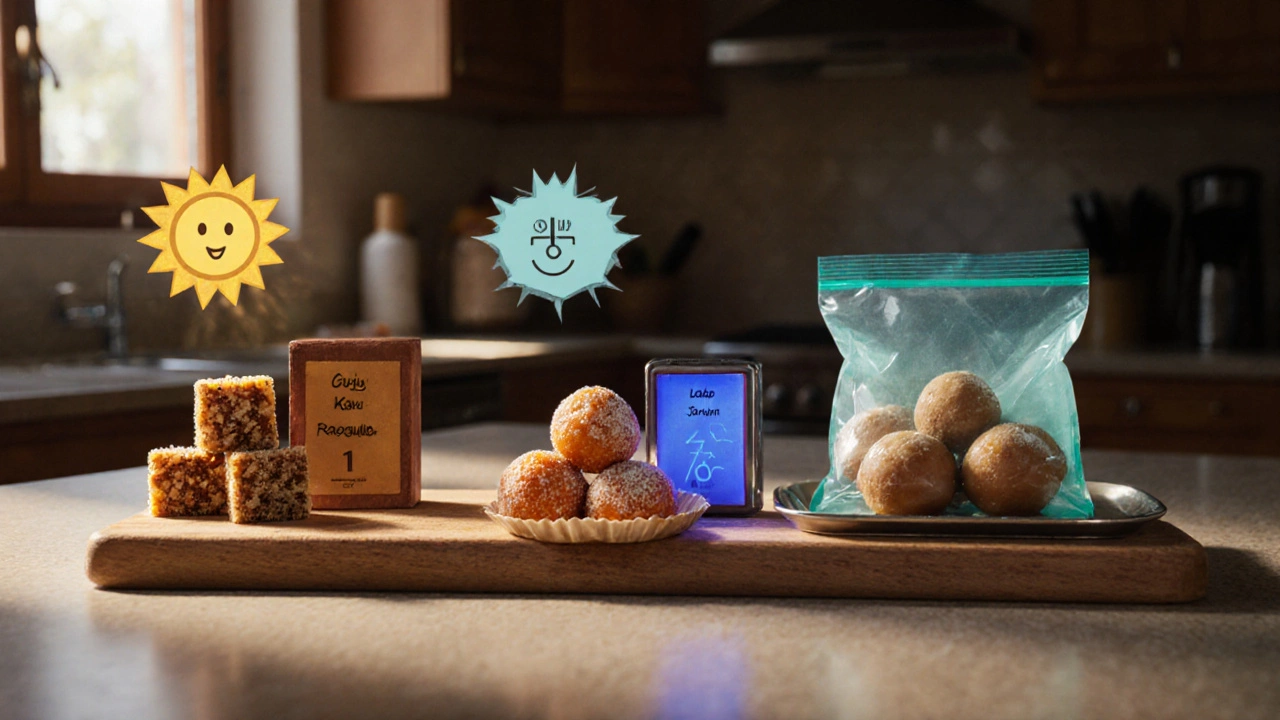
Do Indian Sweets Go Bad? Shelf Life, Storage Tips & Safety Guide
Learn how long Indian sweets last, how to store them safely, and how to tell if they’ve gone bad. Get practical tips, shelf‑life tables, and a FAQ for every sweet lover.
learn more