Indian Street Ice Cream: The Sweet Treats That Define Summer Nights
When you think of Indian street ice cream, a slow-churned, dense, and aromatic frozen dessert made with milk, sugar, and natural flavors like cardamom and saffron. Also known as kulfi, it’s not your average ice cream—it’s richer, denser, and far more flavorful, often sold from carts under the hot sun in cities like Mysore, Delhi, and Mumbai. Unlike Western ice cream, it’s not whipped with air. It’s simmered for hours, reduced to thick milk, then frozen in clay pots. The result? A bite that melts slowly, releasing the scent of rosewater or the warmth of cardamom, not just sweetness.
This isn’t just dessert—it’s tradition. Kulfi, the classic Indian frozen treat made by boiling milk until it reduces by half, then flavoring it with nuts, saffron, or pistachio has been made the same way for centuries. You’ll find it on sticks, in cups, or layered with vermicelli and milk in falooda, a chilled dessert combining kulfi, rose syrup, basil seeds, and thin noodles, often served with a splash of milk and a drizzle of cream. These treats aren’t made in freezers—they’re made with patience. That’s why they taste different. They carry the rhythm of street vendors waking before dawn to boil milk, stir it gently, and wait for the right texture before freezing.
What makes Indian street ice cream so special isn’t just the flavor—it’s the story behind it. You won’t find artificial colors or stabilizers here. Instead, you get real rosewater from Rajasthan, crushed pistachios from Kashmir, and saffron threads that cost more than gold. It’s the kind of food that’s passed down in families, sold by vendors who’ve been doing it for 30 years, and eaten barefoot on hot pavement after a long day. It’s not about speed. It’s about soul.
And while you might think of ice cream as a summer thing, in India, it’s a year-round ritual. During festivals, weddings, and even quiet evenings, you’ll see people lining up for a cone of mango kulfi or a bowl of rose falooda. It’s comfort food wrapped in frost. The posts below dive into how these treats are made, why certain ingredients matter, and how to recreate them at home without fancy tools. Whether you’re curious about the difference between kulfi and regular ice cream, or you want to know how to get that perfect creamy texture without an ice cream maker, you’ll find real answers here—no fluff, no guesswork, just the way it’s done on the streets of South India.
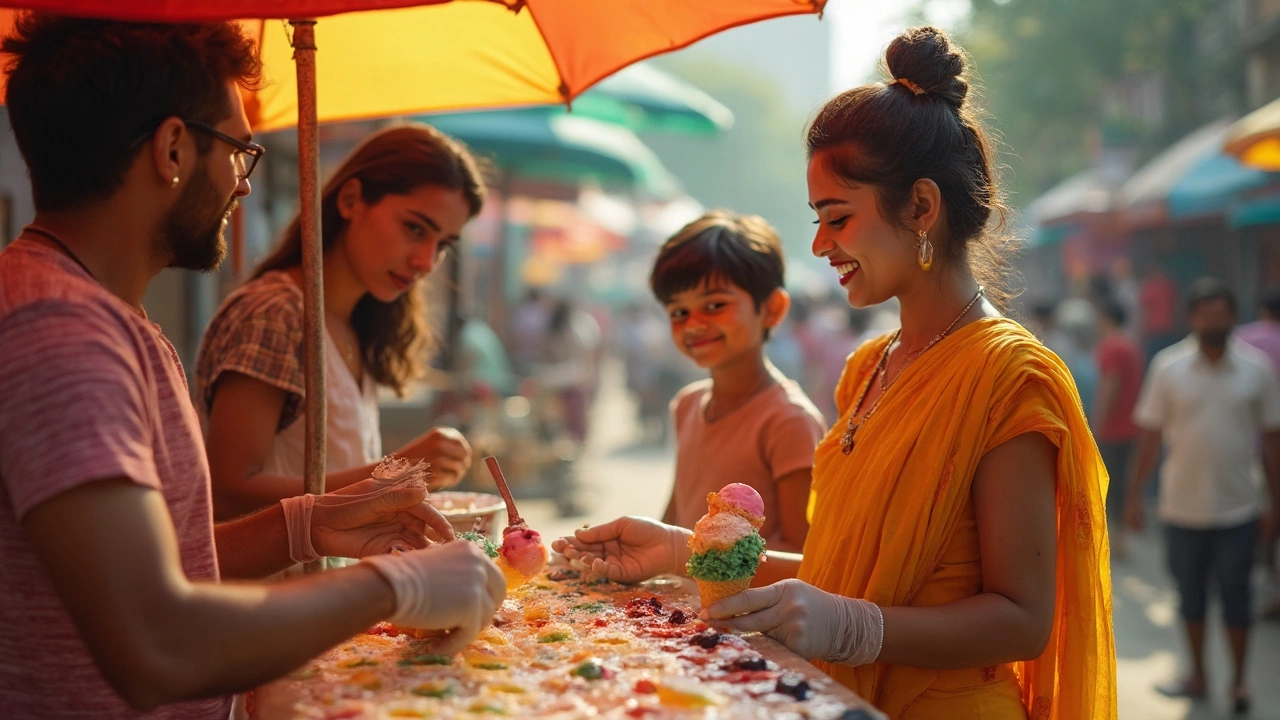
Is It Okay to Eat Ice Cream in India? Street Food Safety Guide
Ice cream on Indian streets looks tempting, but is it safe to eat? This article breaks down what you need to know about hygiene, quality, and common risks. Learn how to spot the good spots and avoid sticky situations. Tips and facts included, straight from local experiences and real stories. Stay cool and make sure your treat is worry-free.
learn more