Indian food habits: What people really eat daily across India
When you think of Indian food habits, the everyday eating patterns of millions across India, centered on simple, regionally rooted meals. Also known as daily Indian food, it's not about restaurant dishes or festive feasts—it's what’s on the plate before sunrise, after work, and during monsoon rains. Most Indians don’t eat biryani every day. They don’t start their morning with paneer butter masala. What they eat is quieter, older, and far more consistent: roti, a flatbread made from whole wheat, eaten with lentils or vegetables across North and Central India, rice, the staple grain of South and East India, often paired with dal or curry, and dal, a simple cooked lentil dish that’s protein-rich, affordable, and eaten by nearly every household. These aren’t side dishes—they’re the foundation.
Indian food habits change by region, but the core stays the same. In Tamil Nadu, it’s idli and sambar. In Karnataka, it’s ragi roti with coconut chutney. In Punjab, it’s makki di roti with sarson ka saag. In Bengal, it’s rice with fish curry. Yet all of them share the same rhythm: meals built around grains, legumes, vegetables, and chutneys. Even in cities, people cook these at home. Delivery apps may offer biryani or pizza, but the real daily meal? It’s the one made in a pressure cooker or on a tawa. Indian breakfast, often overlooked by outsiders, is a full meal—not just coffee and toast. It’s dosa with coconut chutney, poha with peanuts, upma with curry leaves. No one skips it. And it’s never just carbs—it’s balanced with protein, fiber, and spice.
What you won’t find in most Indian homes is processed food for breakfast or dinner. No cereal boxes, no frozen pizzas. Instead, there’s fermentation—dosa batter left overnight, idli rice and urad dal soaked and turned bubbly. There’s tempering—mustard seeds popping in hot oil, curry leaves sizzling. There’s balance—a little sour from tamarind, a touch of sweetness from jaggery, heat from green chilies. These aren’t trends. They’re habits passed down, tested over generations, and still alive because they work. You don’t need fancy tools. You don’t need imported ingredients. Just rice, dal, spices, and time. That’s what Indian food habits are made of. Below, you’ll find real guides on how these meals are made, why they work, and how to bring them into your kitchen—no trip to Mysore required.
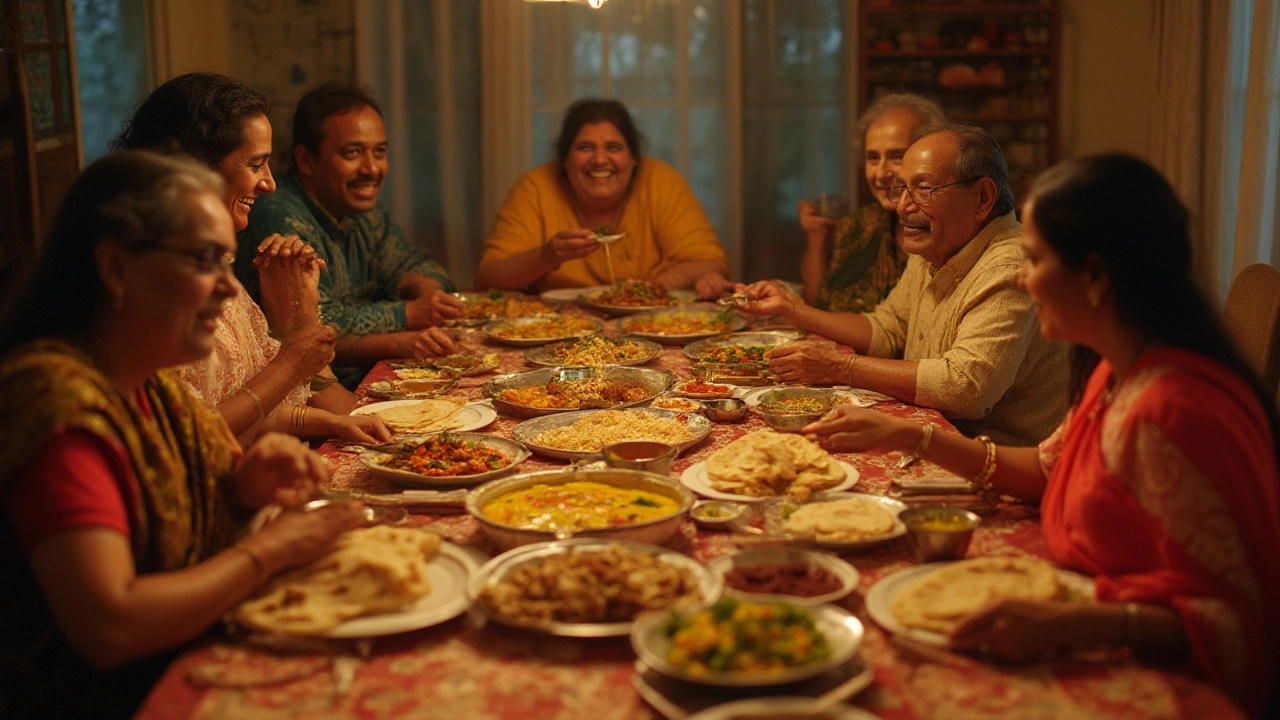
What Do Most Indians Eat for Dinner? A Real-Life Guide to Everyday Indian Dinners
Curious about what most Indians eat for dinner? This deep-dive explores regional habits, daily staples, family routines, and fun facts about Indian dinners—so you can get real-life insight.
learn more