Indian eating habits: What people really eat daily across India
When you think of Indian eating habits, the everyday food patterns shaped by region, season, and tradition across India. Also known as daily Indian food routines, they’re not defined by restaurant menus or viral recipes—they’re built on what’s cooked in homes every morning, noon, and night. This isn’t about biryani or paneer butter masala being served at every meal. It’s about roti with dal in Punjab, rice with sambar in Tamil Nadu, poha in Maharashtra, and idli in Karnataka. These aren’t occasional dishes. They’re the foundation. Millions eat them without a second thought, not because they’re trendy, but because they work—filling, affordable, and tied to generations of practice.
Indian staple foods, the core ingredients that form the backbone of daily meals across the country rarely change. Rice in the south, wheat in the north, millets in the west, lentils everywhere. These aren’t choices—they’re constants. You won’t find a household in rural Orissa or urban Delhi that doesn’t have at least one of these on the table. Even when people eat out, they often order something built on these same bases: dosa, upma, khichdi, or chawal with sabzi. The traditional Indian meals, structured eating patterns that follow time, season, and regional norms are simple: breakfast is light and quick, lunch is the biggest meal with carbs and protein, dinner is minimal. Snacks? Always there. Chutney isn’t an afterthought—it’s a necessity. It’s what turns plain rice into something alive.
What you eat in India depends less on what’s fancy and more on what’s available, affordable, and familiar. A farmer in Andhra doesn’t eat biryani every day—he eats rice with lentils and pickles. A student in Bangalore starts with idli and coconut chutney. A family in Jaipur breaks their fast with puri and aloo sabzi. These aren’t recipes you find in cookbooks for tourists. They’re the rhythm of life. The posts below dig into exactly that: the real food people eat, how they make it, why certain ingredients matter, and how even small habits—like adding lemon to biryani or using the right rice-to-dal ratio for dosa—make a huge difference. You’ll find out what’s truly common, what’s disappearing, and what still holds strong across India’s kitchens.
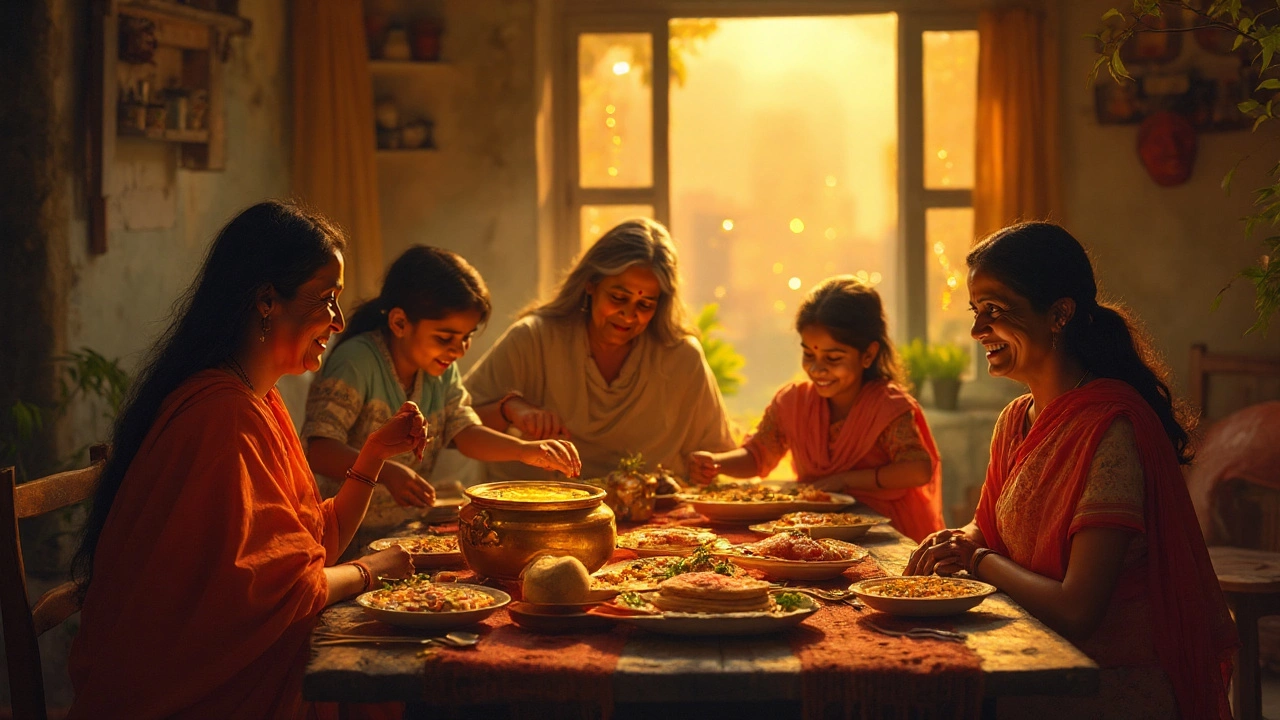
What Time Do People Eat Dinner in India? A Guide to Indian Dinner Habits
Curious about dinner times in India? Explore when people eat dinner across regions, cultural factors influencing dinner, and how social life shapes Indian eating habits.
learn more