Indian Curry Spices: The Core Flavors That Define Every Bowl
When you think of Indian curry spices, a blend of ground seeds, roots, and pods that form the backbone of South Indian and North Indian cooking. Also known as curry powder, it's not a single spice but a living system of flavors that changes with every kitchen. These aren’t just things you throw into a pot—they’re the reason your rice clings to the sauce, your chicken stays tender, and your nose wakes up before your eyes do.
Behind every great curry is a trio that never leaves the shelf: turmeric, the golden root that gives color, earthiness, and anti-inflammatory power, cumin, the smoky, nutty seed that grounds the heat, and garam masala, a warm, aromatic blend added at the end to lift the whole dish. Skip turmeric and your curry looks like mud. Leave out cumin and it tastes flat. Add garam masala too early and its magic vanishes. These aren’t suggestions—they’re rules written in taste.
Coriander seeds, fenugreek, mustard, and cardamom all play their parts too. You’ll find them in the recipes below, not as fancy add-ons, but as essential players. One post explains why blending onions changes how these spices bloom. Another shows how coconut milk can mute or amplify them. You’ll see how lemon juice doesn’t just brighten—it unlocks the spice. And yes, there’s a reason why your dosa batter has a pinch of turmeric, and why your biryani needs garam masala stirred in at the last second.
This isn’t about memorizing spice ratios. It’s about understanding how each one talks to the others. Turmeric doesn’t work alone. Garam masala doesn’t fix a bad base. The best curries aren’t the spiciest—they’re the most balanced. And that balance? It starts with knowing which spices do what, and when to use them.
Below are real recipes and fixes from home cooks who’ve burned the paste, overcooked the cumin, or forgotten the coriander—and learned how to fix it. No theory. No fluff. Just what works when you’re standing at the stove, wondering why your curry tastes like nothing.
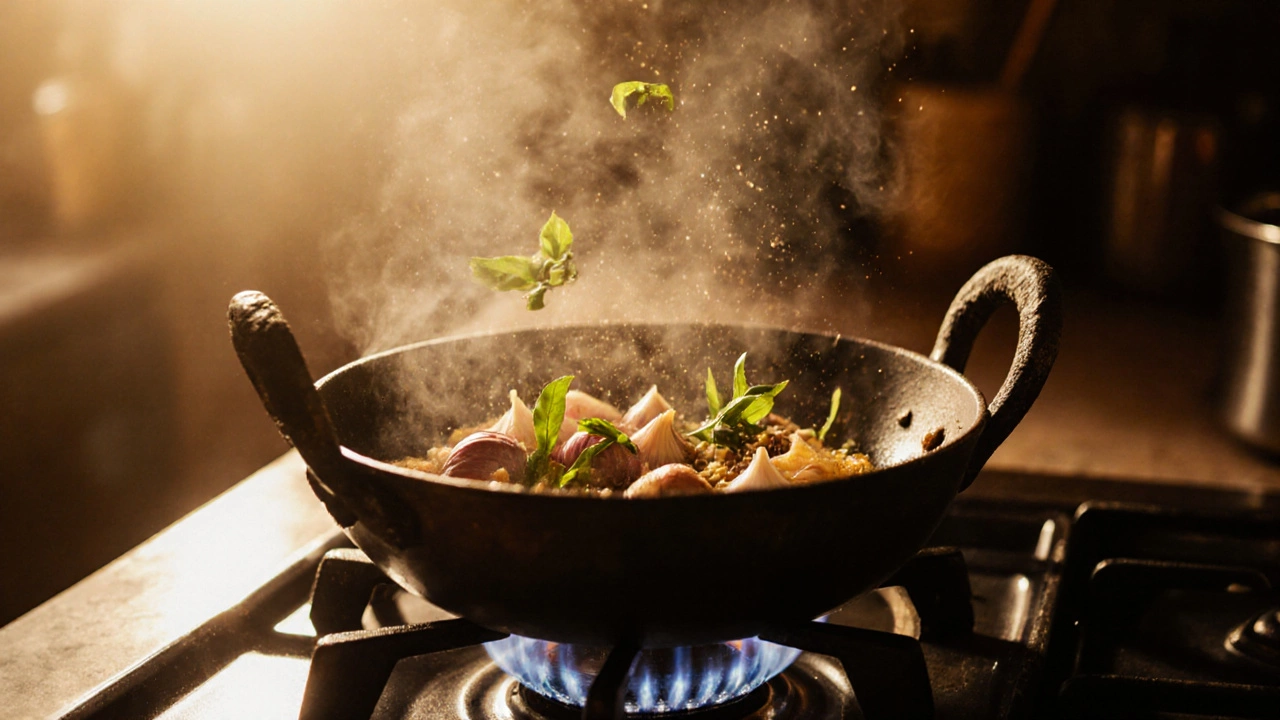
What Are the Most Common Ingredients in Curry?
Discover the essential ingredients that make chicken curry taste authentic - from onions and garlic to turmeric, cumin, and curry leaves. Learn how to build flavor layer by layer without relying on store-bought mixes.
learn more