Indian Cotton Candy Sweet: What It Is, How It's Made, and Where to Find It
When you think of Indian cotton candy sweet, a light, airy, spun-sugar confection often made with jaggery or sugar and flavored with cardamom or rose. Also known as mysore petha, it's not the same as Western cotton candy—it's denser, more fragrant, and deeply tied to temple offerings and festive tables across Karnataka and Tamil Nadu. This isn’t just candy. It’s a cultural artifact wrapped in sugar, made during Diwali, weddings, and temple festivals. You won’t find it in supermarkets. You’ll find it in small shops near temples in Mysore, handed to you still warm from the pan, its threads glistening under the morning sun.
What makes this sweet different from regular candy? It’s the jaggery, unrefined cane sugar with molasses, giving it a deep, earthy sweetness and a golden hue. Unlike Western cotton candy made with white granulated sugar and spun at high speed, Indian versions are pulled by hand or rolled slowly, allowing the sugar to crystallize just enough to hold its shape without crumbling. The cardamom, a spice native to South India, adds a floral warmth that cuts through the sweetness. Some versions even include crushed nuts or a hint of saffron. It’s not just about taste—it’s about balance. Too much sugar, and it’s cloying. Too little flavor, and it’s forgettable.
This sweet doesn’t last long. Unlike hard laddoos or barfis, it melts quickly in humidity, which is why it’s often made fresh daily. That’s why you won’t see it shipped across the country—it’s meant to be eaten where it’s made. The people who make it? They’re often third-generation sweetmakers, using copper pans and wooden paddles passed down for decades. Their secret isn’t in fancy tools. It’s in timing. Heat the syrup just right. Pull it just long enough. Let it cool just enough to hold its shape. One second too long, and it turns brittle. One second too short, and it sticks to your fingers like glue.
There’s a reason this sweet shows up in the same posts as dosa batter and biryani rice. It’s part of the same culinary rhythm—the rhythm of South Indian kitchens that treat food as ritual. You don’t just eat it. You experience it. The crunch of sugar threads, the scent of cardamom rising as you unwrap it, the way it dissolves slowly on your tongue. It’s not dessert. It’s memory.
Below, you’ll find posts that explore how this sweet connects to other Indian treats—how jaggery is used in dal, how cardamom shows up in chai, and why some sweets last for weeks while others vanish by noon. These aren’t just recipes. They’re stories about time, tradition, and taste.
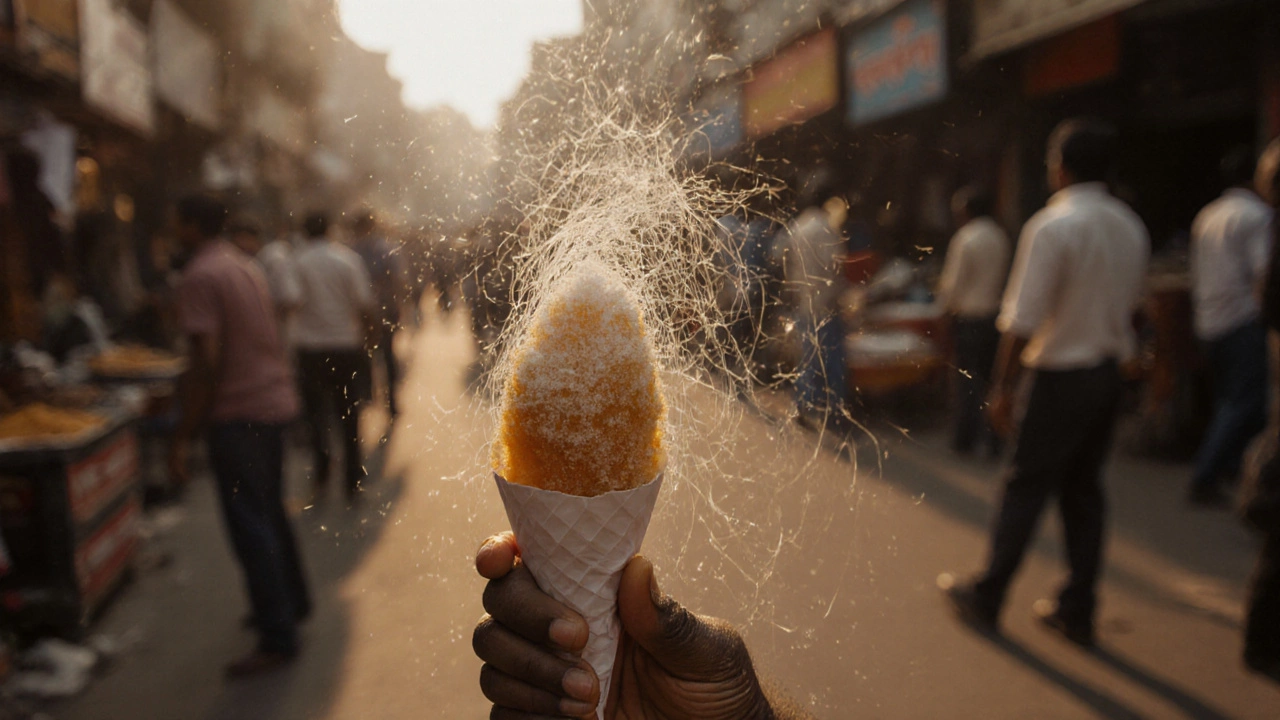
What Is the Indian Sweet That's Like Cotton Candy?
Phool jhadi is the Indian sweet that tastes like cotton candy but is made by hand with sugar, cardamom, and rose water. Discover its history, how it’s made, and why it’s disappearing.
learn more