Indian coffee culture: The rituals, brews, and traditions behind every cup
When you think of Indian coffee culture, a deeply rooted, daily ritual centered on strong, slow-brewed coffee, especially in South India, often served in a tumbler and davara with milk and sugar. Also known as filter coffee, it’s not just a drink—it’s a morning ceremony, a social glue, and a quiet moment of calm in a busy day. Unlike espresso shots or pour-overs, Indian coffee is made by dripping hot water through finely ground dark roast beans mixed with chicory, slowly extracting a thick, rich concentrate. This isn’t a trend—it’s been done the same way for over a century, passed down from generation to generation in homes across Karnataka, Tamil Nadu, and Andhra Pradesh.
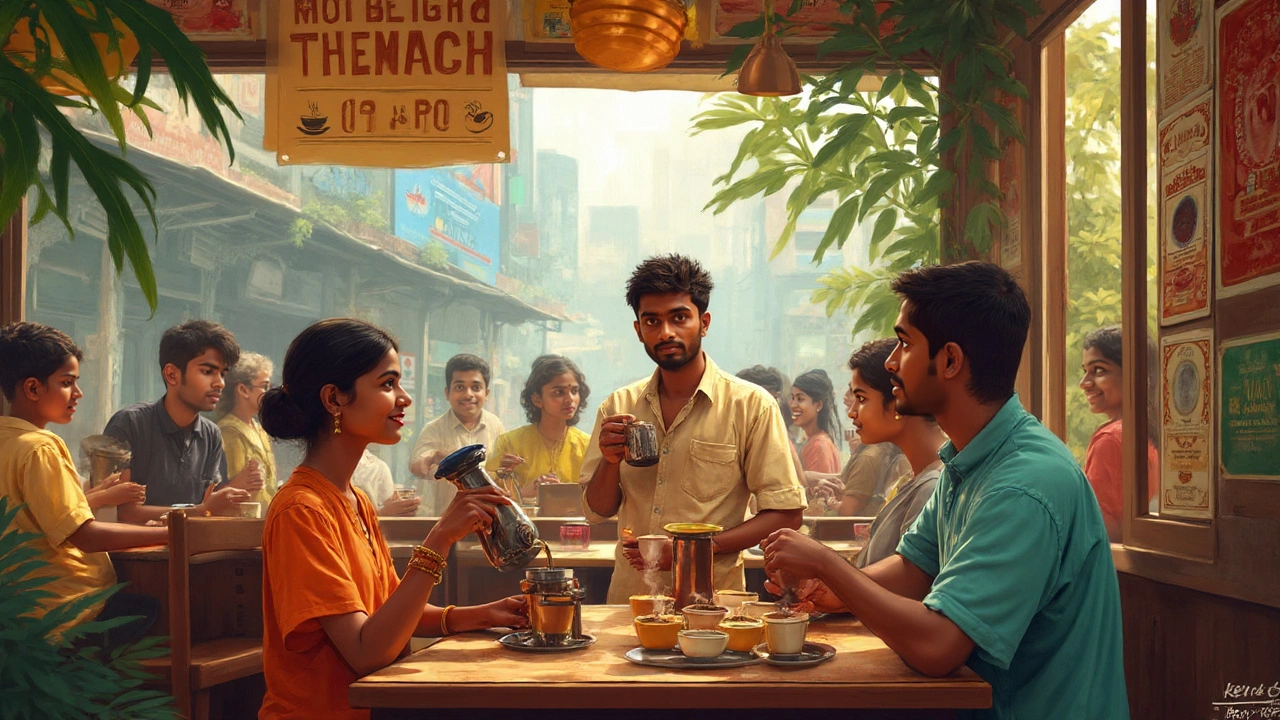
The heart of this culture beats strongest in Mysore, a city where coffee isn’t just consumed—it’s celebrated, with local roasters, family-run cafes, and homes where the filter pot sits like a trusted heirloom. You’ll find it in early morning stalls, in offices where workers pause for a break, and even in temples where priests sip it before prayers. It’s served in a stainless steel tumbler and poured from a height into a small plate called a davara, cooling it down and mixing it with milk. The result? A creamy, aromatic brew that’s bold but smooth, never bitter. This isn’t about caffeine—it’s about rhythm. People don’t rush it. They sit. They talk. They breathe.
What makes Indian coffee different isn’t just the beans or the chicory—it’s the brewing method, a simple device with two chambers: an upper basket for grounds and a lower chamber to collect the drip, using gravity, not pressure. No machines. No buttons. Just patience. The coffee drips slowly, sometimes taking 10 to 15 minutes, turning the process into meditation. And unlike Western coffee, where people often drink it black, Indian coffee is almost always mixed with hot milk and sugar—sometimes in a 1:1 ratio. It’s sweet, milky, and strong all at once. You don’t sip it—you savor it.
And while global chains push cold brews and oat milk lattes, Indian coffee culture stays true to its roots. It doesn’t need to be trendy to matter. It’s the coffee your grandmother made, the one your uncle still brews every morning, the one you get when you visit a friend’s house and they say, ‘Wait, I’ll make you some filter coffee.’ It’s not about the beans being the rarest or the roast the darkest—it’s about the care, the routine, the connection.
Below, you’ll find real guides and stories from people who live this culture every day—how to make it right, why chicory matters, how to pick the best beans, and why some families never use a kettle, only a gas flame. These aren’t recipes you’ll find in a café in New York. These are the truths of a tradition that’s quiet, stubborn, and deeply loved.
Coffee in India: Can You Drink It, Where, and What to Expect
Thinking about drinking coffee in India? Discover India's surprising coffee culture, best coffee types, safety tips, and unique finds for travelers and locals.
learn more