Indian Candy: Sweet Treats, Traditional Recipes, and Hidden Gems
When you think of Indian candy, handmade sweets made from sugar, jaggery, milk, and spices, often tied to festivals and family traditions. Also known as mithai, it’s not just dessert—it’s memory, celebration, and craft rolled into one. Unlike mass-produced candies, Indian candy is often made in small batches, sometimes by hand, using techniques passed down for generations. You won’t find preservatives here—just sugar, cardamom, rose water, and patience.
Some of the most beloved types include phool jhadi, a delicate, cotton-candy-like sweet made by spinning hot sugar into fine threads, and gur ka peda, a dense, chewy sweet made from jaggery and milk solids. Then there’s khoya, milk reduced to a thick paste and shaped into balls or bars, often flavored with nuts and saffron. These aren’t just snacks—they’re cultural artifacts. You’ll find them at temple fairs in Mysore, wrapped in paper and handed out during Diwali, or sold by street vendors who’ve been making them since they were kids.
What makes Indian candy different isn’t just the ingredients—it’s the process. No machines, no molds. Just skilled hands pulling, spinning, folding, and shaping. Some sweets take hours to make. Others, like the brittle-like chikki, come together in minutes but still require perfect timing and temperature. And while modern stores sell packaged versions, the real flavor comes from the old ways: clay pots for boiling sugar, copper pans for even heat, and a quiet kitchen where the only sound is the crackle of sugar caramelizing.
These sweets don’t last long. Most are best eaten within days. That’s why they’re made fresh, often daily. If you’ve ever wondered why Indian candy tastes so different from Western candy, it’s because it’s not meant to be shelf-stable—it’s meant to be shared, right now. That’s why you’ll find recipes that tell you to make it in the morning, serve it by noon, and not keep it past evening.
Behind every sweet is a story. Phool jhadi is fading because fewer people have the time or skill to make it. Gur ka peda survives because it’s tied to harvest festivals. And khoya? It’s the base for dozens of other sweets, from barfi to rasgulla. This collection brings you the real deals—not just recipes, but the why behind them. You’ll learn how to fix a sugar syrup that won’t thread, why cardamom is non-negotiable in some candies, and which sweets actually keep well (spoiler: not many).
What you’ll find below aren’t just instructions. They’re guides to understanding texture, timing, and tradition. Whether you’re trying to recreate a childhood treat or just curious about how sugar becomes something magical, these posts give you the tools to get it right. No fluff. No guesswork. Just the facts that matter—because Indian candy deserves nothing less.
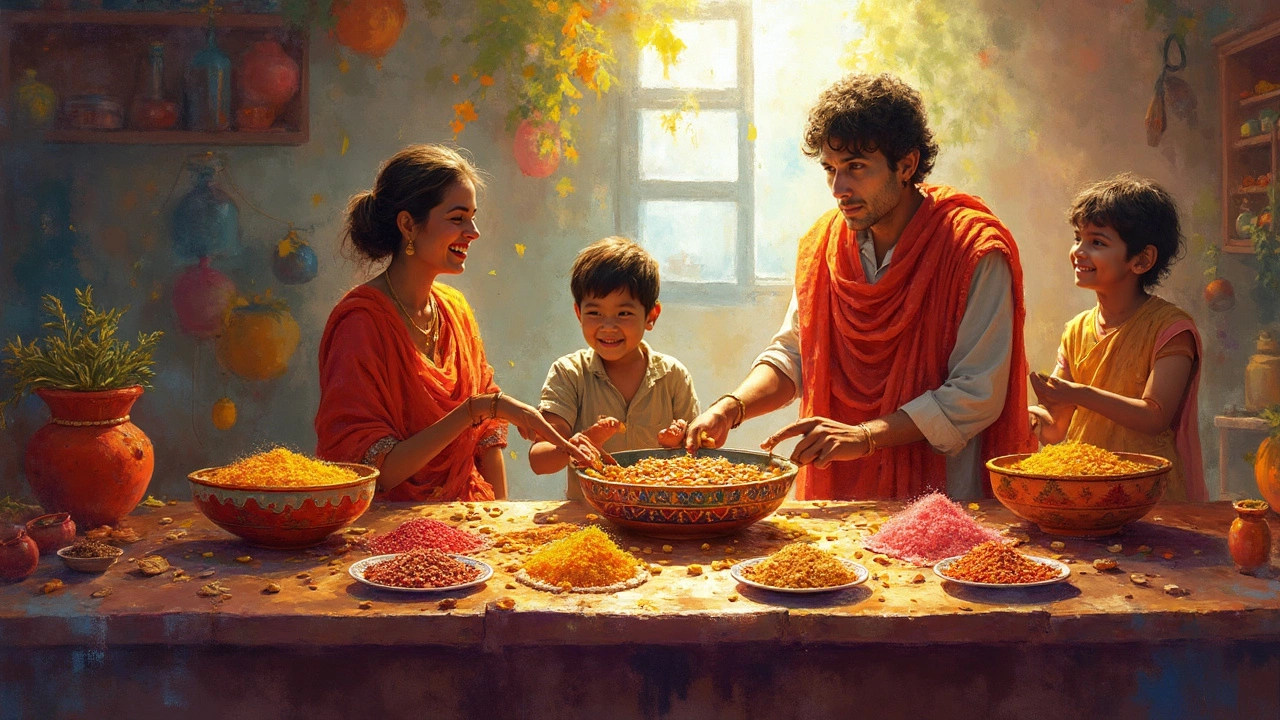
Indian Candy After Dinner: The Delightful World of Mukhwas
Mukhwas, a colorful and flavorful blend, is more than just a candy consumed after Indian meals. It's a delightful combination of seeds, nuts, and sugar-coated ingredients that aids digestion and freshens breath. In this article, learn about the cultural significance and varied recipes of Mukhwas, and discover how to make your own at home using commonly found ingredients. From its vibrant presentation to its health benefits, Mukhwas offers a unique glimpse into Indian culinary traditions.
learn more