Hottest Curry: Spices, Secrets, and the Bold Flavors Behind India's Most Fiery Dishes
When people talk about the hottest curry, a fiery, spice-driven dish rooted in South Indian cooking traditions that balances heat with depth of flavor, they’re not just talking about chilies. They’re talking about the way dried red chilies crackle in hot oil, how black peppercorns burst under pressure, and how curry leaves sizzle into a base that makes your tongue tingle and your nose run. This isn’t about pain—it’s about precision. The curry spices, a dynamic mix of ground seeds, dried fruits, and aromatic leaves that form the soul of Indian curries are layered like a song—each note building on the last. Turmeric gives color, cumin adds earthiness, coriander brings balance, and then—boom—the heat hits. But here’s the secret: the hottest curry doesn’t always use the spiciest chilies. It uses the right ones, at the right time, in the right way.
Think about it: a curry base, the foundational layer of sautéed onions, garlic, ginger, and spices that defines the character of any Indian curry is what turns heat into flavor. You can throw in ten ghost peppers, but if your base is watery or undercooked, the heat just sits on top—sharp and one-dimensional. The real magic happens when that base is slow-cooked until the oil separates, the spices bloom, and the heat sinks into the meat or vegetables. That’s when the curry doesn’t just burn—it sings. And that’s why recipes like chicken curry with whole dried red chilies, or Andhra-style Gongura chicken, aren’t just spicy—they’re complex. The chili heat, the intense, lingering burn delivered by specific Indian chilies like Guntur Sannam or Byadagi isn’t random. It’s controlled. It’s earned. It’s what happens when you let the spice do its job instead of drowning it in cream or sugar.
What you’ll find in these posts isn’t just a list of recipes. It’s the breakdown of how real cooks in Mysore and beyond build heat that sticks—not just in your mouth, but in your memory. You’ll learn why adding lemon at the end tames the burn without killing the flavor, how coconut milk can either calm the fire or amplify it depending on when you add it, and why blending onions changes how the heat spreads through the dish. You’ll see how the same curry can be mild in one home and explosive in another, all because of a single spice, a different pan, or a tweak in timing. This isn’t about who can make the hottest curry. It’s about understanding what makes heat meaningful.
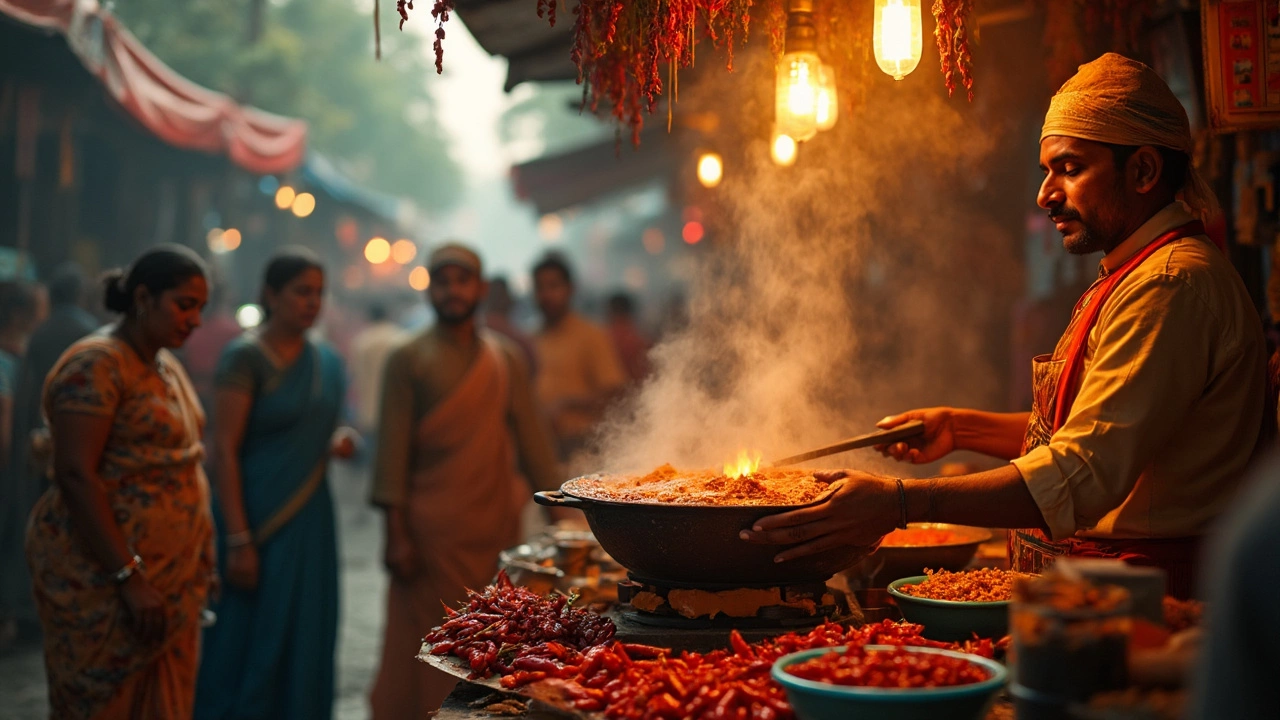
Hottest Indian Curry: What Makes Phaal the King of Heat?
Curious which Indian curry holds the title for the most tongue-scorching? This article gets straight into the world of street food spice, spotlighting the infamous Phaal curry and why it burns its way to the top. We’ll look at its origins, what goes inside, how it compares to other spicy dishes, and how street food fans handle the burn. Plus, I’ll share some tips if you ever want to try the hottest curry yourself.
learn more