Dosa Ingredients: What You Really Need for Perfect Crispy Dosa
When you think of dosa ingredients, the core components that form the fermented batter used to make the thin, crispy South Indian crepe. Also known as dosa batter, it’s not just rice and lentils—it’s a living mix that transforms over hours into something light, tangy, and perfectly crisp. This isn’t a recipe you grab from a box. Real dosa comes from patience, balance, and a few non-negotiable ingredients that have stayed the same for generations in Mysore kitchens.
The heart of every good dosa is urad dal, a small, white lentil that, when ground, gives dosa its airy texture and slight puff. Without enough urad dal, your dosa turns flat and tough. Then there’s rice, preferably idli rice or parboiled rice, which provides structure and crunch. You don’t need fancy rice—just plain, unpolished rice that soaks well. The ratio? Usually 3 parts rice to 1 part urad dal. Salt? Essential. Water? Just enough to grind smoothly. And then there’s time—the silent ingredient. Fermentation isn’t optional. If your batter doesn’t rise, bubble, and smell slightly sour after 8–12 hours, you won’t get that signature crisp edge.
Some people add fenugreek seeds to boost fermentation. Others mix in a little rice flour for extra crispness. But here’s the truth: you don’t need baking powder, yeast, or vinegar. Those are shortcuts that ruin the soul of the dish. The batter should ferment naturally, thanks to wild bacteria in the air and the warmth of your kitchen. If you live in a cold place, wrap the bowl in a towel and leave it near the stove. Don’t rush it. And never use metal bowls—glass or stainless steel only. Plastic can harbor bad bacteria that kill the fermentation.
What about water? Use filtered or clean, room-temperature water. Tap water with heavy chlorine can slow down the good bacteria. And don’t over-grind the batter. It should be thick but pourable—like heavy cream. Too thin? Your dosa turns soggy. Too thick? It won’t spread. The right consistency lets the batter flow into a thin, even circle on a hot griddle. That’s when the magic happens: edges curl, bubbles form, and the bottom turns golden brown with those tiny, crispy lattices you can’t replicate with any other food.
You’ll find posts here that explain why your dosa isn’t crispy, how to fix sticky batter, and what happens if you skip fermentation. Some show you how to store batter in the fridge for days. Others break down the difference between regular dosa and masala dosa batter. But they all circle back to the same thing: if you get the ingredients right—and give them time—you don’t need a fancy pan or a cooking class. Just a hot griddle and a little patience. The rest? That’s just tradition doing its job.
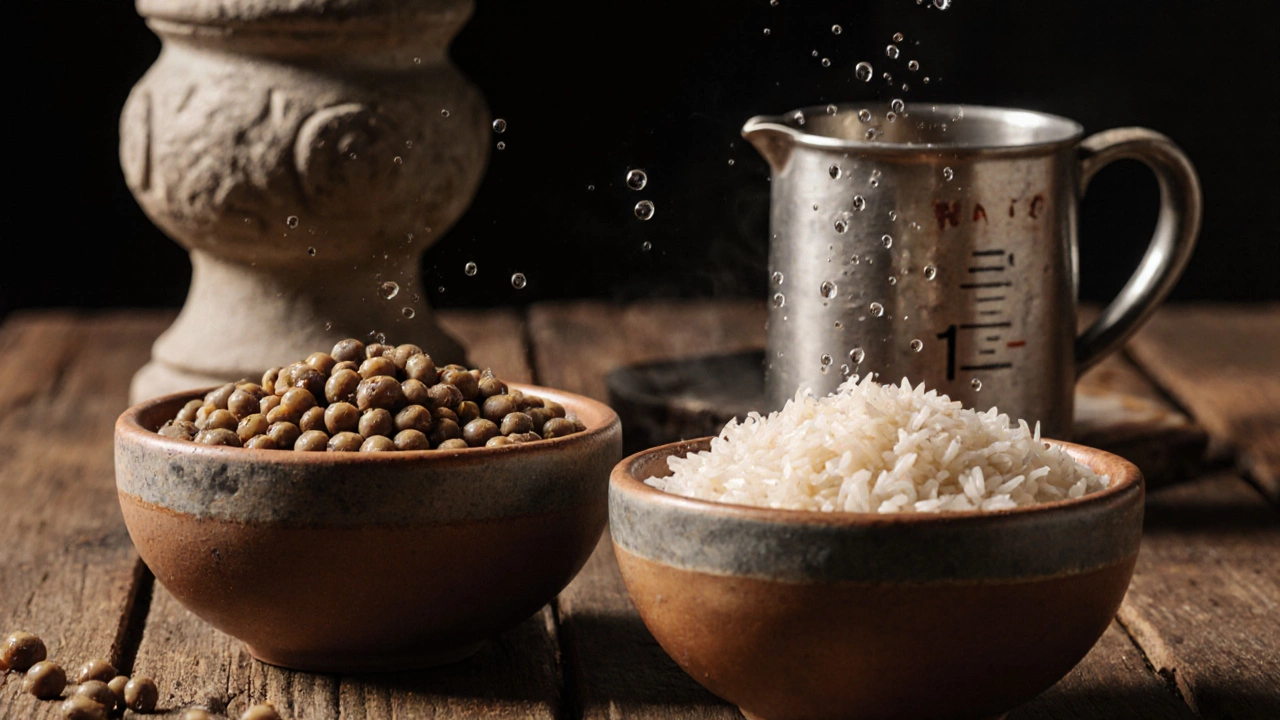
What Is the Ratio of Urad Dal to Rice for Perfect Dosa Batter?
The perfect dosa batter needs a 1:3 ratio of urad dal to rice. Learn why this ratio works, how to soak and ferment the batter, and how to avoid common mistakes for crispy, fluffy dosas every time.
learn more