Dhokla: The Fermented South Indian Snack That’s Easy, Healthy, and Delicious
When you think of Indian snacks, you might picture samosas or pakoras—but Dhokla, a light, steamed, fermented cake made from rice and urad dal. Also known as steamed savory cake, it’s one of the most satisfying snacks you can make without frying, baking, or even using an oven. It’s sour, tangy, fluffy, and packed with protein, all while being naturally gluten-free and vegan. Unlike idli, which is steamed in molds and eaten with chutney, Dhokla is cut into squares, tempered with mustard seeds and curry leaves, and served as a snack or light meal. It’s the kind of food that feeds families in Gujarat and South India every morning, not because it’s fancy, but because it’s simple, keeps well, and makes you feel good afterward.
What makes Dhokla work isn’t just the recipe—it’s the fermentation, a natural process that breaks down starches and boosts digestibility. Also known as lactic acid fermentation, this is the same magic behind yogurt, sourdough, and dosa batter. You don’t need yeast or baking powder. Just mix rice flour and split urad dal, let it sit overnight, and the wild bacteria do the rest. The batter rises, gets bubbly, and turns airy. That’s why Dhokla is so light. If you’ve ever tried making it and ended up with a dense, rubbery block, you probably skipped the fermentation time or used pre-ground flour that didn’t have enough live cultures. The right batter smells slightly sour, looks like sparkling water, and feels airy when you stir it.
Dhokla isn’t just a snack—it’s a bridge between tradition and health. It’s eaten by people who need energy without heaviness, by diabetics who want low-glycemic carbs, and by parents looking for kid-friendly protein. It pairs perfectly with green chutney, a fresh blend of coriander, mint, green chili, and tamarind. Also known as herb chutney, it cuts through the mild tang of Dhokla and adds a punch of flavor. You’ll find it served alongside idli, upma, and poha in South Indian homes—not as a side, but as the main event. And while some versions use semolina or baking soda for speed, the real deal sticks to the old way: soaked lentils, ground fresh, fermented slow, and steamed with care.
What you’ll find in the posts below isn’t just recipes. It’s the why behind the batter, the fix for a flat Dhokla, the trick to getting that perfect spongy texture, and how to make it without a steamer. You’ll learn how to adjust fermentation for cold kitchens, what happens if you skip the tempering, and why some people add yogurt while others swear by lemon juice. This isn’t about following a rigid rule—it’s about understanding the process so you can make Dhokla your way, every time.
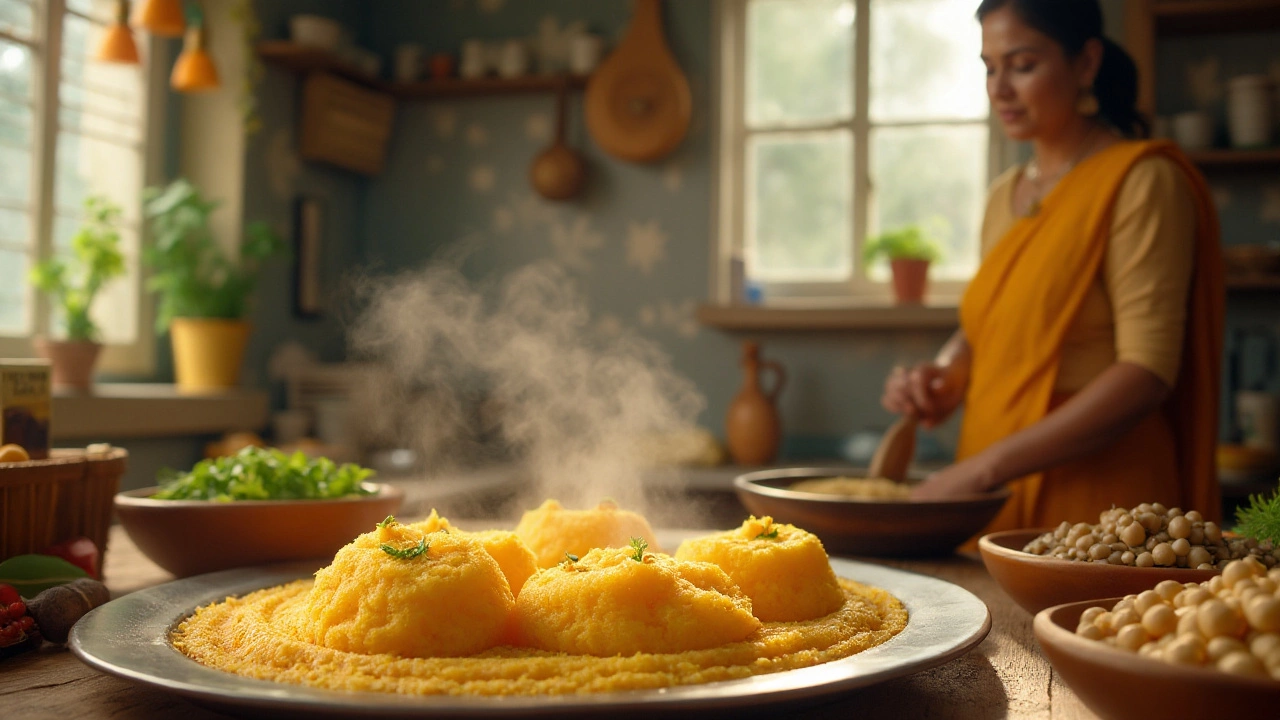
Does Eating Dhokla Increase Blood Sugar Levels? Healthy Indian Snacks Explored
Dhokla, a famous Indian snack made from fermented rice and chickpea batter, is often debated for its impact on blood sugar levels. This article explores the nutritional components of dhokla, its glycemic index, and provides insights into its potential effects on health. By breaking down its ingredients and cooking process, the article evaluates whether this beloved snack is a safe option for those monitoring blood sugar. Through practical tips and modern variations, discover how to enjoy dhokla healthily.
learn more